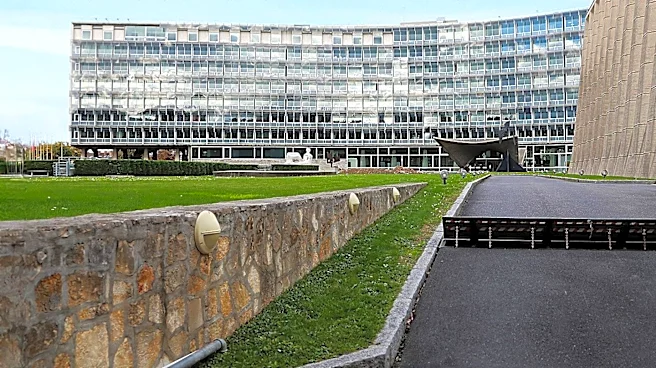






UNESCO, the United Nations Educational, Scientific and Cultural Organization, officially came into being on November 16, 1945. Its creation was a direct response to the devastation of World War II, with a core aim to foster peace through intellectual and cultural exchange. The organization's mandate, to "build the defenses of peace in the minds of men and women through education, science, and culture," reflects a profound belief that international
cooperation in these fields could prevent future conflicts. This vision was shaped by a series of international discussions and agreements that began even before the war concluded, highlighting a global desire for a new era of collaboration.
Early Foundations and Predecessors
The roots of UNESCO's mandate for international cooperation can be traced back to a League of Nations resolution from September 21, 1921. This resolution called for the election of a commission to study the feasibility of nations freely sharing cultural, educational, and scientific achievements. This led to the creation of the International Committee on Intellectual Cooperation (ICIC) in 1922. The ICIC included prominent figures such as Henri Bergson, Albert Einstein, and Marie Curie, though it was largely centered in Western Europe.
To act as the executing agency for the ICIC, the International Institute for Intellectual Cooperation (IIIC) was established in Paris in September 1924. However, the onset of World War II largely interrupted the work of these predecessor organizations. Alongside these intergovernmental efforts, private initiatives also played a role, such as the International Bureau of Education (IBE), which began as a non-governmental organization in December 1925, dedicated to international educational development. The IBE later joined UNESCO in 1969, following the establishment of a joint commission in 1952.
The Path to Formal Establishment
The formal process leading to UNESCO's creation began with meetings of the Conference of Allied Ministers of Education (CAME) in London, which took place from November 16, 1942, to December 5, 1945. Following the signing of the Atlantic Charter and the United Nations Declaration, the importance of an international body was further emphasized in the Moscow Declaration on October 30, 1943, agreed upon by China, the UK, the US, and the USSR. The Dumbarton Oaks Conference proposals, released on October 9, 1944, also contributed to the framework.
Based on CAME's proposals and the United Nations Conference on International Organization (UNCIO) held in San Francisco from April to June 1945, the United Nations Conference to set up an educational and cultural organization (ECO/CONF) was convened in London from November 1 to 16, 1945. Forty-four governments participated in this conference, with Rab Butler, the UK Minister of Education, being a strong advocate for the idea of UNESCO. At the ECO/CONF, the Constitution of UNESCO was introduced and signed by 37 countries, and a Preparatory Commission was established. This Preparatory Commission operated between November 16, 1945, and November 4, 1946, the date when UNESCO's Constitution officially came into force after the deposit of the twentieth ratification by a member state.
Evolving Governance and Early Leadership
The first General Conference of UNESCO took place from November 19 to December 10, 1946, during which Julian Huxley was elected as the first Director-General. A significant amendment to the Constitution occurred in November 1954, when the General Conference agreed that members of the executive board would represent the governments of their respective states, rather than acting in their personal capacity as had been the case previously. This change in governance distinguished UNESCO from its predecessor, the ICIC, by formalizing the collaborative efforts of member states within the organization's fields of competence. As member states worked together to fulfill UNESCO's mandate, political and historical factors, particularly during the Cold War, the decolonization process, and the breakup of the Soviet Union, continued to shape the organization's operations.