







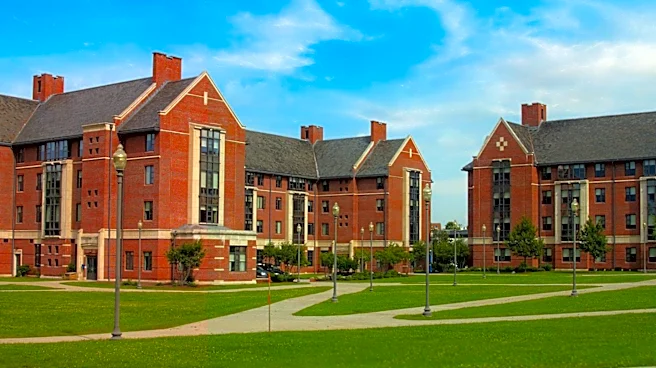
East Carolina University (ECU), a public research university located in Greenville, North Carolina, boasts a rich history marked by significant growth and transformation. Founded in 1907 as a teacher training school, it has evolved into the fourth-largest university in North Carolina, offering a diverse range of academic programs including unique schools of medicine, dentistry, and engineering. Its journey from a modest institution focused on teacher preparation
to a comprehensive research university within the University of North Carolina System reflects a dynamic century of development and adaptation to changing educational needs.
Early Beginnings and Educational Expansion
The university's origins trace back to March 8, 1907, when it was officially chartered by the North Carolina General Assembly as East Carolina Teachers Training School (ECTTS). The legislation, Public Laws of North Carolina, 1907, Chapter 820, aimed to stimulate high school instruction and teacher training in the state. Thomas Jordan Jarvis, a former Governor of North Carolina and chairman of the original Board of Trustees, played a pivotal role in its establishment and is known as the "Father of ECU." Groundbreaking ceremonies for the first buildings took place on July 2, 1908, in Greenville, North Carolina, and ECTTS welcomed its first students on October 5, 1909.
Initially, the school's purpose was to train "young white men and women," though male graduates were not seen until 1932. A significant step in its academic progression occurred in 1920 when ECTTS became a four-year institution and was renamed East Carolina Teachers College. The following year, it awarded its first bachelor's degrees in education. Further expansion of its academic offerings included the authorization of a master's degree program in 1929, with the first such degree granted in 1933. By 1948, the institution made progress toward full college status by designating the Bachelor of Arts as a liberal arts degree and the Bachelor of Science as a teaching degree, reflecting a broader educational mission.
Transition to University Status and System Integration
This expanded mission led to another name change in 1951, when it became East Carolina College. The institution's ambition to become a regional university faced initial opposition from Governor Dan K. Moore, who was against creating a university system separate from the Consolidated University of North Carolina. Despite these objections, East Carolina College was officially made a regional university on July 1, 1967, and adopted its current name, East Carolina University. However, its independence as a standalone university was short-lived.
On July 1, 1972, East Carolina University was incorporated into the University of North Carolina System, which succeeded the Consolidated University. This integration marked a new chapter for ECU, aligning it with other public universities across the state under a unified system. Today, ECU stands as the fourth-largest university in North Carolina, serving a substantial student body that includes 22,463 undergraduate and 5,558 graduate students, with specific numbers for medicine (344) and dental (206) students. The university is classified among "R1: Doctoral Universities – Very High research activity," underscoring its commitment to advanced research and scholarship.
Campus Development and Academic Structure
Over the years, ECU has expanded significantly from its original 43 acres to almost 1,600 acres today. Its academic facilities are spread across six properties, including the Main Campus, Health Sciences Campus, West Research Campus, a Field Station for Coastal Studies in New Holland, the Millennial Research Innovation Campus in Greenville's warehouse district, and an overseas campus in Certaldo Alto, Italy. The university also operates the Coastal Studies Institute, further demonstrating its diverse academic and research interests.
ECU's academic structure is comprehensive, comprising nine undergraduate colleges, a graduate school, and four professional schools. The non-health sciences majors are primarily located on the main campus, while the College of Nursing, College of Allied Health Sciences, The Brody School of Medicine, and School of Dental Medicine are situated on the health science campus. This organizational structure highlights ECU's unique position in North Carolina as a single university hosting schools of medicine, dentistry, and engineering, alongside a broad array of other disciplines.