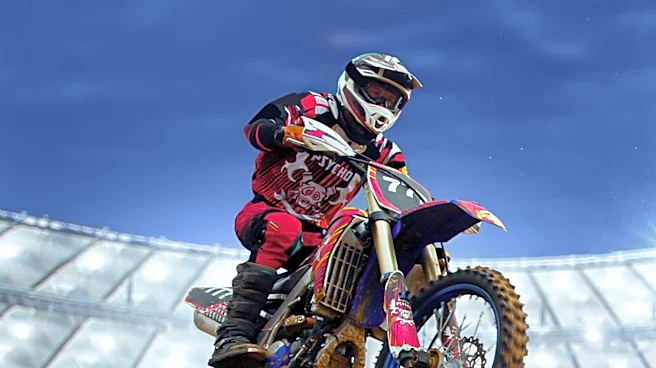









The FIM Motocross World Championship, a premier series in motocross racing, boasts a rich history marked by significant changes in its structure and engine displacement formulas. What began as a European Championship eventually transformed into a worldwide spectacle sanctioned by the Fédération Internationale de Motocyclisme (FIM). This evolution reflects the sport's growth and its adaptation to advancements in motorcycle technology, ultimately shaping
the competitive landscape we see today.
Early Beginnings and Class Introductions
Before its official inauguration as the FIM Motocross World Championship in 1957, the competition was known as the European Championship. This foundational period laid the groundwork for what would become a globally recognized racing series. When it officially became a world championship, it initially featured a 500 cc engine displacement formula, setting the standard for the premier class of its time.
The championship quickly expanded its categories to accommodate different engine sizes and foster broader participation. In 1962, a 250cc class was introduced, adding another layer of competition and strategy to the series. This was followed by the introduction of a 125cc class in 1975, further diversifying the championship and allowing riders with different machine preferences to compete at the highest level. These early class additions were crucial in establishing the multi-tiered structure that would characterize motocross racing for decades.
Adapting to New Technology: The 2004 Restructuring
A pivotal moment in the championship's history occurred in 2004 when the FIM implemented significant changes to the displacement formulas. This restructuring was a direct response to advancements in engine technology and a conscious move towards more environmentally friendly four-stroke engines. The goal was to modernize the sport and ensure its continued relevance and sustainability.
Under the new 2004 regulations, the MX1 class emerged as the premier category. This class permitted two-stroke engines with displacements up to 250cc and four-stroke engines up to 450cc. This change reflected a shift in industry trends and allowed for a more balanced competition between different engine types. Simultaneously, the MX2 class was defined to allow two-stroke engines up to 125cc and four-stroke motors up to 250cc, catering to a different segment of riders and machines. An MX3 class was also established, accommodating two-stroke engines up to 500cc and four-stroke engines up to 650cc, further broadening the scope of the championship.
The Women's Motocross World Championship
Beyond the main men's categories, the FIM also recognized the growing participation of women in motocross. The FIM Women's Motocross World Championship (MXW) was inaugurated in 2005, marking a significant step towards inclusivity and providing a dedicated platform for female riders to compete at a world-class level. This women-only championship serves as a feeder series to the broader FIM Motocross World Championship, highlighting its importance in developing talent and promoting the sport across all demographics.
The introduction of the MXW championship underscores the FIM's commitment to expanding motocross and ensuring opportunities for all athletes. It has become an integral part of the global motocross calendar, showcasing the skill and determination of female riders. The ongoing success and growth of this championship demonstrate the dynamic nature of motocross and its continuous evolution to embrace new competitors and categories, solidifying its status as a premier motorsport worldwide.