








WWJ (950 kHz) is a commercial AM radio station in Detroit, Michigan, known for its all-news format. Beyond its programming, the station is notable for its significant technical capabilities and its early adoption of broadcasting innovations. Operating on a regional broadcast frequency, WWJ's studios are located in the Panasonic Building in Southfield. The station's powerful signal and advanced antenna systems have allowed it to reach a wide audience,
making it a prominent fixture in the broadcasting landscape.
Unmatched Signal Strength and Antenna Systems
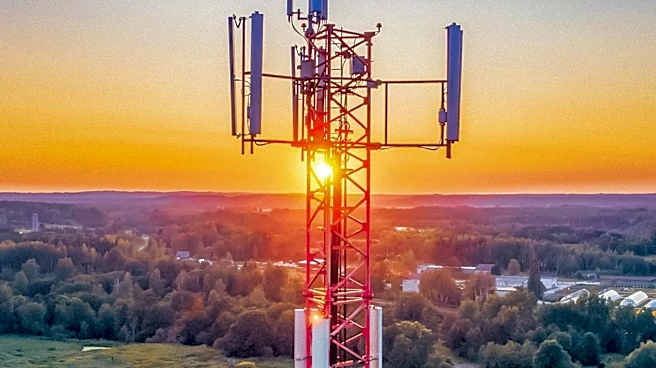
WWJ's transmitter site is situated near Newport, from where it broadcasts full-time with an impressive 50,000 watts of power. To achieve optimal coverage, the station utilizes a sophisticated antenna system. During daytime hours, it employs a five-tower directional antenna system. At night, its entire six-tower array is engaged, further enhancing its reach. This configuration is critical for its extensive coverage area.
Notably, WWJ possesses the highest field strength—7,980 mV/m at a distance of 1 km—in a single direction (nighttime pattern) of any U.S. AM station. This powerful signal is primarily directed to the north, enabling the station to be heard in parts of northern Michigan, including the Upper Peninsula and Mackinac areas, during nighttime hours. During the day, its signal effectively covers much of southern Lower Michigan, demonstrating the effectiveness of its high-power transmission and directional antenna design.
Early Technical Challenges and Regulatory Adaptations
The early days of WWJ, then operating as the "Detroit News Radiophone" under the call sign "8MK," involved significant technical evolution. Initially, the station operated under an amateur license. In the fall of 1921, the Detroit News sought to improve coverage by applying for a "Special Amateur" station license, which would allow it to move to a wavelength less susceptible to interference. However, on October 13, 1921, the government issued a "Limited Commercial" license instead. This change meant the station, now with the call letters WBL, would operate on a wavelength of 360 meters (833 kHz).
This transition presented a technical challenge: the station's continued use of DeForest equipment was technically in violation of the commercial radio equipment patent rights held by AT&T. This issue was promptly resolved through the acquisition of a 500-watt transmitter from Western Electric, an AT&T subsidiary, which was installed on January 28, 1922. This move not only ensured compliance but also marked an upgrade in the station's transmission capabilities. The random assignment of the WBL call sign also proved problematic, as listeners found it difficult to discern. The newspaper requested a more phonetically distinct call sign, leading to the assignment of WWJ on March 3, 1922.
Modern Broadcasting Innovations
WWJ has continued to embrace technological advancements throughout its history. In March 2005, the station began streaming its programming over the internet, making its content accessible to a global audience. This was followed in August 2005 by the introduction of podcasts, offering listeners on-demand access to newsmakers, interviews, and feature programming. A year later, in August 2006, WWJ began broadcasting in the HD Radio format, providing improved audio quality and additional digital features to its listeners. These innovations highlight WWJ's ongoing commitment to leveraging technology to enhance its broadcasting services and reach.