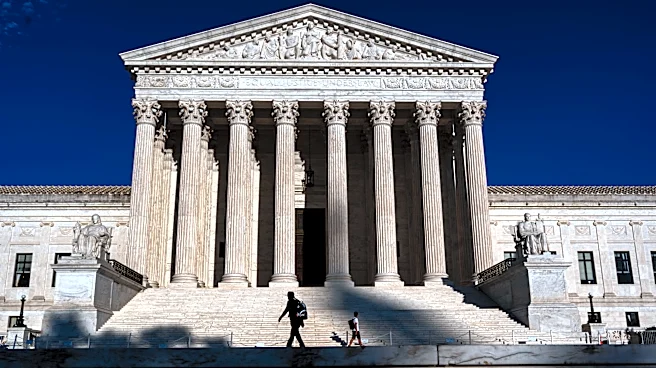







Robert Bork's 1987 nomination to the Supreme Court by President Ronald Reagan ignited one of the most intense and partisan confirmation battles in U.S. history. The debate was fueled by strong opposition from civil and women's rights groups, who were deeply concerned about Bork's judicial philosophy and his perceived willingness to overturn landmark civil rights rulings. This nomination became a significant moment, illustrating the increasing politicization
of judicial appointments and setting a precedent for future confirmation hearings.
Early Opposition and the "Robert Bork's America" Speech
Within minutes of Bork's nomination, Senator Ted Kennedy delivered a powerful, nationally televised speech condemning him. Kennedy famously declared, "Robert Bork's America is a land in which women would be forced into back-alley abortions, blacks would sit at segregated lunch counters, rogue police could break down citizens' doors in midnight raids, and schoolchildren could not be taught about evolution, writers and artists could be censored at the whim of the Government, and the doors of the Federal courts would be shut on the fingers of millions of citizens." This speech immediately framed the debate in stark terms and galvanized public opposition.
Conservatives viewed Kennedy's accusations as slanderous, but the Reagan White House was reportedly stunned by the rapid response and failed to counter the attacks for over two months. This initial period allowed the narrative set by Kennedy and other opponents to take root, shaping public perception of Bork as an extremist. The swift and aggressive nature of this opposition highlighted a new level of political engagement in Supreme Court nominations.
Concerns from Civil Rights and Pro-Choice Groups
Civil rights and women's rights organizations were particularly vocal in their opposition. They expressed deep concern that Bork's judicial philosophy would lead to a rollback of civil rights decisions made by the Warren and Burger Courts. His opposition to the federal government's authority to impose standards of voting fairness on states was a major point of contention. The American Civil Liberties Union (ACLU) notably opposed Bork, making him one of only four Supreme Court nominees ever to face their opposition, alongside William Rehnquist, Samuel Alito, and Brett Kavanaugh.
Pro-choice legal groups also mobilized against Bork, fearing that his originalist views and his belief that the Constitution does not protect a general "right to privacy" signaled his intent to overturn the 1973 Roe v. Wade decision. These groups also speculated that his marriage to Mary Ellen Pohl, a former Roman Catholic nun and anti-abortion supporter, might influence his decisions on abortion. This confluence of concerns from various advocacy groups transformed the confirmation hearings into an intensely partisan battleground.
The Role of the Judiciary Committee and Joe Biden
Senator Joe Biden, as Chairman of the Judiciary Committee, presided over Bork's hearings. Biden had initially approved of a hypothetical Bork nomination the previous year but reversed his stance after the actual nomination, angering conservatives who questioned his impartiality. Despite this, Biden later received praise for conducting the proceedings fairly and with good humor and courage, even as his own 1988 presidential campaign faltered during the hearings.
Biden framed his opposition around the belief that the U.S. Constitution provides rights to liberty and privacy that extend beyond those explicitly enumerated in the text, arguing that Bork's strong originalism was ideologically incompatible with this view. Bork himself was criticized for his bluntness before the committee, including his direct criticism of the reasoning behind Roe v. Wade. Conversely, his supporters expressed frustration that some of his more controversial and conservative views, previously articulated in his writings, appeared to be moderated during his testimony.
The Outcome and Lasting Impact
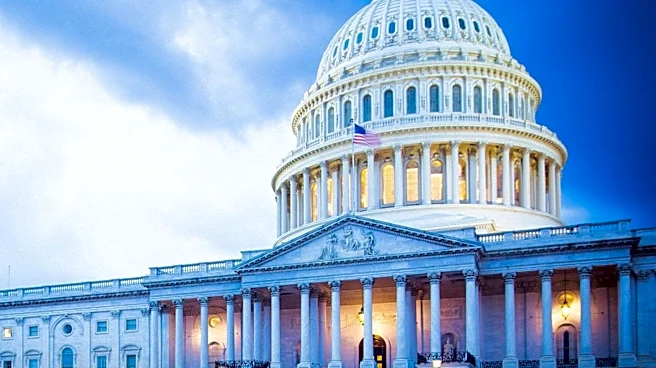
The Senate Judiciary Committee ultimately rejected Bork's nomination by a 9–5 vote. Subsequently, the full Senate rejected his confirmation by a 58–42 margin. This rejection marked a significant defeat for President Reagan and a victory for the coalition of liberal and civil rights groups. The Bork nomination became a watershed moment, demonstrating the power of organized opposition and the increasing scrutiny applied to judicial nominees. It also highlighted how deeply ideological divisions could impact the confirmation process, setting a precedent for the highly politicized Supreme Court battles that would follow in subsequent decades.