

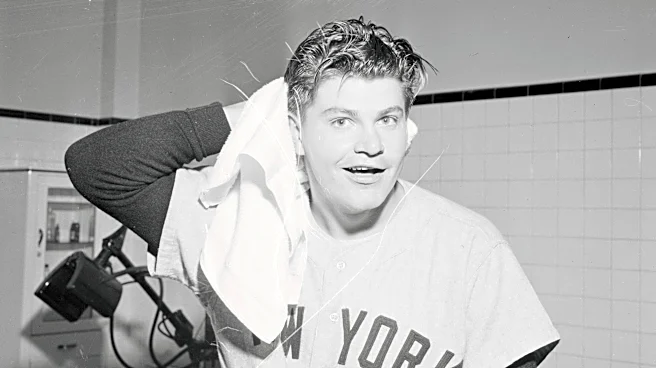
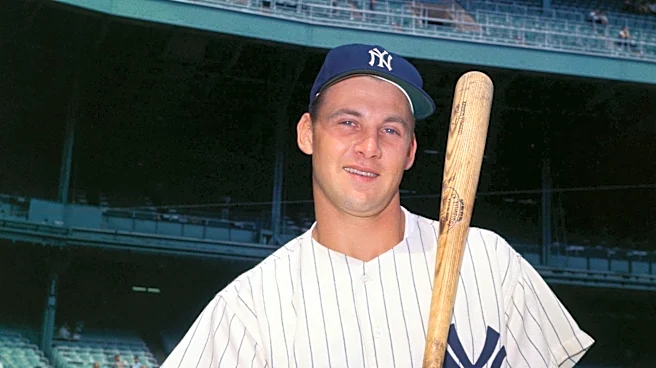

Edwin Donald "Duke" Snider, famously known as "the Duke of Flatbush," carved out a significant career in Major League Baseball, primarily as a center fielder for the Brooklyn and later Los Angeles Dodgers. Born in Los Angeles in 1926, Snider's self-confident demeanor from a young age earned him his regal nickname. His journey with the Dodgers spanned 16 seasons, during which he became a central figure in the team's successes, including two World Series
victories. His contributions cemented his place in baseball history, leading to his induction into the National Baseball Hall of Fame in 1980.
Early Career and Rise to Stardom with Brooklyn
Snider's athletic prowess was evident early on, excelling in basketball, football, and baseball at Compton High School. He was a strong-armed quarterback, reportedly capable of throwing a football 70 yards. His baseball talent led to a tryout with the Brooklyn Dodgers during their 1947 spring training. He made his major league debut on April 17, 1947, getting a single in his first at-bat. After spending some time with minor league affiliates like St. Paul and Montreal, where he posted a .327 average, Snider returned to the Dodgers in August 1948, playing in 53 games.
From 1949 onward, Snider became a consistent force in the Dodgers' outfield. He was named to the National League All-Star roster eight times during his career, a testament to his sustained performance. In 1955, he was the NL Most Valuable Player runner-up, narrowly missing the award in a controversial vote. That same year, Snider played a crucial role in leading the Dodgers to their first World Series victory, defeating the New York Yankees. He hit four home runs in that series, including two in Game 5, showcasing his power and clutch hitting ability.
The Move to Los Angeles and Career Decline
The Dodgers' relocation to Los Angeles in 1958 marked a turning point in Snider's career. The change of scenery, coupled with an aching knee and the vast dimensions of the Los Angeles Memorial Coliseum, particularly its 440-foot right field fence, contributed to a decline in his numbers. In 1958, he hit only 15 home runs, a significant drop from his previous seasons. Despite these challenges, Snider had one final standout season in 1959, helping the Dodgers secure their first World Series title in Los Angeles.
That year, he rebounded with a .308 batting average, 23 home runs, and 88 RBIs in 370 at-bats, sharing fielding duties in right and center fields. However, injuries and age began to take their toll, reducing Snider to part-time status by 1961. A notable incident occurred in 1962 when, during a crucial playoff game against the Giants, Snider and third-base coach Leo Durocher reportedly urged manager Walter Alston to bring in Don Drysdale. Alston opted for Stan Williams, leading to a 6-4 loss and the Giants winning the pennant. This period signaled the end of Snider's long tenure with the Dodgers, as he was subsequently sold to the New York Mets.
A Lasting Impact
Even as his playing days with the Dodgers concluded, Snider's impact on the franchise and its fans remained profound. His career with the team saw him accumulate impressive statistics, including 407 home runs and 1,333 RBIs. His leadership and performance were instrumental in the Dodgers' six World Series appearances and two championships during his time. The emotional reaction of his roommate, Don Drysdale, who reportedly cried upon hearing of Snider's departure, underscores the deep bonds and respect Snider commanded within the team. His legacy as a Dodger, particularly as "the Duke of Flatbush," continues to be celebrated, reflecting an era of baseball marked by his powerful hitting and graceful play in center field.