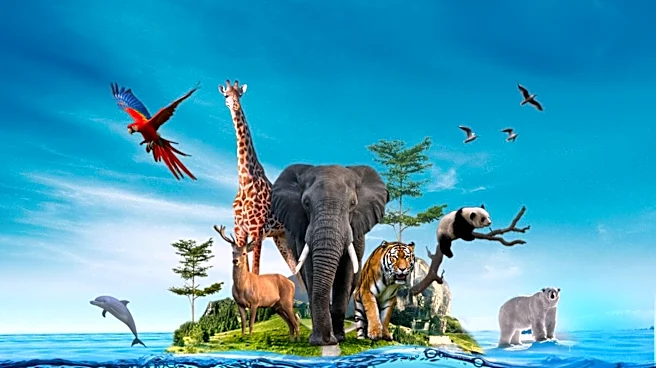







The term "animal rights" is often used broadly in popular discourse, sometimes interchangeably with "animal protection" or "animal liberation." However, more narrowly, it refers to a specific philosophical and moral stance: the idea that many animals possess fundamental rights to be treated with respect as individuals. These rights, akin to human rights, center on notions of freedom, including rights to life, liberty, and freedom from torture. This
perspective argues that these basic interests of animals should not be overridden by considerations of aggregate human welfare, challenging the long-held view that non-human animals exist primarily for human use.
Speciesism and the Argument from Marginal Cases
A central concept in the animal rights debate is "speciesism," defined as the prejudice or discrimination based on species membership alone. Animal rights advocates often oppose assigning moral value and fundamental protections solely on the basis of being human, considering speciesism as irrational as any other form of prejudice. From this viewpoint, animals should not be regarded as property or exploited for food, clothing, entertainment, or labor simply because they are not human. The argument from marginal cases is frequently employed to support this conclusion. This argument posits that if human beings who lack certain cognitive abilities—such as infants, individuals with severe cognitive disabilities, or those in persistent vegetative states—are granted moral status and negative rights, then non-human animals must be afforded similar moral consideration. This is because animals do not lack any known morally relevant characteristic that these "marginal-case" humans possess, challenging the idea that rationality or specific human capacities are prerequisites for moral rights.
Sentience, Consciousness, and the Capacity to Suffer
The ability of animals to suffer is a cornerstone of many animal rights arguments. As Jeremy Bentham famously stated, the crucial question is not whether animals can reason or talk, but whether they can suffer. Modern scientific understanding strongly supports the idea that non-human animals are not only sentient but also conscious. The 2012 Cambridge Declaration of Consciousness, for instance, affirms that "non-human animals have the neuroanatomical, neurochemical and neurophysiological substrates of conscious states along with the capacity to exhibit intentional behaviors." This scientific consensus indicates that animals can feel and generate states of mind, experiencing pleasure and pain.
This capacity for conscious experience involves not only agency—the ability to make choices and exhibit individual traits—but also, in some cases, a concept of death. The behavior of exploited animals, such as those in farming, labor, or scientific laboratories, often illustrates their resistance to manipulation and confinement, including attempts to escape when opportunities arise, further suggesting their conscious awareness and desire for freedom. While it was once argued that animals' lack of language made it impossible to know if they suffered, Peter Singer points out that if language were needed to communicate pain, it would often be impossible to know when humans are in pain. He argues there is no reason to assume that the pain behavior of non-humans has a different meaning from that of humans, reinforcing the idea that their suffering should be taken seriously.
The "Subjects-of-a-Life" Criterion and Transhumanist Perspectives
Tom Regan's "subjects-of-a-life" criterion provides a detailed framework for identifying which animals should be granted inherent rights. He argues that individuals are subjects-of-a-life if they possess beliefs and desires, perception, memory, a sense of their own future, an emotional life with pleasure and pain, preference- and welfare-interests, the ability to initiate action, a psychophysical identity over time, and an individual welfare that fares well or ill for them, independent of their utility to others. This criterion suggests that such animals have "intrinsic value" and should not be treated merely as means to an end. Regan believes that all normal mammals of at least one year of age would qualify, extending the Kantian ideal of treating individuals as ends in themselves to these non-human beings.
In a more contemporary context, transhumanism also engages with animal rights, often advocating for animal liberation and the "uplift" of animal consciousness, potentially into machines. Transhumanists view animal rights as part of a broader spectrum of sentient rights, which includes human rights and the rights of conscious artificial intelligences (posthuman rights). This perspective suggests a future where the boundaries of moral consideration might expand even further, encompassing diverse forms of consciousness beyond biological organisms. These varied philosophical and scientific approaches continue to shape the ongoing debate about the moral status of animals and the extent of their rights in human society.