
The Savannah cat is instantly recognizable for its striking appearance, a direct inheritance from its wild Serval ancestor. This hybrid breed is celebrated for its large stature, slender yet muscular build, and a coat adorned with bold spots. The physical characteristics of a Savannah cat are meticulously defined by breed standards, which aim to preserve its exotic beauty and ensure its distinct identity. From its impressive height to the intricate
patterns of its fur, every aspect of the Savannah's physique contributes to its unique allure.
Size and Generational Differences
The size of a Savannah cat is significantly influenced by its heredity and the percentage of Serval blood it carries, often referred to by its filial generation (F1, F2, etc.). Generally, the higher the percentage of Serval blood, the larger the cat. Consequently, an F1 Savannah, being the closest generation to the Serval, is typically larger than an F2, and so on. There's also a notable size difference between male and female Savannahs, with males often being larger.
An F2 or F3 male Savannah can surpass the size of a regular domestic cat, while females are usually slightly larger than typical house cats. F1 and F2 Savannahs commonly weigh between 8 and 11 kilograms (approximately 17.6 to 24.2 pounds), with F3s potentially reaching up to 10 kilograms (22 pounds). Savannah cats are slow growers, not reaching their full height and weight until they are about three years old. Specific measurements indicate that an F1 male with 53-56% Serval blood can reach 40-45 cm (about 15.7-17.7 inches) at the withers, while those with 75-77% Serval blood can approach 60 cm (nearly 23.6 inches). F1 females and F2 males typically measure between 35-40 cm (13.8-15.7 inches), and F2 females and F3 males between 30-35 cm (11.8-13.8 inches). By the F3 female, F4, and F5 generations, Savannahs are generally the same size as a normal domestic cat, though individual variations can occur.
Distinctive Physical Traits and Coat Standards
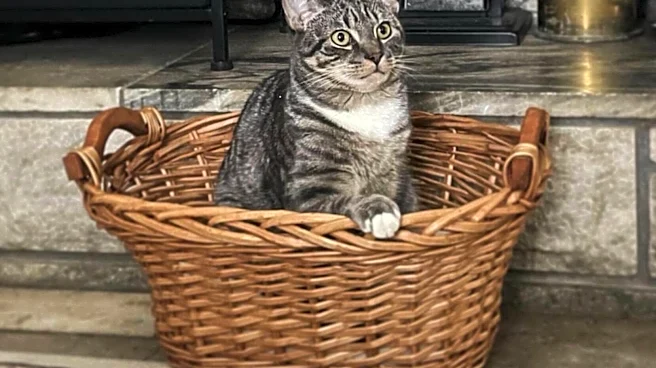
The overall impression of a Savannah cat, as per the TICA Breed Standard, is that of a large, slender, and elegant feline with striking large black spots on a gold or orange coat. They are designed to be a replica of the Serval cat, characterized by a particularly long neck, legs, and ears, and a short, three-quarter length tail. The head is broad, moderately wedge-shaped with rounded contours, appearing triangular from the front and small in proportion to the body. From the side, a long nose with a small chin contributes to their wild appearance. Their ears are large, alert, and broad at the base with slightly rounded tips. Eye shapes range from oval to almond, with preferred colors being warm yellow, green, gold, or caramel brown. The neck is thick and long-muscled.
The body is long and massive, appearing narrow from the front due to the extreme length of the body, legs, and neck. Savannahs are prominently muscled throughout, yet remain limber. The coat is short to medium length, densely coated, soft, and lush. Accepted colors include black, brown spotted tabby, silver spotted tabby, and black smoke. The only allowed color variations are a golden to orange ground with bold black spots, a silver ground with bold black spots, or an all-black coat, preferably with spots. In all color variations, the lips are black, as are the prominent tear duct lines on the inside of each eye. Spotted Savannahs can have a brick red, all-black, or black nose with a light red or pink line down the middle. Black Savannahs must have a completely black nose. The soles of the feet should be coal black or brownish in any color variation, with black spots on a black background being ideal for black Savannahs.