









The COVID-19 pandemic in the United States was profoundly shaped by the rapid development and deployment of vaccines, which became a cornerstone of the national response. Alongside vaccination efforts, public health policies and guidance underwent significant transformations, reflecting the evolving understanding of the virus, its variants, and the best strategies for mitigation. From emergency use authorizations to debates over mask mandates and booster
recommendations, the period from 2020 to 2023 saw a dynamic interplay between scientific advancements and public health directives aimed at controlling the spread of the virus and protecting the population.
The Dawn of Vaccination and Early Policy Responses
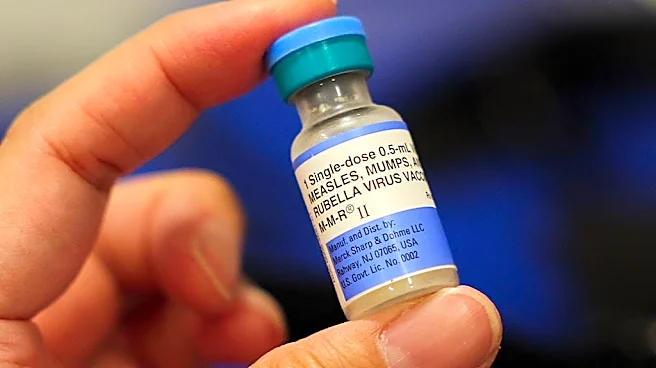
COVID-19 vaccines became available in the United States in December 2020, initially under emergency use authorization, marking the beginning of a nationwide vaccination program. The first vaccine was officially approved by the Food and Drug Administration (FDA) on August 23, 2021. This rapid development was a critical step in the fight against the pandemic, offering a new tool to reduce severe illness and death. Prior to vaccine availability, public health measures focused on containment, including identifying and monitoring close contacts of confirmed cases, and the CDC activated its emergency operations center early in the pandemic to enhance support for the response.
As vaccination efforts gained momentum, public health guidance began to adapt. In May 2021, the CDC revised its recommendations, stating that fully vaccinated individuals no longer needed to wear masks in most situations. This change, however, led to some confusion, as it did not immediately override existing state and local mask mandates, and the federal mask mandate on public transportation remained in effect. The evolving nature of the virus, particularly with the emergence of new variants, continuously challenged public health officials to refine their strategies and communications.
Navigating Variants and Booster Recommendations
The emergence of highly transmissible variants, such as Alpha, Delta, and Omicron, significantly influenced vaccination strategies and public health policy. The Delta variant, which became dominant by July 2021, was found to double the risk of hospitalization for unvaccinated individuals, underscoring the importance of vaccination. The Omicron variant, which led to record highs in hospitalizations and cases in early 2022, further highlighted the need for ongoing protection.
In response to these variants, booster shots became a key component of the vaccination strategy. By October 2022, recommendations for receiving vaccination booster shots were mixed, with experts advising that populations at risk of severe disease and death should stay up-to-date, while healthy, middle-aged and younger populations, who were rarely at risk of severe illness and often had adequate immunity, might not need them as urgently. The newest bivalent boosters, targeting the recent BA.4 and BA.5 variants, were introduced, and a study found that U.S.-authorized bivalent mRNA boosters provided significant additional protection against symptomatic SARS-CoV-2 for those who had already received two to four monovalent vaccinations. However, a survey revealed disparities in booster intake, with lower rates among Hispanic, American Indian, Alaska Native, Black, and multi-racial individuals compared to White, non-Hispanic people, raising concerns about vaccination access inequity.
Shifting Mandates and the End of Emergency Declarations
Throughout 2022 and into 2023, there was a gradual rollback of many pandemic-era mandates and emergency declarations. In April 2022, a U.S. District Judge ended the federal transportation mask mandate nationwide, making masks optional on public transport, though the Justice Department challenged the ruling. By July 2022, only 21 states had active COVID-19 emergency orders in place, and no state-level mask requirements remained in force. The U.S. also dropped COVID testing requirements for inbound international air travelers in June 2022, while vaccination requirements largely remained for other modes of cross-border transportation.
In January 2023, the Biden administration renewed the COVID-19 public health emergency, but also signaled its likely final extension, with an announced end date of May 11. This decision came as relief measures, such as automatic Medicaid re-enrollment, were decoupled from the emergency declaration. Some states had already ended emergency SNAP benefits, and the USDA announced that these benefits would cease for the remaining states after February. On April 10, 2023, President Biden signed a resolution terminating the national emergency, effective immediately, though the public health emergency continued until May 11. These actions marked a significant transition from an emergency response phase to a more integrated approach to managing COVID-19 as an endemic disease, reflecting the impact of widespread immunity through vaccination and prior infection, and improvements in early treatment for at-risk patients.