




Clownfish, also known as anemonefishes, are iconic residents of the warm, tropical waters of the Indo-Pacific. These saltwater fish, belonging to the genus *Amphiprion*, are instantly recognizable by their vibrant colors and distinctive white vertical bars. However, their most remarkable characteristic is their unique and mutually beneficial symbiotic relationship with sea anemones. This partnership is central to their survival, providing shelter
and protection from predators, while the clownfish, in turn, contribute to the anemone's well-being. Their adaptations extend beyond this symbiosis, encompassing specialized sensory organs and color patterns that aid in camouflage and communication within their coral reef habitats.
The Indispensable Partnership with Sea Anemones
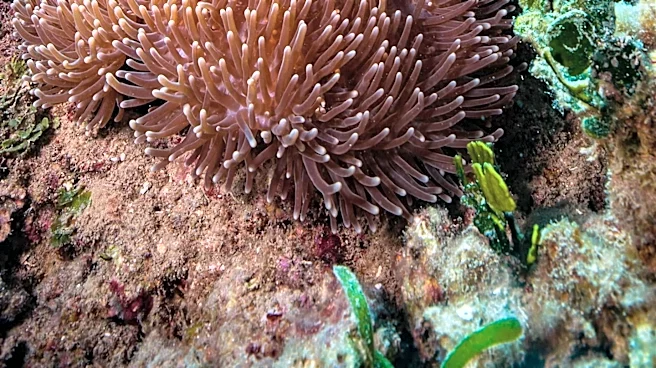
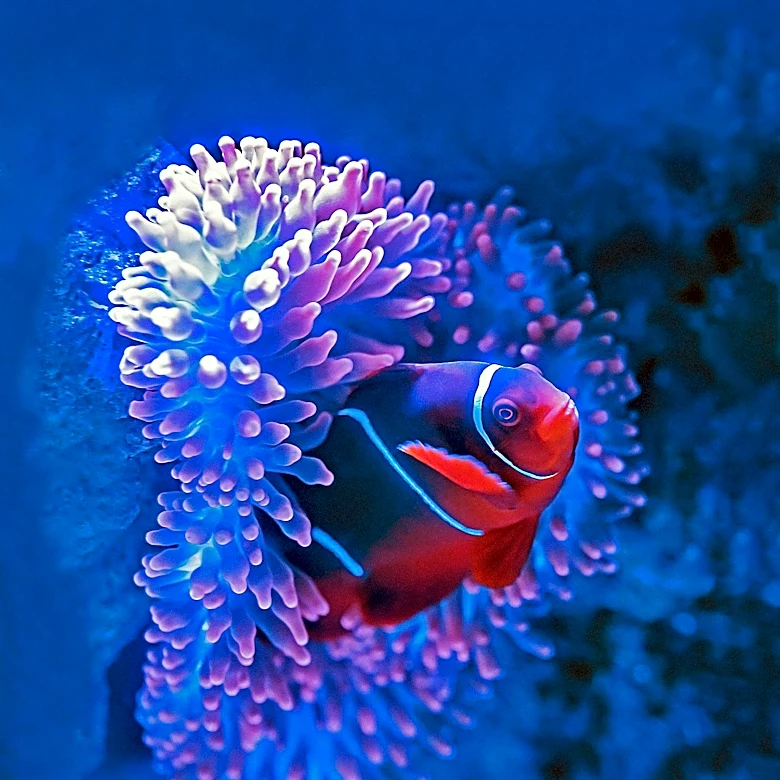
The symbiotic relationship between clownfish and sea anemones is a classic example of mutualism in the marine world. Clownfish rely heavily on anemones for shelter and protection. The anemone's stinging tentacles, which are deadly to most other fish, do not harm clownfish, allowing them to hide safely within the tentacles from predators. This immunity is a key adaptation that enables their survival in predator-rich coral reef environments. In return for this protection, clownfish actively contribute to the health and defense of their host anemone.
Clownfish protect the anemone from fish that would otherwise feed on it. They also perform cleaning duties, removing debris and parasites, and fan the anemone with their fins to improve water circulation. Furthermore, their waste products can attract beneficial microorganisms, providing nutrients to the anemone. This intricate exchange highlights a highly evolved co-dependency where both species thrive from the interaction. The distribution of clownfish is directly limited by the presence of their sea anemone hosts, which typically thrive in the sunlight zone near the surface where photosynthetic microorganisms, essential for anemones, are abundant.
Distinctive Coloration and Sensory Adaptations
Clownfish possess striking color patterns that are a hallmark of the genus. Their bodies typically feature a background of red, orange, yellow, brown, or black, adorned with zero to three white vertical bars often outlined in black. Some species may even have a horizontal bar along their back, while others, like the red saddleback anemonefish, have no bars at all. These colors are produced by specialized pigment cells: xanthophores create orange, yellow, and red; melanophores produce black and brown; and iridophores are responsible for the white bars.
Beyond their visual appeal, clownfish have evolved specialized sensory organs. Their eyes, located on the sides of their head, offer some binocular vision, allowing them to perceive depth. They can also see in both color and ultraviolet light, which may play a role in their environment and interactions. Their olfactory system is particularly unique, featuring a single nostril opening with an arrow-shaped olfactory organ that often contains fork-like extra flaps, a trait uncommon among fish. Additionally, their ears are attuned to relatively low frequencies, ranging from 75 to 900 Hz, suggesting an auditory component to their perception of the underwater world.
Geographic Distribution and Habitat Preferences
Clownfish inhabit the warm and tropical waters across a vast expanse of the Indo-Pacific region. Their range extends from the Red Sea in the west to French Polynesia in the east, and from Japan in the north down to Australia in the south. While some species are widespread, others are more localized, found only around specific islands or archipelagos. The diversity of clownfish species varies geographically; areas at the edges of their distribution, such as the Red Sea and French Polynesia, may host only one species each. In contrast, regions like Southeast Asian and northern Australian waters can be home to as many as 12 different clownfish species.
Within their preferred habitats, primarily coral reefs and surrounding areas, clownfish species that utilize the same anemone hosts have developed strategies to avoid competition. They often occupy different zones within a reef, such as nearshore, mid-lagoon, or outer bank areas. This spatial separation allows multiple species to coexist, even when relying on similar resources. Some species have even been observed cohabitating on the same anemone host, further illustrating their adaptability and complex ecological interactions.