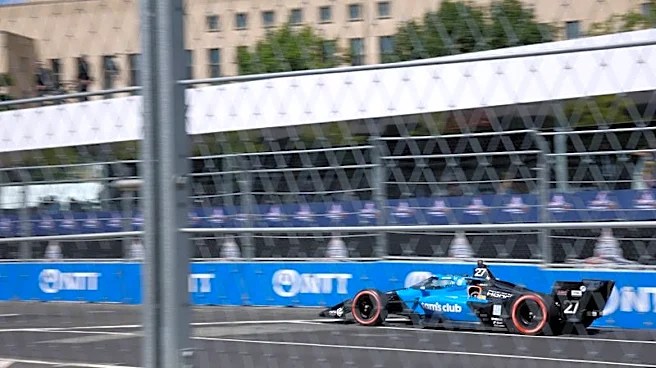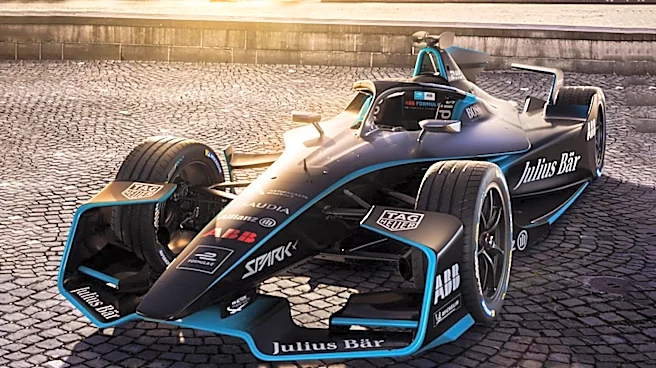






Formula E, the ABB FIA Formula E World Championship, distinguishes itself within motorsport not only through its all-electric cars but also through its innovative and evolving approach to qualifying and race dynamics. Unlike traditional racing series, Formula E has consistently experimented with formats designed to enhance strategic depth, driver engagement, and fan interaction. From its unique group-and-duel qualifying system to features like Attack
Mode and the recent introduction of Pit Boost, the series continually seeks to push the boundaries of electric motorsport, often adapting its rules to leverage technological advancements and improve the spectacle for its global audience.
The Distinctive Qualifying Format
Formula E's current qualifying format, introduced in Season 8, is a multi-stage process that sets it apart from many other racing series. It begins by splitting drivers into two groups based on their championship standings: odd-numbered places go into Group A, and even-numbered places into Group B. For the first race of the season, each team nominates one driver for each group. Each group then gets a 10-minute session to set their fastest lap using 300 kW of power. The top four drivers from each group advance to the "duels" stage.
The duels stage is a head-to-head competition where drivers face off at 350 kW. This involves quarter-finals, semi-finals, and a final. The winner of the final secures pole position, while the loser takes second. The losers of the semi-finals fill positions three and four, and the quarter-final losers take positions five through eight, ordered by their times in their respective duel sessions. The remaining drivers from the group stage are then placed alternately from position nine onwards, with the polesitter's group filling the odd places and the other group the even places. This system creates direct, exciting confrontations to determine the top grid spots.
Race Features and Strategic Elements
Beyond qualifying, Formula E races incorporate several unique features designed to add strategic complexity and excitement. One notable innovation is