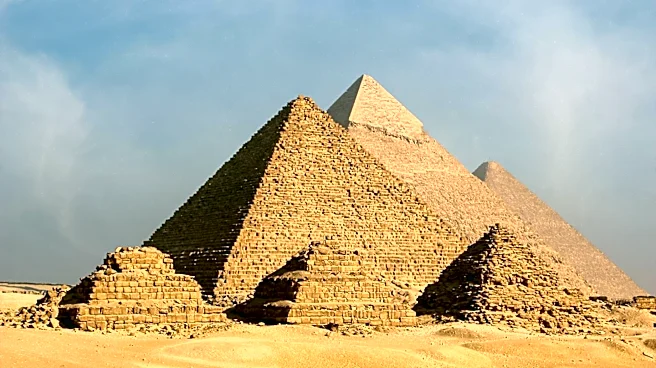









The Giza pyramid complex, also known as the Giza necropolis, stands as a testament to the advanced engineering capabilities and profound religious beliefs of ancient Egypt. Located near modern-day Cairo, this iconic site is home to the Great Pyramid, the Pyramid of Khafre, and the Pyramid of Menkaure, along with their associated complexes and the enigmatic Great Sphinx. These monumental structures were all constructed during the Fourth Dynasty of the Old
Kingdom, approximately between 2600 and 2500 BC. The sheer scale and precision of their construction, particularly the Great Pyramid which remained the world's tallest architectural structure for nearly 4,000 years, highlight a remarkable period of human achievement.
Grand Scale Construction and Material Sourcing
The construction of the Giza pyramids involved an immense undertaking, requiring vast quantities of materials and sophisticated logistical planning. For instance, the Great Pyramid alone utilized 5.5 million tons of limestone and 8,000 tons of granite. The majority of this stone was quarried directly on site, demonstrating an efficient use of local resources. However, some specialized stone, such as limestone, was transported from Tura, requiring barges to cross the Nile River to the Giza plateau. This complex process of quarrying, transporting, and precisely placing millions of tons of stone speaks to a highly organized and skilled workforce.
Construction theories generally agree that these massive stones were moved from quarries and then dragged and lifted into their final positions. One likely method for transportation involved placing large stone slabs on wooden sledges, which were then pulled over ground that had been wetted to reduce friction and facilitate smoother movement. The architects of the pyramids likely refined their techniques over time, beginning with the selection of a stable bedrock foundation rather than sand. After careful surveying, the pyramids were built in horizontal levels, one on top of the other, ensuring structural integrity.
Precision in Craftsmanship and Design
The precision evident in the Giza pyramids extends beyond their sheer size to the meticulous craftsmanship of individual blocks. Copper tools were employed to cut and chisel the softer limestone, while rough powders and sands were used to wear down the harder granite, with copper tools then used for cutting. To maintain the symmetry of the pyramid, the exterior casing stones had to be uniform in height and width. Workers likely marked each block to indicate the angle of the pyramid wall and carefully trimmed the surfaces to ensure a tight fit. While the outer surface was originally smooth, polished limestone, much of this casing has eroded or was removed over centuries for other building projects in Cairo.
Recent discoveries, such as the Wadi el-Jarf papyri from 2013, have provided new insights into the final stages of the Great Pyramid's construction. The diary of an inspector named Merer details his team's role in delivering white limestone from the Tura quarries to Giza, offering a glimpse into the daily operations and coordination required for such a monumental project. These historical accounts and archaeological findings continue to shed light on the sophisticated methods employed by the ancient Egyptians.
Purpose: Tombs, Ascension, and Divine Connection
The primary purpose of the Giza pyramids was deeply rooted in ancient Egyptian religious beliefs concerning the afterlife. These structures served as elaborate tombs for their respective pharaohs, designed to facilitate their ascension to the next world. The Khufu Pyramid Complex, the largest and oldest, was commissioned by Pharaoh Khufu. Following his death, the Pyramid of Khafre was built for his son, and subsequently, the Pyramid of Menkaure for Khafre's son. The Egyptians believed that a portion of the pharaoh's spirit, known as his "ka," remained with his body, necessitating proper care of the remains for the pharaoh to fulfill his duties as "king of the dead."
Beyond serving as burial sites, the pyramids were also thought to be storage places for items the pharaoh would need in the afterlife. The embalmed body of the king was entombed within or beneath the pyramid, protected to allow for transformation and ascension. Furthermore, the pyramids were intended to provide a direct connection to the Egyptian sun god Ra, believed to be the father of all pharaohs. The very shape of the pyramids was symbolic, representing the rays of the sun, and their slanted structure was envisioned as a direct ramp or stairway for the spirit of the deceased pharaoh to join Ra on his daily voyage across the sky. This intricate blend of engineering prowess and spiritual conviction underscores the profound significance of the Giza pyramid complex in ancient Egyptian civilization.