




The New York Cosmos represent a significant, albeit complex, chapter in American professional soccer history. The club has seen three distinct iterations, each contributing to its enduring legacy. From its glamorous beginnings in the 1970s, marked by the signing of global superstars, to its more recent revivals, the Cosmos name has consistently been associated with efforts to elevate soccer's profile in the United States. The latest iteration, founded
in 2025 and based in Paterson, New Jersey, aims to build on this rich past while focusing on local development within the Greater New York area.
The Original Cosmos: A Dazzling Era of Superstars
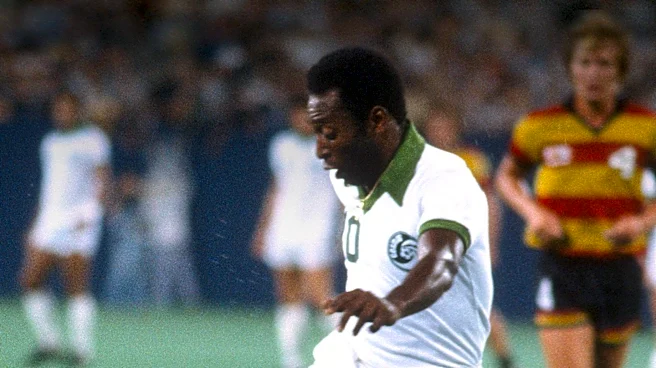
The original New York Cosmos was established in 1970 by a group of ten executives from Atlantic Records and its parent company, Warner Communications. Key figures in its founding included Ahmet and Nesuhi Ertegun of Atlantic and Warner CEO Steve Ross. This initial team began play in the North American Soccer League (NASL) and quickly made a name for itself by attracting international soccer legends. The most notable signings were Pelé and Franz Beckenbauer, whose presence transformed the Cosmos into what was widely regarded as "the most glamorous team in world football."
This star-studded approach brought immense success on the field, with the club winning the league five times. The original Cosmos played its home matches in various stadiums around New York, including Yankee Stadium, before moving to Giants Stadium in East Rutherford, New Jersey, in 1977, where it remained for the rest of its history. The club's economic power was evident in its ability to assemble a diverse roster, at one point featuring players from 16 different nationalities. This era saw the Cosmos achieve remarkable attendance figures, with 18 of the 20 highest-attended games in NASL history being Cosmos matches, including a playoff game in 1977 against the Fort Lauderdale Strikers that drew 77,691 fans.
Challenges and the First Hiatus
Despite its on-field triumphs and celebrity appeal, the original Cosmos faced significant challenges. The club ultimately folded in 1985, a consequence of the demise of the NASL itself and dwindling attendance for its Major Indoor Soccer League team. The financial problems that plagued both the team and the league led to its transfer to the Major Indoor Soccer League in 1983 before its eventual collapse. This marked the end of the first, highly influential chapter of the New York Cosmos.
The Second and Third Iterations: Revival and Reorientation
The Cosmos name was revived for a second iteration, which played parts of six seasons between 2013 and 2020. This team, based in Uniondale, New York, also experienced a mix of on-field success and off-field difficulties, including poor attendance, mismanagement, lawsuits, and unpaid bills. This second hiatus became permanent in 2025 when Rocco B. Commisso, who held the rights to the Cosmos' name and identity, sold majority rights to a USL League One expansion team.
This transaction led to the formation of the third and current iteration of the New York Cosmos, founded on February 14, 2025. This club is majority-owned by Baye Adofo-Wilson and competes in the third-division USL League One. While it "nominally identifies with New York," the club has a strong focus on developing soccer in New Jersey, particularly in the Paterson area. Erik Stover, a former executive with both Red Bull and the second Cosmos, noted the previous lack of professional soccer clubs in New Jersey despite its large population. Giuseppe Rossi, a New Jersey native and vice chairman, emphasized the club's commitment to developing local talent, stating, "I believe that the real magic will be the players that we’re able to develop here in the Paterson area, in the North Jersey area." The current team plays its home games at Hinchliffe Stadium in Paterson, New Jersey, which has a capacity of 7,500. Davide Corti was announced as the first coach for this iteration in September 2025, making him the ninth head coach across all New York Cosmos clubs and the first Italian to hold the position.