





The story of the DuMont Television Network is inextricably linked to its founder, Allen Balcom DuMont, an American electronics engineer, scientist, and inventor whose pioneering work laid much of the groundwork for modern television. Born in 1901 and passing in 1965, DuMont was not merely a businessman; he was a technological innovator whose improvements to the cathode-ray tube in 1931 were crucial for its use in television receivers. His vision extended
beyond components, leading him to manufacture and sell the first commercially practical television set to the public, and ultimately, to establish one of America's earliest television networks.
Revolutionizing Television Technology
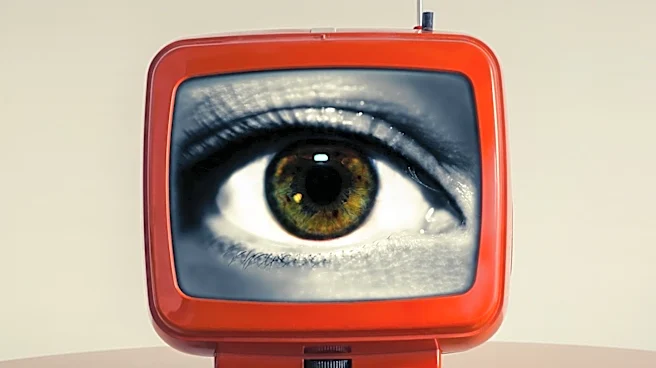
Allen B. DuMont's impact on television began long before the network bearing his name came into full operation. His most significant early contribution was the improvement of the cathode-ray tube in 1931, a fundamental component for displaying images on a screen. This enhancement was vital for the practical application of television technology. DuMont's inventive spirit didn't stop there; just seven years later, in June 1938, he achieved another milestone by manufacturing and selling the first commercially practical television set to the public. This Model 180 television receiver was an all-electronic set, notably preceding RCA's first TV set, which appeared in April 1939.
DuMont Laboratories, founded by Allen B. DuMont in 1931, became a hub for these innovations. The company was renowned for producing black and white televisions in the late 1930s, 1940s, and 1950s that were widely regarded for their highest quality and durability. Many of these premium sets offered advanced features for their time, often including a built-in AM/FM radio and a record player. Beyond television sets, DuMont's work also extended to other critical areas, including significant contributions to the development of radar, showcasing his broad influence in electronics and broadcasting. His successes in television picture tubes, TV sets, and components, combined with his involvement in commercial TV broadcasting, solidified his status as the first millionaire in the business.
From Lab to Licensed Network
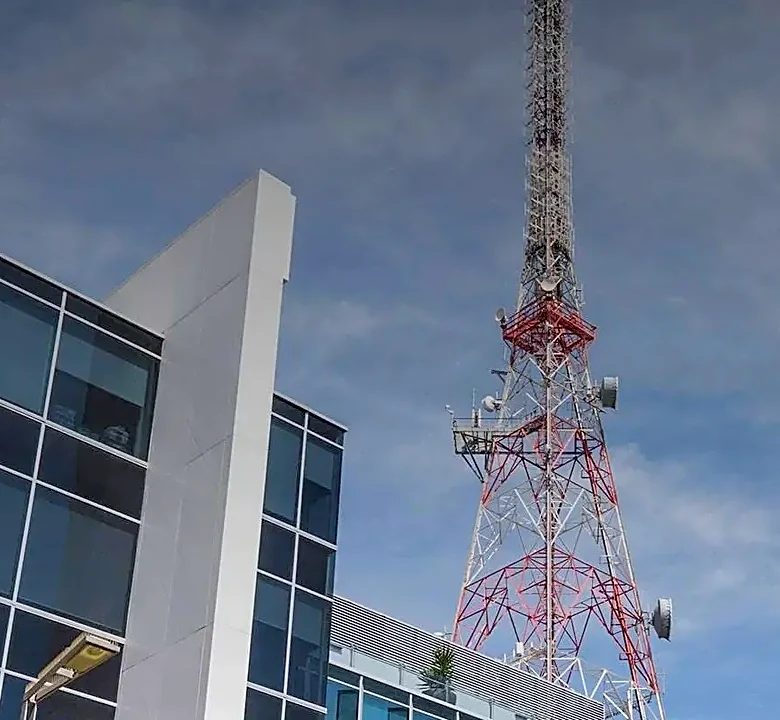
Building on his technological successes, Allen B. DuMont ventured into the realm of broadcasting, founding the DuMont Television Network in 1946. This network was notable for being the first television network to be licensed. Its initial formation involved linking station WABD in New York City with station W3XWT in Washington, D.C. WABD, which later became WNEW and then WNYW, was named directly for DuMont himself, a testament to his personal investment in the venture. The Washington, D.C. station, W3XWT, eventually became WTTG, named in honor of Thomas T. Goldsmith, DuMont's Vice President of Research and his close friend.
DuMont's commitment to television broadcasting was evident even during World War II. While other major networks like CBS and NBC reduced their television broadcasting efforts, DuMont continued both experimental and commercial broadcasts throughout the war. This steadfast dedication allowed the network to develop its capabilities and maintain a presence during a period when many others paused. The network's origins can be traced back to Passaic, New Jersey, with its first station, W2XWV, moving to Manhattan in 1940 and commencing broadcasts on April 13 of that year. By 1944, W2XWV had received its commercial license as WABD, becoming the third such license in New York, further cementing DuMont's pioneering role in the burgeoning television industry.
The Network's Challenges and DuMont's Enduring Legacy
Despite Allen B. DuMont's profound technological contributions and his personal wealth, the DuMont Television Network itself faced an uphill battle for financial success. A significant challenge was the absence of an already established radio network as a base, a benefit enjoyed by competitors like NBC and CBS. This meant DuMont had to build its television operations from scratch, without the pre-existing infrastructure, audience, or advertising revenue that a radio network could provide. This fundamental issue made it difficult for the network to achieve profitability.
After a decade of operation, the DuMont Television Network was shuttered in 1956. Allen B. DuMont sold what remained of his television operations to John Kluge, who subsequently renamed the entity Metromedia. Interestingly, Thomas T. Goldsmith, DuMont's long-time colleague and friend, remained on Metromedia's board of directors until Kluge sold the stations to the Fox Television Stations Group in 1986, coinciding with the formation of the Fox network. DuMont himself sold his television manufacturing division to Emerson Radio in 1958 and the remainder of his company to Fairchild Camera in 1960. Fairchild later played a crucial role in developing semiconductor microchips, with Robert Noyce, a co-founder of Intel, having originally worked for DuMont as an engineer. Thus, DuMont's influence extended far beyond his namesake network, impacting the broader electronics industry for decades.