


Robert Lee "Bob" Pettit Jr., a towering figure in early NBA history, established numerous statistical benchmarks and pioneered several achievements during his 11-season career with the Milwaukee/St. Louis Hawks from 1954 to 1965. His consistent high-level performance across scoring and rebounding categories set him apart, making him a statistical anomaly and a foundational player whose records stood for decades. Pettit's career was not just about
winning, but about redefining what was possible on the basketball court, particularly in an era when the league was still finding its footing.
Setting the Standard: MVP and Scoring Titles
Bob Pettit holds the distinction of being the first recipient of the NBA's Most Valuable Player (MVP) Award, which he earned in 1956. He would go on to win this prestigious award again in 1959, solidifying his status as one of the league's premier players. This early recognition underscored his immediate impact and consistent excellence. Beyond the MVP awards, Pettit was a prolific scorer, capturing his first scoring title in the 1955-56 season with an average of 25.7 points per game. He repeated this feat in 1959, demonstrating his sustained offensive firepower.
His scoring prowess was further highlighted by his career-best 31.1 points per game in the 1961-62 season. Pettit's league-leading scoring average of 29.2 points per game in the 1958-59 season was an NBA record at the time, a testament to his offensive capabilities. He was also a master of drawing fouls, with 6,182 of his 20,880 career points coming from free throws, accounting for nearly 30 percent of his total. This strategic element of his game allowed him to consistently contribute to his team's scoring efforts and put opponents in foul trouble.
Rebounding King and All-Star Dominance
Pettit's impact extended far beyond scoring; he was an equally dominant force on the boards. In the 1955-56 season, he led the league in rebounding with 1,164 total rebounds, averaging 16.2 per game. His career average of 16.2 rebounds per game remains third all-time, behind only Wilt Chamberlain and Bill Russell, placing him in elite company. Pettit was one of only five players in NBA history to break the 20 rebounds per game barrier in a season, achieving 20.3 rebounds per game in the 1960-61 season. He, along with Wilt Chamberlain, Jerry Lucas, and Nate Thurmond, are the only four players to average more than twenty points and twenty rebounds in an NBA season.
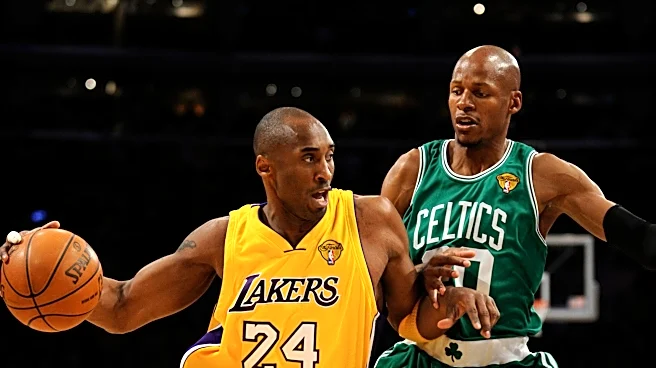
His rebounding dominance was particularly evident in the NBA All-Star Games. Pettit still holds the top two NBA All-Star Game rebounding performances, with 26 rebounds in 1958 and an astounding 27 in 1962. These performances contributed to his record-tying four All-Star Game MVP awards, a distinction he shares with Kobe Bryant. He was an NBA All-Star in each of his 11 seasons, a testament to his consistent high-level play and recognition across the league.
Enduring Legacy and NBA Milestones
Bob Pettit was the first NBA player to eclipse the 20,000 points mark, finishing his career with 20,880 points. This milestone underscored his incredible longevity and scoring consistency. His 12,849 career rebounds were the second-most in league history at the time of his retirement, further cementing his place among the game's greatest rebounders. Pettit's remarkable consistency is also highlighted by the fact that he averaged at least 20 points and 12 rebounds per game in every single one of his 11 NBA seasons, a feat of sustained excellence.
He never finished below seventh in the NBA scoring race throughout his career. Furthermore, no other retired player in NBA history, besides Pettit and Alex Groza (who played only two seasons), has averaged more than 20 points per game in every season they played. His numerous accolades include being named to the All-NBA First Team ten times and the All-NBA Second Team once. Pettit's enduring legacy is recognized by his induction into the Naismith Memorial Basketball Hall of Fame in 1970 and his inclusion in all four NBA anniversary teams (25th, 35th, 50th, and 75th), alongside other legends like Bob Cousy, George Mikan, and Bill Russell. These honors collectively affirm his status as a true pioneer and one of the most statistically dominant players in NBA history.