



Garrett Augustus Morgan Sr. (1877–1963) was an American inventor whose work profoundly impacted public safety, leaving a legacy that continues to benefit society. While he was a successful businessman in the hair care industry, Morgan's most significant contributions stemmed from his dedication to solving critical safety challenges. His inventions, particularly the protective "smoke hood" and the three-way traffic light, addressed pressing needs of his time
and demonstrated his innovative approach to preventing injury and saving lives. Morgan's story is not just one of invention, but also of overcoming societal barriers to ensure his life-saving devices reached those who needed them most.
The Genesis and Design of the Safety Hood
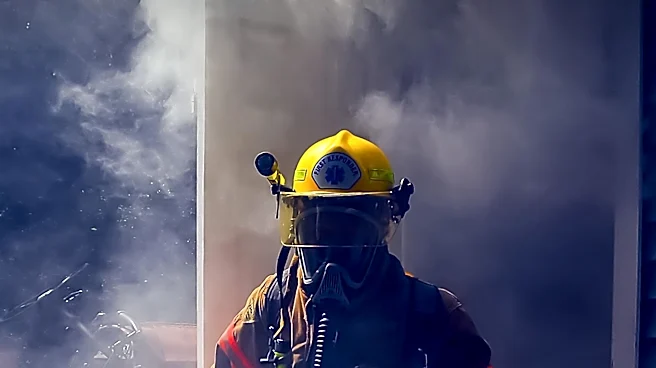
Garrett Morgan's invention of the "safety hood smoke protection device" was a direct response to the dangers faced by firefighters. Witnessing their struggles against suffocating smoke, Morgan was driven to create a solution. His patented design, introduced in 1914, was remarkably effective yet simple. The device incorporated a moist sponge to filter out smoke particles and cool the inhaled air. Crucially, it leveraged the natural tendency of smoke and fumes to rise, leaving a layer of cleaner air closer to the ground. To capitalize on this, the smoke hood featured a series of air intake tubes that extended downwards, drawing in more breathable air from the lowest possible level.
Morgan established the National Safety Device Company in 1914 to market his invention. He employed various strategies to promote the device, including hiring a white actor to present it, a tactic used to bypass racial prejudice that might hinder sales if his identity as a Black inventor were known. Morgan himself would sometimes adopt the persona of "Big Chief Mason," a purported Native American, for demonstrations. These demonstrations were often dramatic, involving him entering a tent filled with noxious smoke from burning tar, sulfur, formaldehyde, and manure, only to emerge unharmed after 20 minutes. The device quickly gained recognition, earning first prize at the Second International Exposition of Safety and Sanitation in New York City and later a gold medal from the International Association of Fire Chiefs, which also granted Morgan honorary membership.
The Heroic Cleveland Tunnel Rescue
The true efficacy and life-saving potential of Morgan's smoke hood were dramatically demonstrated during the Cleveland Waterworks Tunnel explosion on July 24, 1916. This disaster trapped numerous workers 50 feet beneath Lake Erie, and initial rescue attempts proved fatal for those who tried. Morgan was urgently summoned to the scene in the dead of night, bringing with him four of his Safety Hoods. Despite skepticism from many on-site, Morgan, his brother Frank, and two other volunteers bravely entered the smoke-filled tunnel. They successfully rescued two men who had been part of earlier, failed rescue efforts, with Morgan personally carrying a victim out on his back.
Their success spurred others to join, leading to the rescue of several more individuals. Morgan's device was also instrumental in recovering the bodies of those who perished. He made four dangerous trips into the tunnel, an act of heroism that impacted his health for years due to fume exposure. Despite his pivotal role, Cleveland officials and local newspapers initially downplayed or ignored Morgan's contributions, omitting his name from lists of heroes recommended for awards. Morgan believed this was racially motivated, a sentiment echoed by others who acknowledged the prejudice he faced. A group of Cleveland citizens later presented him with a diamond-studded gold medal in 1917 to recognize his bravery. However, national news coverage revealing his race led to the cancellation of orders from some southern cities, highlighting the racial barriers he continually encountered.
Revolutionizing Traffic Control: The Three-Way Traffic Light
Beyond the smoke hood, Morgan made another critical contribution to public safety with his invention of the three-way traffic light. In 1922, after witnessing a severe collision between a horse-drawn carriage and a car, Morgan was inspired to create a device that could prevent such accidents. His manually operated traffic signal, patented in 1923, featured moving arms displaying "stop" and "go" signals. A key innovation was the ability to raise the arms halfway to indicate caution, providing an intermediate warning state. The signal could be operated by an attendant cranking a post, allowing for all lanes to be stopped simultaneously when necessary. Morgan later sold the rights to his traffic signal to General Electric for $40,000, a substantial sum that underscored the value and foresight of his invention. This device laid foundational groundwork for modern traffic control systems, further cementing Morgan's legacy as a pioneer in public safety.