




The CSS Shenandoah, originally known as Sea King, embarked on a remarkable and extensive journey as a Confederate States Navy commerce raider during the American Civil War. Launched in August 1863 as a British merchant ship, it was acquired by the Confederate government in 1864 and subsequently renamed. Its mission was to disrupt the Union's economy by targeting merchant vessels, particularly whalers, across the globe. This twelve-and-a-half-month
raiding mission, spanning from 1864 to 1865, saw the Shenandoah capture and either sink or bond 38 merchant vessels, leaving a significant, albeit short-lived, impact on Union commerce.
From Merchant Ship to Warship
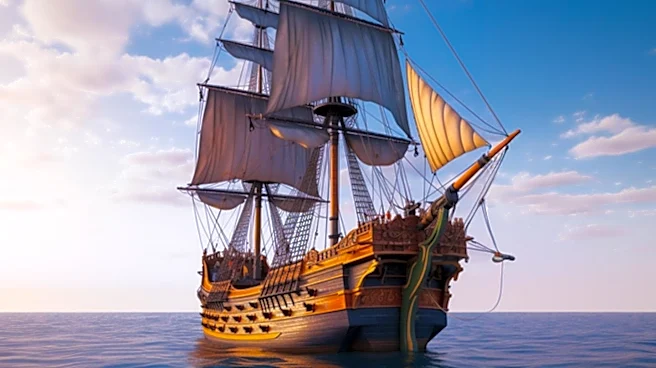
The vessel that would become the CSS Shenandoah began its life as the Sea King, a British merchant ship launched on August 17, 1863. It was a formidable vessel, described as an iron-framed, teak-planked, full-rigged sailing ship equipped with auxiliary steam power. Its initial purpose was to transport British troops to Asia. However, its destiny changed in 1864 when it was purchased by the Confederate government. On October 8, 1864, the ship departed London, ostensibly for a commercial voyage to Bombay. This was a ruse, as its true destination was Funchal, Madeira, where it was to rendezvous with the Confederate steamer Laurel.
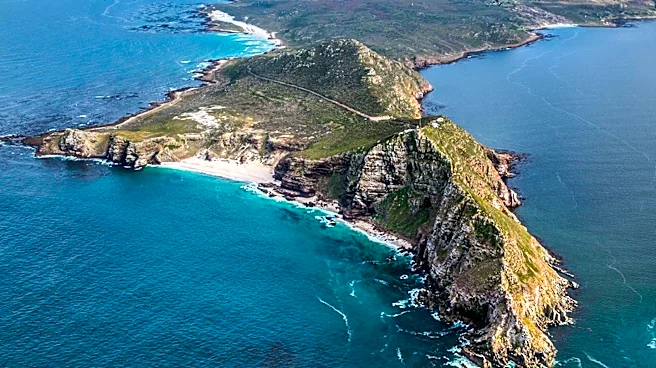
At Funchal, the transformation from merchant ship to warship began. A group of officers and sailors, intended to form the core of its future crew, boarded the vessel. Heavy arms, ammunition, and provisions were also loaded. Under the supervision of Lieutenant Commander James Iredell Waddell and his second-in-command, William Conway Whittle, the Sea King was converted into a cruiser in international waters near Funchal. It was armed with four 8-inch smoothbore cannons, two 32-pound rifled howitzers, and two 12-pound howitzers. Renamed Shenandoah, the newly commissioned Confederate cruiser received its patent on October 19, 1864, and set sail for Australia via the Cape of Good Hope.
The Global Raiding Mission
The Shenandoah's mission was clear: to "search for and totally destroy" Union interests in areas typically unthreatened. This involved cruising the Southern Cape routes, hunting merchant ships, and targeting North American sealers and whalers. The Confederate strategy aimed to cut off vital supplies to the Union, such as wheat and cotton imports from Australia, and whale and seal oil, which were crucial for fuel, chemical industries (including nitroglycerin for armaments), and even as an ingredient in soldiers' rations (margarine). By disrupting these supply lines, the Shenandoah sought to weaken the Union's industrial power.
Before reaching the Cape of Good Hope, the Shenandoah captured six merchant vessels. Five of these were either sunk or burned, while the sixth was used to transport all prisoners to Salvador de Bahia, Brazil. The cruiser then continued its journey, arriving in Melbourne, Australia, on January 25, 1865. Here, it underwent repairs to its hull, which had sustained damage during its encounters with Union ships, and took on provisions and reinforcements. Despite protests from the American Consul, who unsuccessfully demanded the arrest of the "rebel pirates," the British authorities facilitated the Shenandoah's stay, even hosting balls and receptions in honor of the Confederates.
Challenges and Continued Operations
One persistent challenge for the Shenandoah was its crew size. Even with volunteers from captured ships, the crew remained insufficient, and nineteen sailors deserted upon arrival in Melbourne. Some of these deserters even reported to the U.S. Consulate. Nevertheless, the Shenandoah departed Melbourne on February 18, 1865, amidst expressions of sympathy from the British community. Shortly after leaving Australian territorial waters, approximately forty stowaways were discovered on board, including the captain of an English merchant steamer. Waddell enlisted these new recruits, making the English captain his clerk.
In the Indian Ocean, the Shenandoah captured only one Union ship. However, in the Caroline Islands, a traditional hunting ground for North American whalers, the Confederate cruiser encountered and burned four whaling ships. The Shenandoah's extensive voyage covered 44,000 nautical miles over 12 months and 17 days under the Confederate flag, marking the first time the Stars and Bars circumnavigated the globe. Remarkably, there were no deaths or injuries among the crew during this arduous mission. The economic impact of the Shenandoah's actions was significant, with damages to the Northern commercial fleet estimated at $1,400,000 in 1865, equivalent to approximately $16 million today.