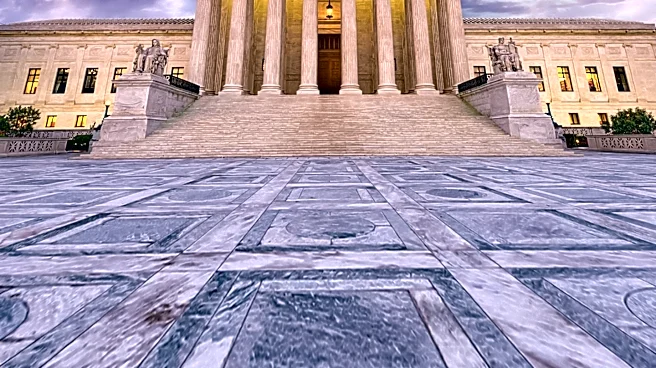









In 1990, the United States Supreme Court made a significant ruling in the case of United States v. Eichman, which addressed the contentious issue of flag desecration. This decision followed the Court's earlier ruling in Texas v. Johnson, which had invalidated a Texas statute banning flag burning. The Eichman case further solidified the Court's stance on the protection of symbolic speech under the First Amendment, specifically regarding the desecration of the American
flag.
Background of United States v. Eichman
The case of United States v. Eichman arose in response to the Flag Protection Act of 1989, which Congress passed following the Texas v. Johnson decision. The Act aimed to circumvent the Johnson ruling by prohibiting the mistreatment of the flag without regard to any message being conveyed. On the day the law took effect, protests erupted across the nation, leading to arrests in Seattle and Washington, D.C. In Seattle, demonstrators burned flags outside the Capitol Hill post office, while in Washington, D.C., Gregory Lee Johnson, the defendant in the Texas case, participated in a protest on the steps of the United States Capitol.
Federal district judges dismissed the charges against the protesters, citing the precedent set by Texas v. Johnson. The U.S. attorneys appealed these decisions, and the cases were consolidated into United States v. Eichman, serving as a test case for the amended statute.
The Supreme Court's Decision
In a narrow 5-4 decision, the Supreme Court invalidated the federal law against flag desecration, ruling it as a violation of free speech under the First Amendment. Justice Brennan, writing for the majority, emphasized that the federal government, like the states, could not prosecute individuals for flag desecration without infringing on their First Amendment rights. The Court acknowledged that the government's interest in preserving the flag's status as a national symbol was related to the suppression of free expression.
The majority opinion highlighted that the mere destruction of a symbol's physical manifestation does not diminish the symbol itself. The government's interest was implicated only when a person's treatment of the flag communicated a message inconsistent with the ideals the flag represents. The Court concluded that the Flag Protection Act's restrictions on expressive conduct could not be justified without reference to the content of the regulated speech.
Implications and Subsequent Developments
The ruling in United States v. Eichman reaffirmed the protection of symbolic speech, even when it involves actions as controversial as flag desecration. The decision underscored the principle that the government cannot prohibit the expression of an idea simply because it is offensive or disagreeable to society. Despite attempts to pass a Flag Desecration Amendment in Congress, which would grant the federal government the authority to prohibit flag burning, such efforts have consistently failed to pass the Senate.
The Eichman decision remains a pivotal moment in the ongoing debate over the balance between national symbols and free expression, illustrating the complexities of interpreting the First Amendment in a diverse and dynamic society.