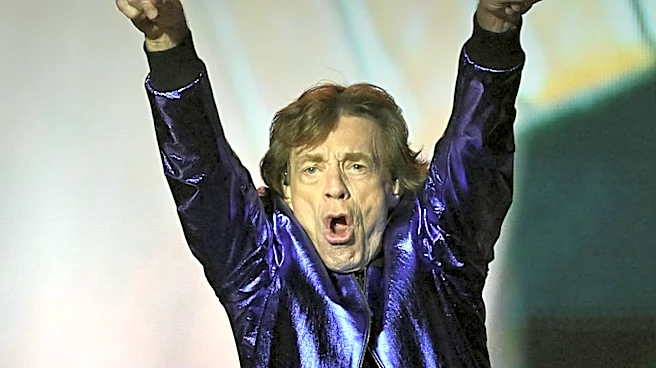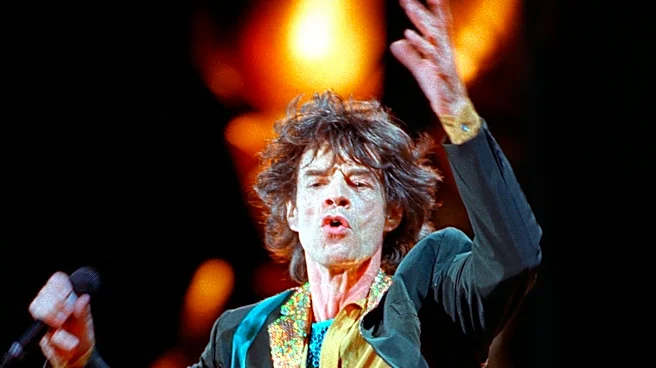




The Rolling Stones' American Tour in 1981, while a massive public success, had its origins in some internal band dynamics and required significant logistical and creative effort. Initially, singer Mick Jagger expressed disinterest in embarking on another tour. However, guitarists Keith Richards and Ronnie Wood, along with considerable pressure from the press and public, eventually persuaded Jagger to relent. This tour, promoting their album "Tattoo
You," would go on to become a landmark event, but its journey from conception to execution involved careful planning, unique stage design, and notable guest appearances, all managed by seasoned promoter Bill Graham.
Rehearsals and Unexpected Warm-Ups
Preparation for the ambitious tour began with rehearsals at Long View Farm in North Brookfield, Massachusetts, from August 14 to September 25, 1981. These intensive sessions were crucial for honing the band's performance. A warm-up show was secretly planned at the Sir Morgan's Cove club in Worcester, Massachusetts, on September 14. The band was billed under the pseudonym "Little Boy Blue & The Cockroaches" to keep the event low-key. However, word quickly spread, leading to an astonishing 11,000 fans pushing and shoving outside the small 300-capacity venue.
The unexpected crowd response prompted Boston Mayor Kevin H. White to intervene, halting any further notions of public rehearsals. He publicly stated that "The appearance here of Mr. Jagger is not necessarily in the public interest," highlighting the immense public frenzy surrounding the band, even for an unannounced, pseudonymous performance. This incident underscored the challenge of managing the band's colossal fame.
Elaborate Stage Design and Visuals
A key element contributing to the tour's spectacle was its elaborate and colorful stage design, conceived by Japanese designer Kazuhide Yamazaki. Jagger recalled the rationale behind the vibrant aesthetics: "Most concerts that took place outdoors at the time were played during the day... So we had the bright, bright primary colors... and we had these enormous images of a guitar, a car and a record—an Americana idea—which worked very well for afternoon shows." This thoughtful design ensured that the visual experience was impactful, even in daylight settings.
As the tour progressed, the stage show evolved to include even more dynamic elements. Many later shows featured a cherry picker, allowing band members to interact more closely with the audience, and concluded with the release of hundreds of balloons, adding a festive and memorable touch to the grand finale. These visual components were integral to creating the immersive and entertaining experience that characterized the 1981 American Tour.
Guest Appearances and Band Dynamics
The tour also featured several notable guest musicians, adding unique dimensions to the performances. Former Stones guitarist Mick Taylor joined the band for a significant portion of the performance at Kansas City's Kemper Arena on December 14. However, this reunion was not without its tensions, as Ronnie Wood reportedly expressed dissatisfaction with Taylor, noting he was "bulldozing through parts of songs that should have been subtle, ignoring breaks and taking uninvited solos."
Other esteemed guests included Tina Turner, who famously sang "Honky Tonk Women" with the band. Jagger acknowledged learning "a lot of things" from Turner, with whom he had previously toured in 1966 and 1969. Chuck Leavell, Tower of Power, and Sugar Blue also made appearances, enriching the musical tapestry of the tour. These collaborations highlighted the band's willingness to share the stage with diverse talents, further enhancing the tour's appeal and musical depth.