
Sergei Rachmaninoff's Piano Concerto No. 3 in D minor, Op. 30, stands as a monumental work in the classical piano repertoire, renowned for its technical demands and intricate structure. Composed during
the summer of 1909, this concerto marked a significant point in Rachmaninoff's career, showcasing his evolving compositional style and his prowess as a pianist. The journey of this piece, from its creation in Dresden to its highly anticipated premiere in New York City, reveals the composer's dedication and the initial reception of what would become one of his most celebrated works.
The Genesis of a Masterpiece
Rachmaninoff undertook the composition of his Third Piano Concerto in Dresden, completing it on September 23, 1909. This period was a fertile one for the composer, as he also worked on his First Piano Sonata and the tone poem *The Isle of the Dead* around the same time. The concerto was conceived with a clear purpose: to highlight the solo pianist as the central figure, a departure from his earlier works where the ensemble played a more integrated role. This focus on the soloist contributed to the concerto's reputation for being exceptionally piano-centric.
The structural complexity of the Third Concerto is notable, featuring advanced polyrhythms and rich textures throughout. While it echoes some of the structural elements of his Second Concerto, the Third further develops Rachmaninoff's distinctive writing style. According to critic Boris Asafiev, the Third Concerto moved beyond the "naive romantic features" found in his earlier compositions, including the Second Concerto, indicating a maturation in his musical language.
Preparing for the American Debut
With his first tour of the United States approaching, Rachmaninoff faced a significant challenge: time constraints prevented him from practicing the new concerto while still in Russia. Resourceful as he was, he found a unique solution. During his voyage to the United States, he brought a silent keyboard with him, allowing him to practice the demanding piece en route. This dedication underscores the technical difficulty of the concerto and Rachmaninoff's commitment to mastering it for its premiere.
The decision to premiere the work in New York City was strategic, coinciding with his American tour. This choice positioned the concerto for an international audience from its very first performance, setting the stage for its global recognition. The composer's personal involvement as the soloist further heightened the anticipation and significance of the event.
The New York Premiere and Early Performances
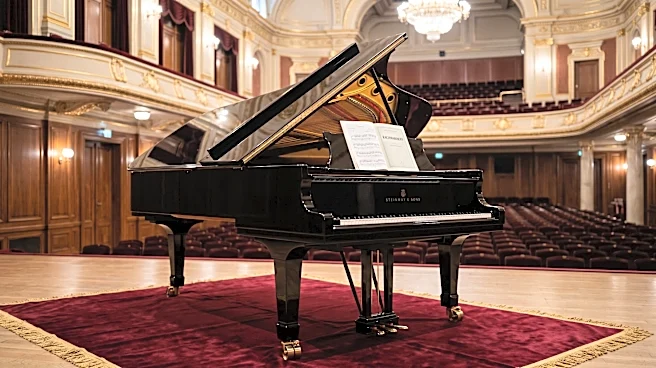
The world premiere of the Piano Concerto No. 3 took place on Sunday, November 28, 1909, at the New Theatre in New York City. Rachmaninoff himself was the soloist, accompanied by the New York Symphony Society under the direction of Walter Damrosch. This initial performance marked the introduction of the technically challenging work to the public, with the composer at the keyboard.
The concerto received a second significant performance shortly thereafter, on January 16, 1910, under the baton of Gustav Mahler. Rachmaninoff reportedly treasured this experience, suggesting a deep appreciation for Mahler's interpretation. Russian critic Grigory Prokofiev praised the new concerto, writing that it "mirrored the best sides of [Rachmaninoff's] creative power – sincerity, simplicity and clarity of musical thought." These early performances laid the groundwork for the concerto's enduring legacy, establishing it as a work of profound musical and technical merit.