








Mathematics education in the United States has been a battleground for differing philosophies, often characterized by a tension between "traditional" and "reform" approaches. In the early to mid-20th century, traditional mathematics education was the dominant method, emphasizing direct instruction and standard algorithms. However, this approach has faced significant challenges from reform movements, notably "new math" and later "standards-based mathematics"
influenced by the National Council of Teachers of Mathematics (NCTM). These ongoing debates, sometimes referred to as the "Math Wars," reflect fundamental disagreements about how mathematics should be taught and learned.
Traditional Mathematics: Foundations and Criticisms
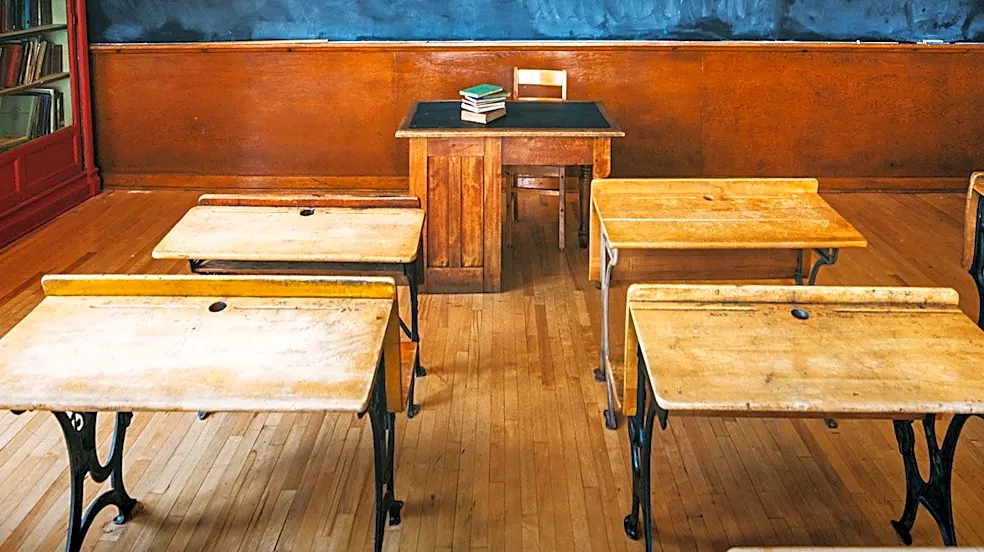
Traditional mathematics, prevalent in the U.S. for much of the 20th century, typically involved direct instruction where students were shown one standard method for performing a task, such as decimal addition, in a fixed sequence. Tasks were often taught in isolation rather than as components of larger projects. Key topics included elementary arithmetic (addition, subtraction, multiplication, division, fractions), with algebra and geometry reserved for high school, and statistics or calculus for college. This method is well-documented in textbooks focusing on standard arithmetic procedures.
Critics of traditional mathematics, often advocates of alternative methods, argue that it over-emphasizes memorization and repetition, failing to foster conceptual understanding or present mathematics as a creative and exploratory field. Studies have suggested instances where traditional instruction was less effective than alternative methods. Furthermore, some critics point out that the historical focus often centered on European advancements by men, potentially alienating minorities and women. Educators like Alan Schoenfeld question whether traditional methods truly teach mathematics as understood by professionals, suggesting students may perceive it as a collection of disconnected rules to be memorized.
The Rise of Reform Movements: New Math and NCTM Standards
Traditional mathematics has been challenged by several reform movements. "New math," a now largely abandoned set of alternative methods, emerged as an early challenge. More recently, reform or standards-based mathematics, grounded in NCTM standards, gained federal support and widespread adoption, though it continues to face criticism. Reform curricula often postpone standard methods until students have the necessary background to understand procedures, encouraging students to explore their own methods for solving problems, thereby deepening their understanding before being guided to standard algorithms.
This approach sometimes leads to parental concerns that children might not be taught formulas and standard algorithms, prompting calls for a return to traditional methods, particularly intense during the 1990s. However, modern curricula, influenced by reform principles, introduce basic algebraic reasoning (like recognizing patterns) in kindergarten and extend it through elementary school to concepts like the distributive law. Similarly, geometric shapes and properties are explored in primary school, and basic statistical ideas like organizing data with bar charts are introduced early on.
Seeking Common Ground: The Common Core Era
The "Math Wars" have seen a general cooling in the 21st century, as organizations like the NCTM and national committees, such as the National Mathematics Advisory Panel, have concluded that an effective approach combines elements from both traditional and reform mathematics. This includes mastery of basic skills and some direct instruction from traditional methods, alongside student-centered instruction, conceptual understanding, and problem-solving skills from reform mathematics.
The Common Core State Standards, adopted by most states since 2011, embody this mediating position. They require students to achieve both procedural fluency and conceptual understanding. While the Common Core does not endorse a specific teaching method, it suggests that students solve word problems using a variety of representations. This reflects a broader consensus that a balanced approach, integrating the strengths of both traditional and reform methodologies, is most beneficial for students' mathematical development.