







The Manhattan Project was a pivotal research and development program during World War II that led to the creation of the first atomic bombs. This massive undertaking was spearheaded by the United States, with significant contributions from the United Kingdom and Canada. The project not only marked a significant technological and scientific achievement but also had profound implications for global politics and warfare.
Origins and Early Development
The Manhattan Project officially
began in 1942, but its roots can be traced back to the early days of World War II. The project was initially a response to fears that Nazi Germany was developing nuclear weapons. The United States, recognizing the potential threat, decided to accelerate its own nuclear research efforts. The project was placed under the direction of Major General Leslie Groves of the U.S. Army Corps of Engineers, who played a crucial role in its organization and execution.
The project absorbed the earlier British nuclear research program known as Tube Alloys, which helped to consolidate efforts and resources. This collaboration was formalized through agreements between the U.S., the U.K., and Canada, ensuring a unified approach to nuclear development. The project's name, "Manhattan," gradually became synonymous with the entire endeavor, although it originally referred to the Army component known as the Manhattan District.
Key Developments and Achievements
The Manhattan Project was characterized by its vast scale and complexity. It employed over 130,000 people and cost nearly $2 billion at the time, equivalent to about $36.3 billion today. The majority of the project's budget was allocated to building factories and producing fissionable materials, with a smaller portion dedicated to the development and production of the weapons themselves.
Two types of atomic bombs were developed: a gun-type fission weapon using uranium-235 and a more complex implosion-type weapon using plutonium. The uranium enrichment process was primarily conducted at Oak Ridge, Tennessee, while plutonium production took place at reactors in Hanford, Washington. The Los Alamos Laboratory in New Mexico served as the principal research and design center for the bomb's development.
Legacy and Impact
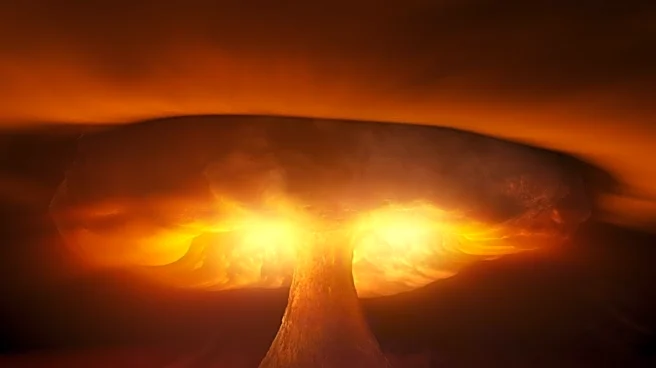
The Manhattan Project culminated in the successful detonation of the first atomic bomb during the Trinity test in July 1945. This was followed by the bombings of Hiroshima and Nagasaki in August 1945, which played a significant role in bringing World War II to an end. The project's success established the United States as a dominant nuclear power and ushered in the atomic age.
In 1947, the Manhattan Project was officially replaced by the United States Atomic Energy Commission, marking the end of its wartime operations. The project's legacy continues to influence global nuclear policy and remains a subject of extensive historical study and debate.