



The United States Declaration of Independence is not only a pivotal document in American history but also a fascinating artifact with a rich physical history. From its original drafting in 1776 to the discovery of historical documents in the 21st century, the Declaration has undergone various transformations and preservation efforts. This article delves into the physical journey of the Declaration, highlighting its drafts, copies, and the meticulous
care taken to preserve this national treasure.
Drafts and Early Copies
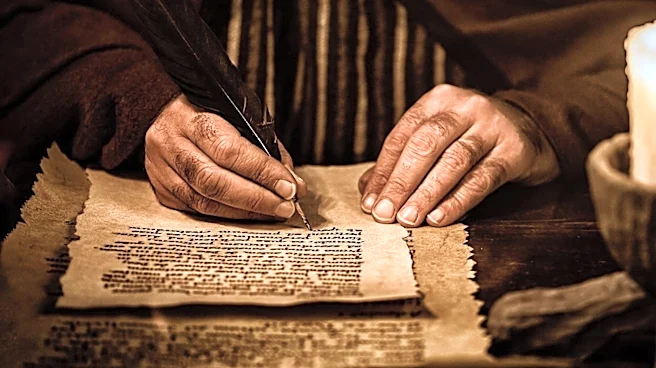
The earliest known draft of the Declaration of Independence is the "Composition Draft," written by Thomas Jefferson in July 1776. This fragment was discovered in 1947 by historian Julian P. Boyd in the Jefferson papers at the Library of Congress. Boyd's discovery confirmed that Jefferson had written more than one draft of the text, as historians had speculated. The Composition Draft contains parts of the Declaration's text and some unrelated notes by Jefferson. Many words from this draft were ultimately deleted by Congress from the final text.
Another significant draft is the "Rough Draft," preserved by Jefferson himself. Late in life, Jefferson referred to this four-page document as the "original Rough draft." Historians initially believed this was a draft written solely by Jefferson, but it is now thought to be a revised version completed after consultation with the drafting committee. Jefferson showed this draft to John Adams and Benjamin Franklin, who made additional changes. For example, Franklin may have altered Jefferson's phrase "We hold these truths to be sacred and undeniable" to "We hold these truths to be self-evident."
Preservation Efforts
The physical preservation of the Declaration has been a priority for historians and conservators. In 1995, conservators at the Library of Congress undid previous restoration work on the Composition Draft and placed it in a protective mat. The document is stored in a cold storage vault to ensure its longevity. When exhibited, the fragment is placed in a temperature and humidity-controlled display case, highlighting the care taken to preserve this historical artifact.
Forensic examination has revealed that the paper used for both the Composition Draft and the Rough Draft was made by the same manufacturer, adding another layer of historical intrigue. These preservation efforts ensure that the Declaration remains accessible for future generations to study and appreciate.
Modern Discoveries
The physical history of the Declaration continues to evolve with modern discoveries. In the early 21st century, a Composition Draft was found in a deaccessioned library book and sold at auction in 2025. This manuscript is the only known eighteenth-century copy of the Declaration held privately, showcasing the ongoing interest and value of this document.
These discoveries and preservation efforts underscore the Declaration's significance not only as a historical document but also as a physical artifact. The meticulous care taken to preserve its drafts and copies ensures that the Declaration remains a vital part of American heritage.