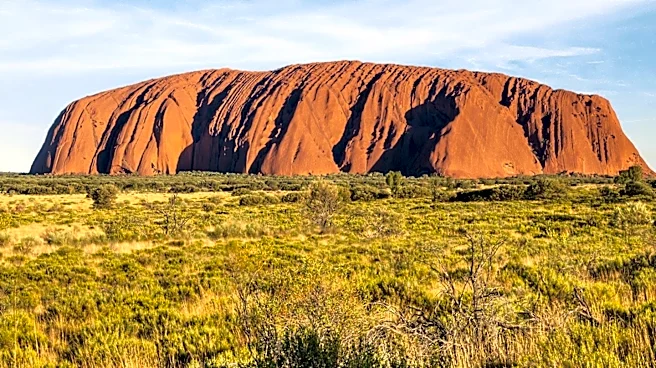






Uluru, a majestic sandstone monolith in Australia's Northern Territory, has undergone a significant transformation in its public identity. Once primarily known by its colonial name, Ayers Rock, it has increasingly become recognized by its traditional Aboriginal name, Uluru. This shift reflects a broader acknowledgment of Australia's indigenous culture and the deep spiritual connection the Anangu people have with this ancient landmark. The dual naming,
officially gazetted as Uluru / Ayers Rock, symbolizes a bridge between historical European exploration and the enduring heritage of the land's traditional custodians.
The Naming by European Explorers
The first recorded European sighting of the landmark occurred on July 19, 1873, when surveyor William Gosse encountered the massive rock formation. Gosse subsequently named it Ayers Rock, honoring Sir Henry Ayers, who was the Chief Secretary of South Australia at the time. This naming convention was typical of the era, where European explorers often bestowed names upon geographical features, often overlooking or supplanting existing indigenous names. For many years, Ayers Rock was the primary name by which the landmark was known to the wider world, particularly to tourists who began visiting the area in increasing numbers from the late 1930s.This period also saw the establishment of infrastructure to support tourism. The first vehicular track to Uluru was constructed in 1948, and tour bus services began in the early 1950s. In 1958, the area was excised from the Petermann Aboriginal Reserve to be managed by the Northern Territory Reserves Board as the Ayers Rock – Mt Olga National Park, further cementing the colonial name in official use. The first permanent accommodation was built that same year, and a new airstrip facilitated fly-in, fly-out tour groups, all under the banner of Ayers Rock.
Reclaiming the Indigenous Name and Cultural Significance
The local Anangu people, specifically the Pitjantjatjara, have always referred to the landmark as Uluṟu. This word is a proper noun in their dialect and is used as a local family name by the senior traditional owners of Uluru. It carries profound cultural weight, representing a continuous connection to the land that spans thousands of years. The Anangu believe that their culture was created at the beginning of time by ancestral beings, and Uluru provides physical evidence of the feats performed during this creation period. To them, Uluru is not just a rock but a place name with numerous landmarks where ancestral beings interacted with the landscape, some believed to still reside there.The movement towards recognizing and prioritizing the name Uluru gained momentum as Australia began to acknowledge its indigenous heritage more fully. The official gazetting of the name as Uluru / Ayers Rock signifies a dual recognition, but the emphasis has increasingly shifted towards Uluru. This change reflects a broader societal effort to respect and integrate Aboriginal culture into the national identity. Uluru has become a focal point for Australia and the world's acknowledgment of Australian indigenous culture, serving as a powerful symbol of reconciliation and cultural pride.
Joint Management and Cultural Preservation
The shift in naming is part of a larger effort to empower the Anangu people in the management and preservation of their ancestral lands. In 1985, the traditional owners were presented with the freehold title deeds for the Uluru-Kata Tjuta National Park. In turn, they leased the land back to the Australian Government for 99 years, establishing a unique joint management arrangement. This partnership between the Anangu and Parks Australia ensures that the park is managed in a way that respects both its natural values and its deep cultural significance.Through this joint management, the Anangu actively participate in informing visitors about the local flora and fauna, bush foods, and the Aboriginal Dreamtime stories of the area. This direct engagement allows for the authentic sharing of their culture and traditions, reinforcing the idea that Uluru is not merely a tourist attraction but a living cultural landscape. The park's designation as a UNESCO World Heritage Site in 1987 for both natural and cultural landscape further solidifies its importance as a place where indigenous heritage is celebrated and protected for future generations.