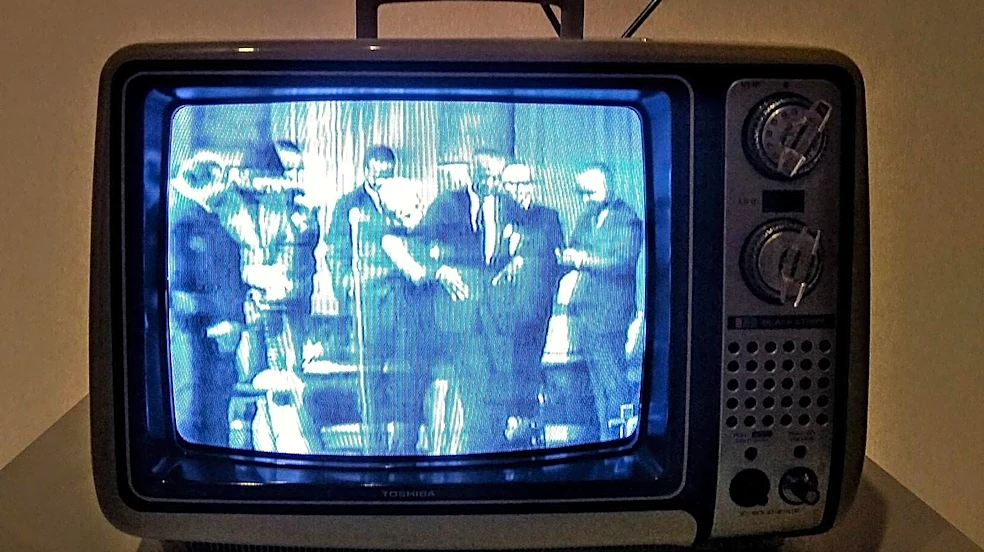




The 1960 United States presidential election marked a pivotal moment in American political history, largely due to the introduction of televised presidential debates. These debates, featuring Republican nominee Richard Nixon and Democratic nominee John F. Kennedy, were the first series of their kind for any U.S. presidential election. They set a precedent that would eventually lead to debates becoming a regular and expected feature of all presidential campaigns,
though the next one wouldn't occur until 1976. The format and presentation of these initial encounters had a significant impact, not only on the election itself but also on the future of political communication.
Setting the Stage: The First Televised Debates
Before 1960, presidential candidates did not engage in televised debates. The decision to hold four such debates between Nixon and Kennedy was a groundbreaking move, transforming how the American public engaged with presidential campaigns. The first debate took place on Monday, September 26, 1960, at the WBBM-TV studios in Chicago, Illinois. This initial encounter was moderated by Howard K. Smith of CBS, with a panel of journalists including Sander Vanocur, Charles Warren, Stuart Novins, and Bob Fleming. Questions during this debate were specifically restricted to internal or domestic American matters, setting a focused agenda for the candidates.
The format for the first debate included eight-minute opening statements from each candidate, followed by two-and-a-half-minute responses to questions, and an optional rebuttal period. Each candidate also delivered three-minute closing statements. This structured approach aimed to provide both candidates with ample opportunity to articulate their positions while also allowing for direct engagement with questions from the press. The visual aspect of this debate proved particularly impactful, as Nixon's appearance, without make-up and sweating under the studio lights, contrasted sharply with Kennedy's more polished presentation, leading to immediate public commentary.
Evolution of Debate Formats
Following the first debate, the series continued with three more encounters, each with slight variations in format and focus. The second presidential debate occurred on Friday, October 7, 1960, at the WRC-TV studios in Washington, D.C., moderated by Frank McGee of NBC. The third debate, on Thursday, October 13, 1960, was unique in its virtual setup, with Nixon in Los Angeles, California, and Kennedy in New York City, New York, both at ABC studios. Bill Shadel of ABC moderated this debate, with a panel of journalists including Frank McGee, Charles Von Fremd, Douglass Cater, and Roscoe Drummond. To ensure fairness, the journalists and Nixon were placed in separate studios, and both candidates were situated without aides in studios described as "identical in every detail." A major topic of this debate was the potential use of military force to prevent Quemoy and Matsu, two island archipelagos, from falling under Communist control.
This third debate notably featured no opening or closing statements, with candidates questioned in turn for two and a half minutes to answer, and one and a half minute rebuttals being optional. This format emphasized direct questioning and response. The fourth and final presidential debate, held on Friday, October 21, 1960, at the ABC studios in New York City, New York, returned to a more comprehensive structure. Moderated by Quincy Howe of ABC, with panelists Frank Singiser, John Edwards, Walter Cronkite, and John Chancellor, this debate focused on foreign affairs. It included eight-minute opening statements, two-and-a-half-minute answers to questions, one-and-a-half-minute rebuttals, and three-minute closing statements. The entire series of debates, particularly their televised nature, marked a monumental step for television's role in American politics.