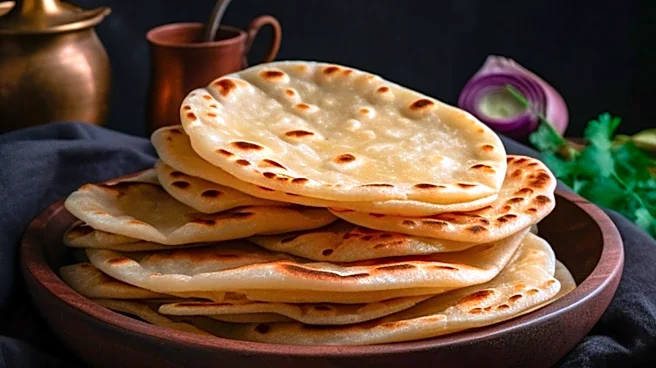








Lavash, a thin, soft flatbread, holds a significant place in the culinary traditions of numerous countries across the Caucasus, Western Asia, and beyond. Made from flour, water, yeast, and salt, this versatile bread is not just a food item but also a symbol deeply woven into the social fabric of many communities. Its presence spans Armenia, Azerbaijan, Georgia, Turkey, Iran, and Afghanistan, and it can even be found in areas with a strong Armenian
diaspora, such as California, Spain, and southern France. The preparation and consumption of lavash reflect ancient traditions and continue to play a vital role in daily life, from simple meals to elaborate ceremonies.
The Widespread Presence and Preparation of Lavash
Lavash is a common bread in many cuisines, including Georgian, Azerbaijani, Turkish, and Kashmiri. In Eastern Georgia, it is a staple alongside another wheat bread called shoti. It is one of the few foods shared between Armenian and Georgian culinary traditions. In Azerbaijan, lavash is widely consumed, including by Kurdish communities. Turkish cuisine also features lavash as one of its most common flatbreads, with grill restaurants often serving an oblong version cooked to form a pocket, similar to pita, typically accompanied by tulum cheese. In rural areas of Turkey, lavash cooked on a saj is more prevalent. Kashmiri cuisine incorporates lavash, known as lawaas, which is frequently eaten with butter and jam or used as a wrap.
The preparation of lavash traditionally involves rolling and flattening the dough before baking it by pressing it against the hot walls of a clay oven, known as a tonir in Armenian or tondir in Azerbaijani. This method of baking is still practiced in Iran, Afghanistan, Azerbaijan, Armenia, and Georgia. The bread can be square, rectangular, or circular, sometimes as thin as a millimeter and nearly a meter long. While fresh, lavash is soft, but it becomes crispier as it hardens. Some types of lavash can be stored dry for weeks or even months, making it a practical food for military marches, travels, and nomadic pastoralists. Dried lavash can be rehydrated by lightly moistening it, making it ready to eat.
Culinary Versatility and Serving Traditions
Lavash's versatility in serving is extensive. It can be eaten plain or with various accompaniments such as folded cheese, soups, cream, butter, or khorovats, a type of barbecue. It is commonly used for wraps with fillings like cheese, greens, or meats, including kebabs or kofta. In Armenia, lavash is used to wrap khorovats for lunch or dinner, and tarragon-spiced eggs are wrapped in it for breakfast. In Turkey, lamb or beef is wrapped in lavash to prepare tantuni, a specialty from Mersin. Kashmiri cuisine features masala lavasa, a lavash wrap with barbecued meat and chickpeas.
Beyond wraps, lavash serves other culinary functions. It can be used to scoop up food or wrap around dishes before eating, a common practice in parts of the Iranian plateau where it is considered central to the meal. It is also served with dips like hummus or muhammara. In Armenia, dried lavash is broken into pieces for stews such as khash, a hoof meat stew, which can also be eaten with soft lavash instead of a spoon. Another Iranian preparation involves mashing hard lavash with butter to form bite-sized balls. Turkish cuisine even incorporates lavash into sweet dishes, serving it alongside desserts like kaysefe, hasude, pestil kavurması (braised fruit leather), ağuz, and helva.
Cultural Significance and Symbolic Roles
Lavash transcends its role as mere sustenance, holding deep cultural and symbolic meaning in many societies. In 2014, UNESCO recognized "Lavash, the preparation, meaning and appearance of traditional bread as an expression of culture in Armenia" on its list of intangible cultural heritage. This highlights its importance as a cultural expression. In Armenia, lavash is a staple, accounting for 16.9% of national bread intake, or 54 grams daily per capita, and is often prepared fresh in restaurants.
Its significance extends to life's major events. Lavash is a traditional wedding food in several countries. In Armenian weddings, a lavash is placed on the couple's shoulders to symbolize luck, wealth, and fertility. In Azerbaijan's Sabirabad District, a mother-in-law places lavash on the bride's shoulder upon her arrival at her new home, wishing her wealth and good fortune. After funerals in Novkhani, Azerbaijan, it is customary to prepare kyulchya, sometimes consisting of halva wrapped in lavash. Lavash is also used in Armenia to swaddle babies. An Armenian magical belief suggests that to ward off evil from a child, a mother can bake a person-shaped lavash from flour contributed by seven families and place it under the child's pillow. This rich tapestry of uses underscores lavash's profound cultural impact.