

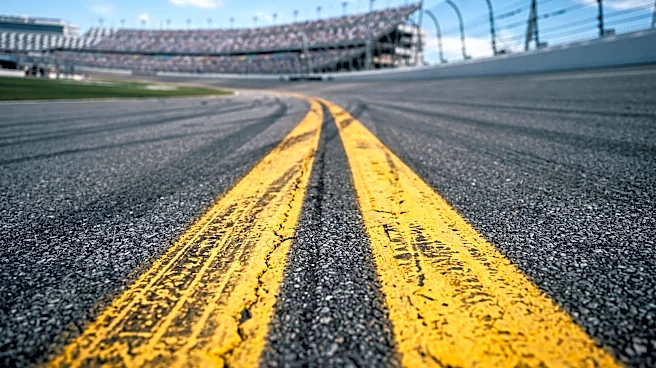

The Daytona 500 Experience, formerly known as Daytona USA, served as an interactive motorsports attraction and museum located at Daytona International Speedway in Daytona Beach, Florida. This destination-style museum was intrinsically linked to the Daytona 500, primarily focusing on exhibits related to NASCAR. However, its scope also extended to other significant events held at the speedway, including the Daytona 200 motorcycle race, the 24 Hours
of Daytona, and even the historical Daytona Beach & Road Course. It offered visitors a unique opportunity to delve into the rich history and excitement of motorsports.
From Visitors' Center to Interactive Museum
Prior to 1996, Daytona International Speedway featured a more modest two-story visitors' center. This earlier facility, located outside the oval's fourth turn, housed a ticket office and a small collection of racing memorabilia on its first floor, while the second floor displayed photographs of past Daytona 500 winners. Track tours were also offered on open-air trams. In mid-to-late 1995, this visitors' center closed to make way for a new, more ambitious project.The new interactive museum, Daytona USA, opened its doors in July 1996 during the Pepsi 400. This attraction quickly gained recognition, earning the Themed Entertainment Association's Thea Award of Outstanding Achievement in September 1997. The facility underwent an expansion of 10,000 square feet in July 2001, which included the addition of two motion simulators: an IWERKS motion simulator ride called Daytona Dream Laps and the full-motion simulator Acceleration Alley. A third simulator, Toyota Tundra's Thunder Road, was added in 2003. In 2006, to celebrate its tenth anniversary, the Daytona 500 Champion's Walk of Fame was added to the walkway in front of the building. On July 1, 2007, Daytona USA was officially rebranded as the Daytona 500 Experience.
Preserving the Legacy: The Winning Cars
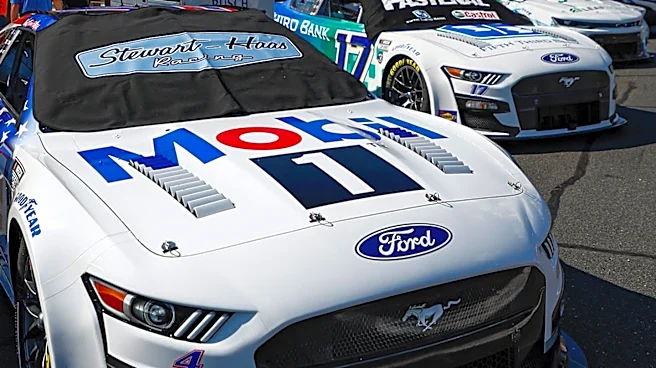
A distinctive feature of the Daytona 500 Experience was its role in preserving the history of the Daytona 500 through the display of its winning cars. Since 1997, the victorious car from each Daytona 500 was impounded and displayed at the museum for the subsequent twelve months. This practice required all winners, as explicitly stated on the race entry form, to surrender their winning car and all its parts in an uncleaned, complete, and unaltered condition. This contractual obligation often drew criticism from participants, who argued that it prevented them from using a successful chassis in other races during the season, potentially putting them at a competitive disadvantage, particularly in other restrictor plate races.Despite these concerns, only twice since 1997 did a Daytona 500 winner, after surrendering their car, go on to win the next restrictor plate race (Talladega): Jeff Gordon in 2005 and Jimmie Johnson in 2006. By the time a winning car was returned to its team, approximately 364 days after its victory, it was typically considered obsolete and a write-off. The morning after the race, the winning car was formally inducted into the museum during the Champion's Breakfast ceremony. In some years, the driver's helmet, driving suit, or other race-used paraphernalia were also included for display, further enriching the exhibit. The winning driver also had the honor of unveiling the logo for the following year's Daytona 500, cementing their place in the race's ongoing legacy.