






The 1968 Summer Olympics in Mexico City showcased a remarkable display of athletic prowess, particularly in the swimming events. Among these, the women's 100 meter freestyle stood out as a testament to the strength of the United States swimming program. Held between October 18 and 19 at the Alberca Olímpica Francisco Márquez, this event saw American swimmers sweep all three medal positions, a significant achievement that underscored their preparation
and skill on the international stage. The competition involved 57 athletes from 27 different nations, all vying for Olympic glory in a race that demanded both speed and endurance over two lengths of a 50-meter pool.
A Clean Sweep on the Podium
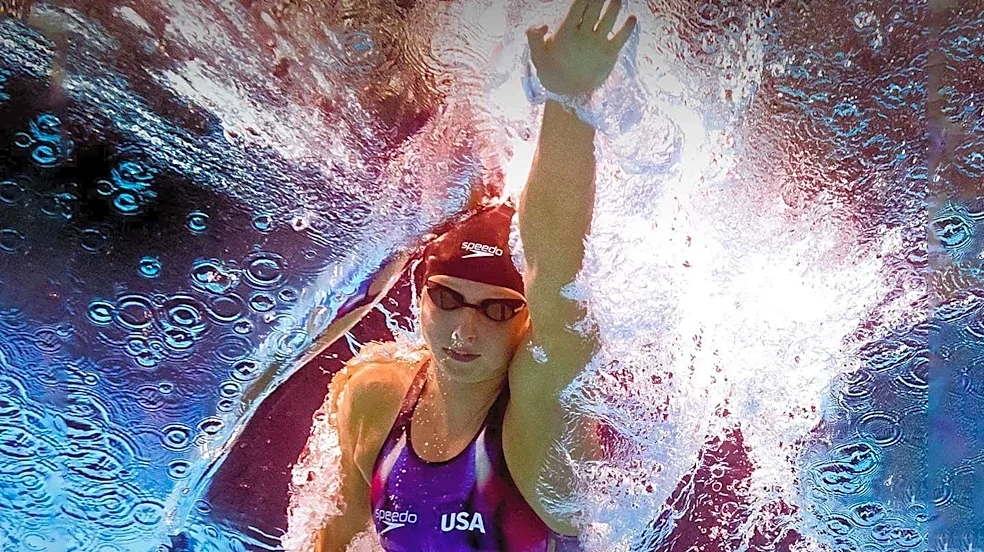
The final results of the women's 100 meter freestyle were a clear indication of American dominance. Jan Henne secured the gold medal with an impressive time of 1:00.0, leading the field. Hot on her heels were her compatriots, Susan Pedersen and Linda Gustavson, who both finished with identical times of 1:00.3. Pedersen was awarded the silver medal, while Gustavson earned the bronze, completing an all-American podium. This clean sweep meant that the United States claimed every available medal in this prestigious event, a rare and celebrated feat in Olympic competition.
This outcome was not just a win for individual athletes but a powerful statement about the depth of talent within the U.S. swimming contingent at the 1968 Games. The ability of three swimmers from the same nation to outperform competitors from 26 other countries speaks volumes about the training, coaching, and competitive environment that fostered such success. The narrow margins between the silver and bronze medalists, both clocking 1:00.3, highlight the intense competition even among teammates striving for Olympic honors.
The Nature of Freestyle Swimming
The women's 100 meter freestyle event, by its very definition, offers swimmers a unique degree of freedom compared to other strokes. Unlike backstroke, breaststroke, or butterfly, where specific techniques are mandated, freestyle allows competitors to use any stroke they choose. In practice, this almost universally translates to the front crawl, or a variation of it, due to its efficiency and speed. This particular race required swimmers to complete two lengths of the 50-meter Olympic-size pool, demanding a powerful start, sustained speed, and a strong finish.
The strategic element of the 100-meter race involves managing energy effectively over a relatively short but intense distance. Swimmers must balance an all-out sprint with maintaining proper form and breathing. The fact that Jan Henne was able to achieve a time of exactly one minute, a benchmark in swimming, further emphasizes the high level of performance exhibited by the medalists. The event itself, taking place over two days with heats, semifinals, and finals, tested the athletes' consistency and ability to perform under pressure multiple times.
International Competition and Notable Performances
While the United States took the top three spots, the final race featured a strong international field. Marion Lay of Canada finished fourth with a time of 1:00.5, just two-tenths of a second behind the bronze medalist, indicating a very close contest for the podium. Martina Grunert from East Germany and Alexandra Jackson from Great Britain tied for fifth place, both recording times of 1:01.0. Mirjana Šegrt of Yugoslavia and Judit Turóczy of Hungary rounded out the top eight finalists with times of 1:01.5 and 1:01.6, respectively.
These results demonstrate the global nature of Olympic swimming and the high caliber of athletes participating from various nations. Even though the U.S. secured the medals, the presence of swimmers from Canada, East Germany, Great Britain, Yugoslavia, and Hungary in the final underscores the worldwide competition and the pursuit of excellence in the sport. The 1968 women's 100 meter freestyle final was a showcase of elite swimming talent, with the American team ultimately achieving a memorable and dominant performance.