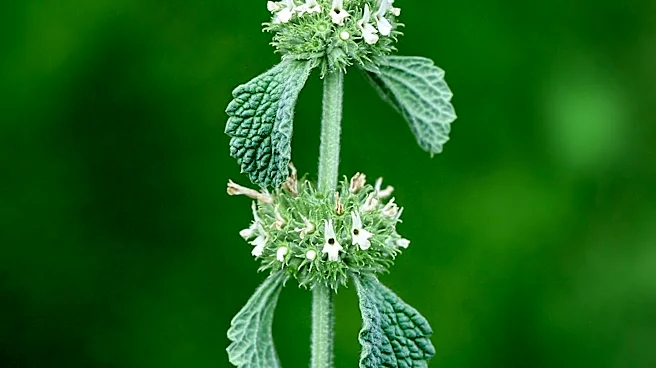

Catnip, scientifically known as *Nepeta cataria*, is a plant with a remarkable global footprint. While its origins are firmly rooted in specific regions of Eurasia, this perennial herb has demonstrated
an impressive ability to naturalize across vast stretches of the world. Its journey from its native lands to becoming a common sight in diverse ecosystems highlights its adaptability and resilience. Understanding its geographical spread provides insight into the plant's biological success and its interaction with various environments.
Native Strongholds in Europe and Asia
According to Plants of the World Online, the native range of catnip encompasses a significant portion of Eurasia. In Europe, it is definitively native to the southern regions around the Mediterranean and in the east. Specifically, it is identified as native in countries such as Portugal, Spain, France, Corsica, Italy, Switzerland, the former Yugoslavia, Albania, and Greece. Moving eastward, its native presence extends to Bulgaria, Romania, Ukraine, Belarus, European Russia, and the Caucasus region. However, its native status in northern European countries like the Baltic Countries, Germany, the Netherlands, and the United Kingdom is a subject of some disagreement among sources.In Asia, catnip's native range stretches from Turkey, through Syria, Lebanon, and Iraq. It continues eastward into Iran and Pakistan, reaching the western Himalayas, though it does not extend further into India. All of Central Asia, including Afghanistan, Kazakhstan, Kyrgyzstan, Tajikistan, Turkmenistan, and Uzbekistan, is part of its native territory, and its presence also reaches western Siberia. The plant's native status in China, the Russian Far East, Nepal, Korea, and Japan, however, remains disputed. There is also a doubtful report of its native presence in Morocco, Africa.
Naturalization Across Continents
Beyond its native range, *Nepeta cataria* has become widely naturalized in many parts of the world, demonstrating its capacity to thrive in new environments. In northern Europe, where its native status is sometimes debated, it is generally agreed to be an introduced species in Scandinavia and Poland, and it may also grow in Ireland. This widespread naturalization indicates its ability to adapt to different climates and ecological conditions.Its journey across the globe includes significant establishment in the Southern Hemisphere. In Australia, catnip has been reported in the states of South Australia, New South Wales, Victoria, Queensland, and Tasmania. New Zealand also hosts naturalized populations, with the plant having been introduced there in 1870 and now growing on both the north and south islands. This expansion into new continents showcases its successful dispersal and establishment.