






The Situation: A Crowded Backfield
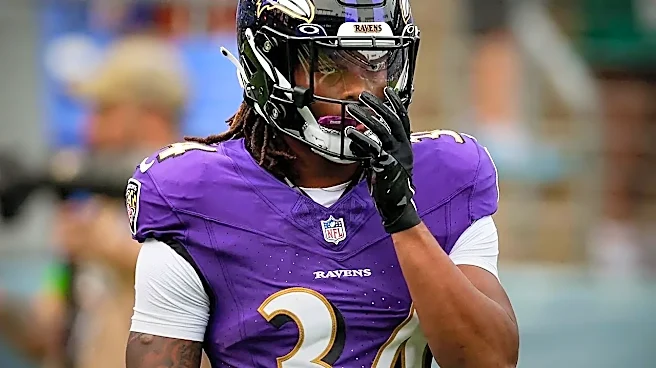
First, let's set the scene in Baltimore. The Ravens' running back room is a complicated place. With Derrick Henry handling the primary early-down and goal-line work, finding consistent fantasy value behind him has been a challenge. Hill isn't a traditional
'handcuff' who would simply inherit the entire workload if Henry were to miss time. Instead, he operates in a specific, but potentially valuable, role as the team's primary passing-down and third-down back. This was evident in recent weeks, where he has seen a significant snap share, even leading the backfield at times. In the Week 8 game against Buffalo, for example, Hill played 49% of the offensive snaps compared to Henry's 45%. This usage pattern is the entire basis for his fantasy relevance.
The Bull Case: The PPR Upside
The reason we're even having this conversation is Hill's role in the passing game, which is fantasy gold in PPR (Points Per Reception) formats. While Henry is a force on the ground, he isn't a high-volume receiver. Hill, on the other hand, is the clear favorite for that work. Through the first nine weeks of the season, he has been targeted 28 times, catching 20 of those passes. His target share has been trending up, seeing a significant spike in recent games. This passing-down role gives him a higher weekly floor in PPR leagues than a standard-league manager might expect. If the Ravens find themselves playing from behind, Hill's snap count and target volume could increase significantly as the team is forced to throw. We saw a glimpse of his big-play ability in Week 9, when he had 12 total touches, including a long touchdown run. That kind of dual-threat usage, even in limited doses, makes him an intriguing asset.
The Bear Case: Inconsistent Touches and TD Dependence
Now for the dose of reality. While the snap share is encouraging, Hill's touch volume can be frustratingly inconsistent. He is averaging just over three carries per game on the season. His value is heavily tied to game script and receiving work, which can vanish in games where Baltimore establishes an early lead and leans on Henry to grind the clock. In those scenarios, Hill might only see a handful of touches, leaving you with a disappointing fantasy score. Furthermore, he is not the primary option near the goal line, which caps his touchdown upside. His recent touchdown in Week 9 was a long run, not a goal-line plunge. Relying on a player who needs long gains or a high volume of receptions to be fantasy-relevant is a risky proposition, especially as you head toward the fantasy playoffs. He is best viewed as a flex-level player with a volatile weekly output, not a set-and forget starter.
The Verdict: Who Should Add Him?
So, is he worth a look? The answer depends entirely on your league format and roster construction. In standard or halfPPR leagues, Hill is likely a lowupside stash, best left for deeper leagues. His lack of consistent rushing volume and goalline work makes him a difficult player to trust. However, in fullPPR leagues of 12 teams or more, he becomes a much more compelling waiver wire target. If you are weak at the running back position or need a byeweek fillin with a decent receiving floor, Hill fits the bill. He's the type of player who could win you a week with a handful of catches and a broken tackle, but could also give you a quiet 4point game. Think of him not as a potential RB1, but as a strategic depth piece who has a defined role in his offense. His value is tied directly to receptions, making him a matchupandformatdependent play for the remainder of the 2026 season.