





The Resume of a Titan
Before we get into the debate, let's establish the facts: Bob Pettit’s resume is bulletproof. Over 11 seasons with the Hawks, he never averaged fewer than 20 points and 12 rebounds. He was an All-Star every single year of his career. He won the league's
first-ever MVP award in 1956 and grabbed another in 1959. He was the first player in NBA history to score 20,000 points. More than just numbers, he was a winner. The crowning achievement of his career came in 1958 when he led the St. Louis Hawks to an NBA Championship, dethroning Bill Russell's mighty Boston Celtics. In the title-clinching Game 6, Pettit was otherworldly, pouring in 50 points to secure a one-point victory. By every metric of his day, he wasn't just a star; he was a supernova.
A Different Game, A Different World
This is where the debate begins. The NBA that Pettit dominated was, in many ways, a different sport. When he was drafted in 1954, the league was unstable, shrinking to just eight teams for a period. This concentration of talent is a double-edged sword in legacy arguments. On one hand, he faced the best of the best every night; on the other, the overall talent pool was minuscule compared to today. The game itself was also wildly different. The frantic pace of play led to more possessions, more shots, and, consequently, more rebounds and points, inflating the box scores of the era's stars. Critics often point to the limited archival footage, which shows a game with less sophisticated defense and a noticeable lack of the explosive athleticism that defines the modern NBA. This has led to the common, if dismissive, critique that players of Pettit's time competed against "plumbers and firemen," a comment that Pettit himself has called "stupid."
The Case Against Greatness
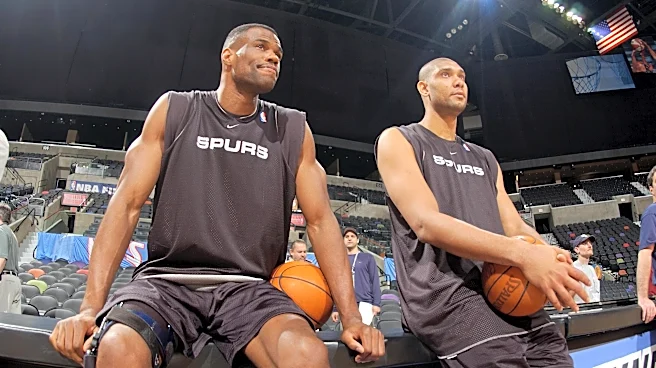
For modern NBA fans and analysts, the argument against placing Pettit in the uppermost echelon of all-time greats rests on this lack of context-adjusted dominance. While his rebounding numbers are staggering—his career average of 16.2 per game is third all-time—the game's pace and lower shooting percentages created far more rebounding opportunities. Furthermore, while he is lauded for beating Russell's Celtics, skeptics quickly point out that Russell was significantly hampered by an ankle injury during that 1958 Finals series, missing two full games and playing injured in another. When comparing Pettit to later power forwards like Tim Duncan, Karl Malone, or Dirk Nowitzki, the debate shifts to skill set and athletic translation. The question becomes: could Pettit's game, built on relentless offensive rebounding and a solid-but-not-transcendent face-up game, dominate in an era of three-point shooting, complex defensive schemes, and world-class athletes at every position? For many, the answer is a definitive no.
The Pioneer's Enduring Defense
The defense of Pettit's legacy is simple and powerful: you can only dominate the era you play in, and no one questions that he did just that. He was a pioneer who essentially defined the power forward position. Before him, big men were almost exclusively back-to-the-basket players. Pettit combined relentless hustle, a deadly outside shot for his time, and an instinct for the ball that was second to none. He was named to an All-NBA team in every single one of his 11 seasons—ten times to the First Team. That level of sustained excellence is incredibly rare. The 1958 championship, injury asterisk or not, remains a monumental achievement; it was the only title Bill Russell's Celtics failed to win during a 10-year stretch. He was the undisputed best player on a championship team and consistently performed at an MVP level. To discount his accomplishments because of the era is to punish a player for being born too soon.