






An Old-School Rollercoaster
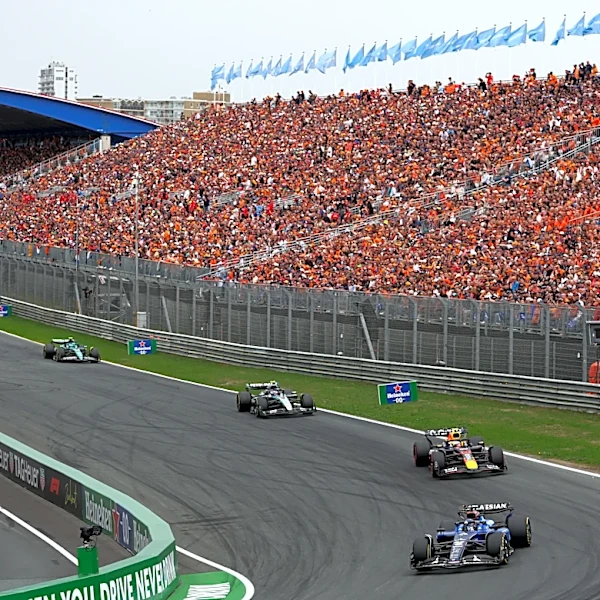
Drivers often describe Zandvoort as “old-school,” a high-speed plunge through sand dunes that feels more like a rollercoaster than a modern racetrack. Built in 1948, its fundamental character remains unchanged: it’s narrow, fast, and unforgiving. Unlike
newer circuits with vast tarmac runoff areas, Zandvoort is lined with merciless gravel beds. A mistake doesn't just cost you time; it often means your race is over. This constant threat of disaster demands a level of precision and bravery that is a hallmark of a classic driver's track. The circuit is one of the shorter ones on the calendar, meaning drivers are constantly working, with little time to rest on the straights before being thrown into another demanding sequence of corners. It’s a relentless test of concentration where even a momentary lapse is severely punished.
Banking on a Different Challenge
Zandvoort's most visually stunning and technically demanding features are its banked corners. Specifically, Turn 3 (Hugenholtzbocht) and the final Turn 14 (Arie Luyendykbocht) feature dramatic banking of around 18-19 degrees—steeper than the famous Indianapolis Motor Speedway. This isn't just for show. The banking allows drivers to carry much more speed through the corners than a flat profile would permit, subjecting them and their tires to immense vertical and lateral forces. It also opens up multiple racing lines, allowing for creative overtaking maneuvers or side-by-side action. However, this unique characteristic creates setup nightmares for teams. The cars are not inherently designed for these kinds of loads, putting unusual stress on the floor and aerodynamics. Finding a balance that works in the banked turns without compromising the rest of the lap is a key to success.
The Unpredictable Coastal Factor
The circuit’s location, nestled in the dunes just a stone's throw from the North Sea, adds a significant layer of unpredictability. The coastal wind is a constant variable that can have a dramatic effect on today's aerodynamically sensitive F1 cars. A sudden gust can unbalance a car in a high-speed corner, turning a perfect lap into a trip into the gravel. Furthermore, the wind often blows sand onto the track surface, reducing grip in an already low-grip environment and forcing drivers to constantly adapt to changing conditions. The dunes themselves can also create strange variations in airflow around the track, meaning the car's balance can shift from one corner to the next, demanding constant driver input to keep it on the ragged edge.
Nowhere to Hide
The combination of a narrow, twisting layout and the difficulty of following another car closely makes overtaking notoriously tough at Zandvoort. This places an enormous premium on qualifying. A good starting position is often more valuable here than at many other circuits. This pressure cooker environment—where one mistake in qualifying can ruin the weekend and one mistake in the race can end it—is what makes the Dutch Grand Prix such a formidable mental challenge. Drivers must have total confidence in their car and their own ability to push to the absolute limit for 72 laps. It’s a circuit that doesn’t allow a driver to hide any weakness, revealing who can truly master a complex and punishing track under immense pressure.