


The Annual Summer Blockbuster
Before it was a two-night stadium spectacle, SummerSlam was WWE's answer to the summer blockbuster movie. Since its inception in 1988, it has been positioned as the second-biggest show of the year, a high-stakes follow-up to WrestleMania. For fans who
grew up watching, this wasn't just another pay-per-view. It was the event that defined the latter half of the year, setting up new champions, escalating feuds, and often delivering matches that lived in our minds for decades. It became a checkpoint. You remember where you were for certain SummerSlams, the same way you remember other major life events, because the moments were just that seismic.
The Fairy-Tale Ending in London
Every long-term fan has that one match. For many, it's from SummerSlam 1992. The show took a massive gamble, moving to Wembley Stadium in London, England, and drawing a colossal crowd of over 80,000 fans. The main event was a storybook setup: British Bulldog Davey Boy Smith challenging his real-life brother-in-law, Bret "Hitman" Hart, for the Intercontinental Championship. The emotion was palpable as the hometown hero fought the technically perfect champion. The match itself is a masterpiece of storytelling, made even more legendary by the fact that Bret Hart had to guide a less-than-prepared Bulldog through it. When Smith scored the pinfall with a surprise reversal, the explosion from the crowd was deafening—a perfect moment frozen in time.
When Chaos Was Gloriously Redefined
As fan sensibilities changed in the late '90s, so did SummerSlam. The defining memory for a generation of Attitude Era fans is the inaugural Tables, Ladders, and Chairs (TLC) match at SummerSlam 2000. Edge & Christian, The Hardy Boyz, and The Dudley Boyz took the DNA of their WrestleMania ladder match and cranked the insanity to eleven. It was a symphony of destruction that perfectly encapsulated each team's identity. We watched, breathless, as bodies crashed through tables and dangled from tag team titles high above the ring. It wasn’t just a gimmick match; it was the birth of a stipulation that would define careers and fundamentally change tag team wrestling forever.
The Shocking End of an Era
Being a lifelong fan also means experiencing genuine shock. Nothing prepared the WWE Universe for the main event of SummerSlam 2014. John Cena, the unbeatable hero for a decade, defended his WWE World Heavyweight Championship against Brock Lesnar. What followed wasn't a match; it was a demolition. Lesnar delivered 16 German suplexes and an F5 just 30 seconds into the bout, dismantling the face of the company in a way no one had ever seen. It was uncomfortable, polarizing, and absolutely unforgettable. It signaled a brutal end to Cena's era of dominance and cemented Lesnar as the most terrifying force in WWE history.
The Rise of a Legend Killer
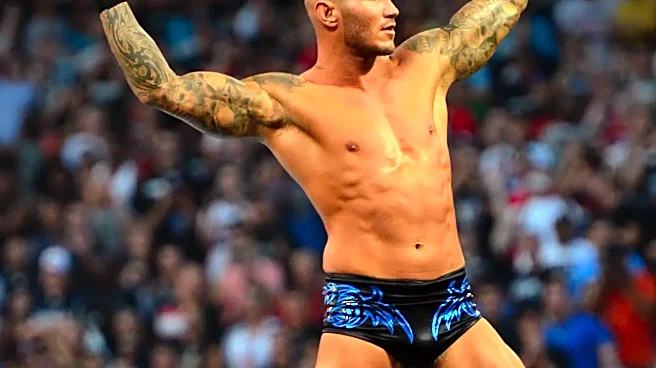
SummerSlam has always been a place where new main eventers are minted. At SummerSlam 2004, Randy Orton, the cocky young member of Evolution, defeated Chris Benoit to become the youngest World Heavyweight Champion in WWE history at just 24 years old. The moment itself was huge, but it was the aftermath that fans remember. The very next night on Raw, his mentor Triple H and the rest of Evolution turned on him, jealous of his success. This single event launched Orton's solo career, transforming him from a hot prospect into a certified main event player and the vindictive "Legend Killer" who would haunt the title scene for the next two decades.