




Those Infamous Banked Corners
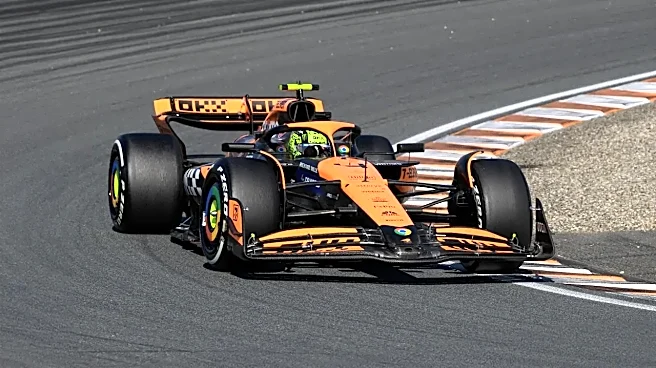
The most talked-about feature of Zandvoort is its aggressive banking. Specifically, Turn 3 (Hugenholtzbocht) and Turn 14 (Arie Luyendykbocht) are tilted at an astonishing 18 degrees. For context, that’s about double the banking of the famous Indianapolis
Motor Speedway. This unique geometry creates immense vertical and lateral forces on the cars and tires, forcing teams into setup compromises they don't face anywhere else. For drivers, it opens up multiple potential racing lines through a single corner, allowing for creative overtaking maneuvers and side-by-side action that simply isn't possible on a flat corner. The final banked corner, taken at full throttle, effectively lengthens the main straight, boosting slipstream and DRS opportunities into the first turn.
An Old-School, High-Stakes Layout
Zandvoort is what drivers affectionately call an “old-school” circuit. That’s code for narrow, unforgiving, and incredibly challenging. Unlike modern tracks with vast asphalt run-off areas, Zandvoort is lined with merciless gravel beds. A small mistake doesn't just cost you time; it often means your race is over. This high-stakes environment demands absolute precision and punishes even the slightest lapse in concentration. The track’s compact, sinuous nature means drivers are constantly working, flowing from one corner to the next in a high-speed rhythm that has been described as a rollercoaster ride. There’s no room to breathe, making it a pure test of driver skill.
The Rollercoaster in the Dunes
Carved into the natural topography of the Dutch coastline, Zandvoort features significant elevation changes that don't always come across on television. The layout swoops and dives through the dunes, creating blind crests and challenging compressions. Corners like Scheivlak (Turn 7) are a perfect example: a fast, blind, downhill right-hander that requires immense bravery and trust in the car. This undulating character unsettles the car and tests the driver’s commitment, making a perfect lap both incredibly difficult and deeply satisfying. It’s a physical, seat-of-your-pants driving experience that many on the grid relish.
A Battle Against the Elements
Its location right next to the North Sea makes Zandvoort uniquely susceptible to the weather. Strong winds can whip in from the coast, upsetting the cars' aerodynamic balance, especially through high-speed sections. Even more uniquely, sand from the nearby beaches frequently blows onto the racing surface. This can drastically reduce grip levels, making the track slippery and unpredictable from one session to the next, and sometimes even from one lap to another. Teams and drivers must constantly adapt to these changing conditions, adding another layer of complexity to the race weekend.
The Unmatched 'Orange Army' Atmosphere
While not a physical part of the asphalt, the atmosphere at Zandvoort is an undeniable feature that makes it unique. The passionate Dutch fans, known as the 'Orange Army,' create an electric, festival-like environment. The compact nature of the venue means the huge, raucous crowd feels incredibly close to the action, their energy feeding back to the drivers. The combination of techno music, orange flares, and non-stop cheering transforms the Grand Prix from just a race into a full-blown cultural event, creating a spectacle unlike any other on the calendar.