



The Gatekeepers of Immortality
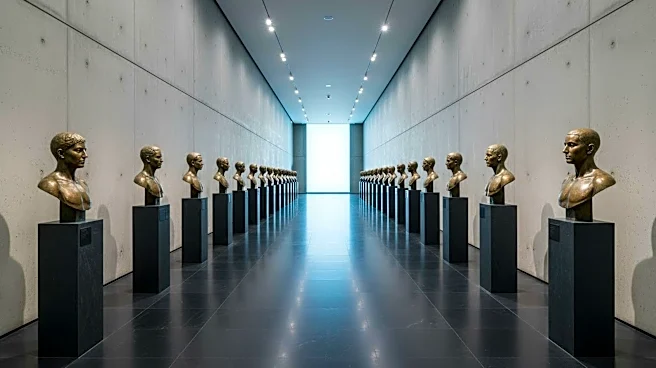
To understand the Hall's power is to understand its exclusivity. Of the thousands who have played professional football, only 387 members were enshrined as of early 2026. The process is famously rigorous. A 50-person Selection Committee, comprised mostly
of media members, holds the keys to football immortality. They meet annually on the Saturday before the Super Bowl to debate and vote. Candidates are whittled down through several rounds of voting, and a finalist needs to secure a staggering 80% of the vote for election. This intense scrutiny ensures that a gold jacket is not just given; it is earned in a crucible of debate, making the honor one of the most coveted in all of sports.
Forging the Narrative of Greatness
Induction into the Hall of Fame does more than recognize a great career; it solidifies and often simplifies its narrative. For first-ballot inductees like the Class of 2026's Drew Brees and Larry Fitzgerald, enshrinement is the final, definitive stamp on careers widely seen as legendary. For others, the process itself becomes part of their story. Consider Roger Craig, also part of the 2026 class, who waited more than two decades after his retirement for the honor. His long wait, followed by his eventual election via the Seniors Committee, highlights how the Hall can rescue a player's legacy from the fog of time, re-introducing his pioneering role to a new generation of fans. The debates around who gets in, and when, force a constant re-evaluation of what constitutes greatness, elevating certain playing styles, positions, or eras in the collective memory of the sport.
The Debate Defines the Values
The Hall's influence is never more apparent than in its controversies. The committee is instructed to consider only a candidate's professional football contributions, but heated debates erupt among fans and media about where that line is drawn. Recent years have seen intense arguments over how to weigh off-field issues or scandals like "Spygate" against on-field genius, a conversation brought into sharp focus by Bill Belichick's surprising snub in his first year of eligibility. These arguments are not just noise; they are a public negotiation of the sport's values. Does pure statistical dominance outweigh championships? How do you account for a player who changed the way his position was played, like special teams ace Devin Hester? The Hall of Fame acts as the forum for these essential discussions, and its verdicts send a powerful message about what the sport chooses to celebrate.
A Cultural and Economic Anchor
Beyond the philosophical, the Hall's impact is tangible. Enshrinement week is a massive event, featuring a parade, the Gold Jacket Dinner, and nationally televised speeches, all drawing tens of thousands of fans to Ohio. It has become a pilgrimage site for football fans and a significant economic engine for Canton. For the players, enshrinement means their story becomes part of the permanent record, preserved for future generations. It inspires young athletes and sets a benchmark for current stars. The Hall is a not-for-profit educational institution, accredited by the American Alliance of Museums, with a mission to not only honor the great but also to preserve the history and promote the values of the game. It's a living archive that connects the NFL's past, present, and future.