





The Case For: An Offensive Revolution
James Harden didn't just play offense; he reinvented it. For a stretch of his career, particularly in Houston, he was arguably the most unstoppable offensive force in the league. This wasn't just about scoring, but the relentless, analytical efficiency
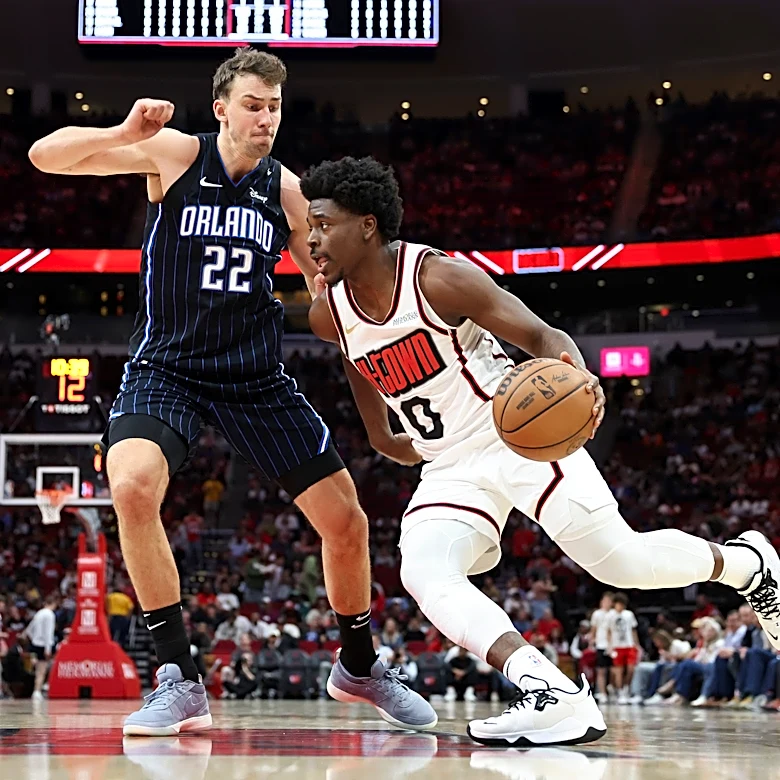
of it. His game was a masterclass in exploiting market inefficiencies: high-value shots at the rim, a barrage of free throws, and the then-revolutionary step-back three-pointer. His peak was staggering. Harden won three consecutive scoring titles from 2018 to 2020 and the NBA MVP award in 2018. During the 2018-19 season, he averaged over 36 points per game, a feat not seen in decades, joining Michael Jordan as one of the only guards to average over 30 points, 7 assists, 6 rebounds, and 2 steals in a season. He was so dominant that he was named to the NBA's 75th Anniversary Team, a testament to his undeniable impact on the game. This wasn't empty-calorie scoring; his teams consistently had elite offenses built entirely around his high-usage, isolation-heavy style.
The Case Against: The Playoff Question
For all his regular-season brilliance, Harden’s career is haunted by his postseason performance. While his overall playoff stats are still strong, averaging over 22 points per game across more than 190 contests, a clear pattern of shrinking in the biggest moments has emerged. His scoring and efficiency numbers noticeably dip in games 5 through 7 of a series. Critics point to several infamous flameouts: a 10-point performance in a 2017 elimination game loss to a Spurs team missing its best player, and multiple series where his turnovers outnumbered his made field goals. The one time his team reached the NBA Finals, in 2012 with Oklahoma City, he was a sixth man, not the primary star. The 2018 Western Conference Finals against the juggernaut Golden State Warriors is perhaps the most painful 'what if.' The Rockets pushed the champs to seven games before Chris Paul's injury, a series many believe Houston would have won otherwise. Still, a recurring theme is Harden looking passive or overwhelmed when the pressure is highest, a stark contrast to the aggressive force seen from October to April.
The Context: How He Stacks Up
When ranking shooting guards, Michael Jordan and Kobe Bryant exist in a tier of their own. The real debate begins after them, with a cohort that includes Dwyane Wade, Jerry West, and Allen Iverson. Wade has three championships, including one as the undisputed Finals MVP, giving him a clear edge in the ultimate team success category. Iverson, like Harden, has an MVP trophy but no ring, though his cultural impact was seismic. Statistically, Harden’s peak scoring and efficiency metrics are superior to many of his rivals. He’s already a top-10 all-time scorer in NBA history. Unlike pure shooters like Reggie Miller or Ray Allen, Harden was also an elite playmaker, twice leading the league in assists. But his defensive liabilities and the lack of a defining championship run as the lead star keep him from ascending into that Jordan-Kobe-Wade stratosphere. He sits firmly in the next tier down: a player with a Hall of Fame resume built on unprecedented individual production that never quite translated into a title.
The Verdict: A Flawed Top-25 Player
So where does James Harden belong? He is unquestionably one of the greatest offensive players in NBA history. Charles Barkley argued he was a more versatile offensive weapon than even Jordan or Kobe due to his combination of dribbling, foul-drawing, and three-point shooting. However, the GOAT debate isn't just about offense. It’s about winning, leadership, and two-way impact. Harden's resume is conspicuously missing a championship, the currency that elevates all-time greats into legends. He is not a top-10 player of all time. He is likely not a top-15 player. His place is most accurately found in the 20-30 range—a titan of the regular season and one of the 5 best shooting guards ever, but one whose legacy will forever be defined by the brilliant, frustrating question of what could have been. He is perhaps the greatest player of his generation to never win a title, a player who broke statistical models but could never quite break through the final barrier.