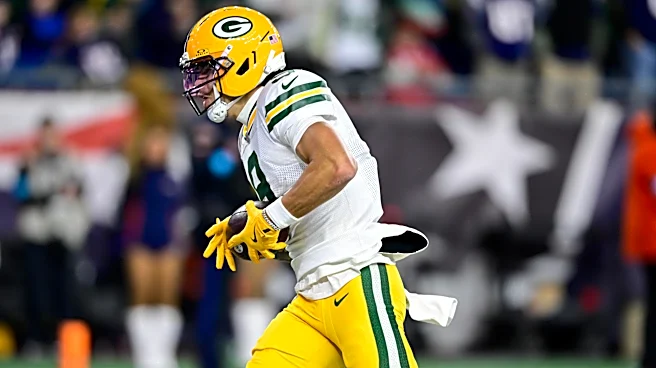


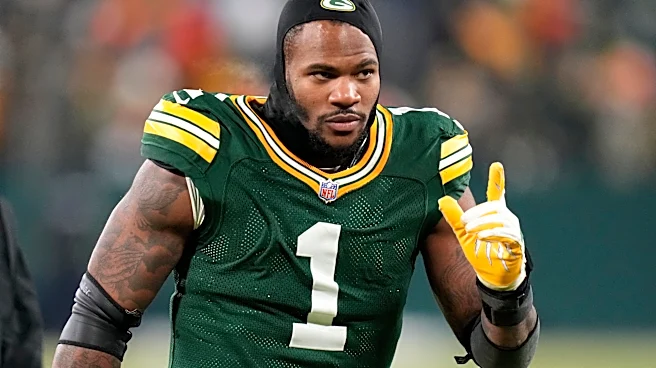
Just when your fantasy lineup felt secure, the Sunday injury reports strike again. Green Bay Packers running back Josh Jacobs is now dealing with a fractured finger, leaving fantasy managers scrambling for answers and staring at a tough decision.
What We Know About the Injury
During
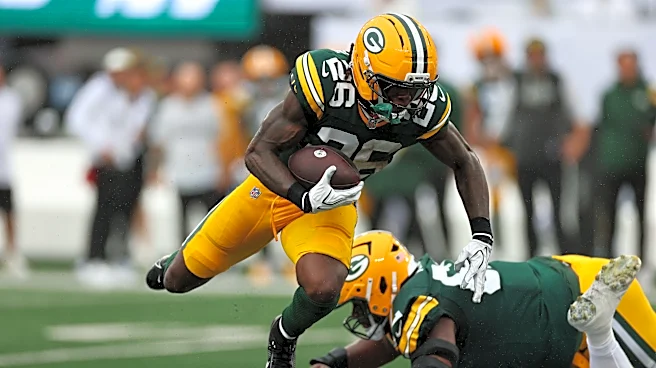
the Packers' Week 9 win over the New England Patriots, Josh Jacobs exited in the first quarter after his hand got caught in an opponent's facemask. He did not return to the game, and head coach Matt LaFleur later confirmed the diagnosis: a fractured finger. According to reports, it's the ring finger on his right hand, and Jacobs himself noted he was having a hard time gripping the football on the sideline. While both Jacobs and LaFleur have expressed hope that he can play through it, his availability for Week 10 against the Vikings is officially uncertain. This isn't just a minor issue; for a running back, grip is everything.
How It Impacts His Game
A fractured finger on a running back's dominant hand introduces two major problems: ball security and pass-catching ability. The primary concern is an increased risk of fumbles. Defenders are trained to attack the ball, and an inability to grip it securely makes a player a prime target for turnovers. Secondly, Jacobs' role in the passing game could be neutralized. Catching a pass, especially one thrown with NFL velocity, is difficult with a healthy hand, let alone a fractured one. Fantasy managers must brace for a potential scenario where Jacobs either sits out or plays a limited role, with his receiving work and goal-line opportunities possibly scaled back to minimize risk. Even if he suits up, he may not be the high-volume workhorse fantasy managers have come to rely on.
Your Fantasy Playbook: Start, Sit, or Trade?
This is the million-dollar question for fantasy managers. The answer depends entirely on your risk tolerance and roster depth. If you have other solid running back options, the conservative play is to bench Jacobs for Week 10. The risk of him playing limited snaps or being ineffective is significant. However, if you are in a tougher spot due to byes or other injuries, you might have to consider starting him. If you do, you must lower your expectations. He falls from a must-start RB1 to a volatile RB2/Flex play. Closely monitor the Packers' practice reports this week. If he is a limited participant all week, his role will likely be diminished. A surprise full practice on Friday would be a more encouraging sign.
The Backup Plan: Who Steps Up?
With Jacobs exiting early in Week 9, Kaleb Johnson stepped in and performed admirably, rushing for 68 yards and a touchdown on 14 carries. With MarShawn Lloyd also dealing with a knee injury, the Packers' backfield depth is being tested. The primary beneficiaries of a potential Jacobs absence would be Johnson and Pierre Strong. Johnson appears to be the more immediate add for fantasy managers, as he took the lead role after the injury. Any fantasy manager who has Jacobs on their roster should immediately look to the waiver wire for one of these backups as an insurance policy. They offer a potential starting running back if Jacobs is ultimately ruled out.
The Long - Term Outlook
A fractured finger is typically not a season - ending injury , but it can be a nagging issue that impacts performance for several weeks . The biggest risk is re - injury or a decline in his effectiveness , particularly in the red zone and passing game . For fantasy purposes , this injury introduces a new layer of volatility to Jacobs ' profile for the remainder of the season . If you are a risk - averse manager in a good position in your league , you could consider floating a trade offer to the current Jacobs owner , who may be panicking . Conversely , if you own Jacobs , don ' t rush to sell him for a lowball offer . The best course of action is to secure a backup from the Packers ' backfield and wait for more clarity on his timeline and ability to play through the pain .