

A Rectangle Among Ovals
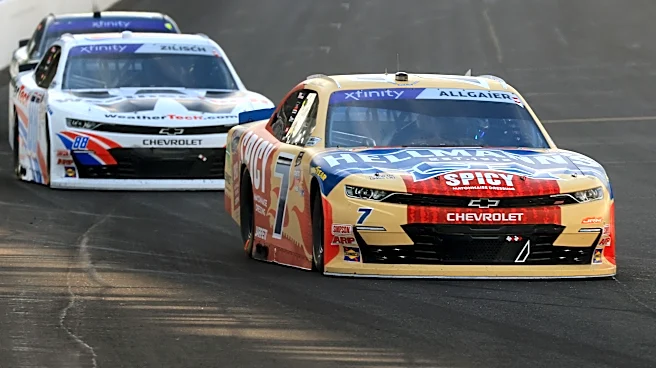
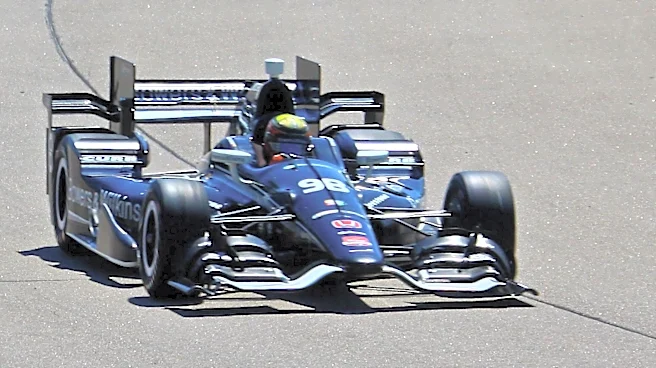
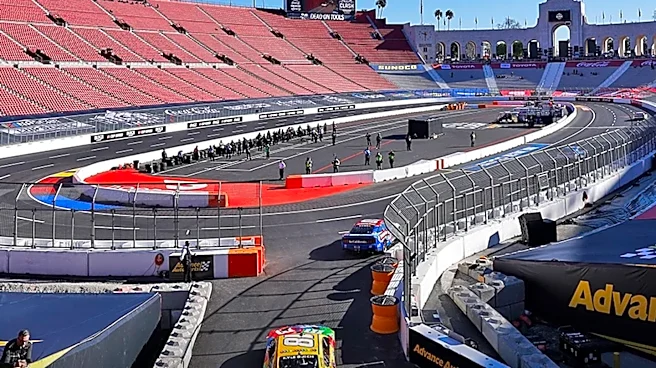
Most tracks on the NASCAR circuit are purpose-built for stock cars, featuring high-banked turns that help 3,400-pound machines carry speed. Indianapolis is different. Built in 1909, its DNA is open-wheel racing. The track is more of a rectangle than an oval,
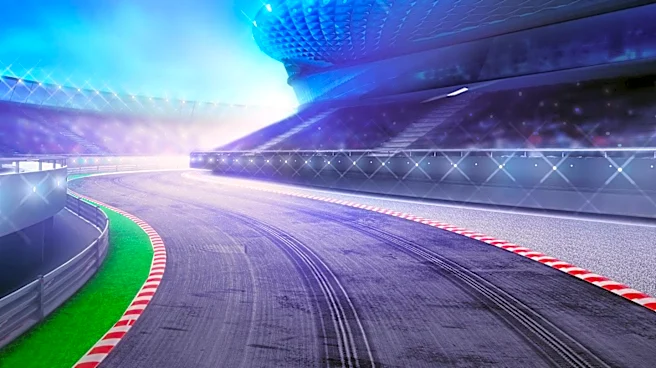
with four distinct 90-degree corners connected by two long straightaways and two shorter ones, or "short chutes." The banking in the turns is a mere nine degrees, exceptionally flat compared to the 24 degrees at Daytona or 18 at Texas. For a heavy, aerodynamically dependent stock car, this geometry presents a fundamental problem: the car wants to push straight ahead in the corners, fighting the driver every inch of the way. It demands a finesse and precision more commonly associated with road course racing, forcing drivers to slow down more than they'd like just to make the turn.
The Four Different Corners
To the eye, the four corners at IMS look identical, but drivers will tell you they each have a unique personality. As one analysis puts it, you have to think of Indianapolis as a road course with four left-hand turns. Because the two primary straightaways are much longer than the short chutes, cars enter Turn 1 and Turn 3 at tremendous speed, creating brutally hard braking zones. Conversely, entries into Turn 2 and Turn 4 are slower, changing the car's handling dynamics. Even the visual cues are different. The grandstands that line the frontstretch create a "tunnel effect" that can make Turn 1 seem tighter than it is. This lack of rhythm is mentally taxing. A driver can't just find a groove and repeat it lap after lap; they must adapt their approach for each specific corner, making it a constant test of concentration and adaptability.
A Test of Horsepower and Brakes
The two 3,300-foot straightaways are a pure display of horsepower, a drag race where engine builders earn their paychecks. But what goes fast must slow down. The long straights feed into tight, flat corners, demanding that drivers brake exceptionally hard and late to gain an advantage. This combination of top-end speed and heavy braking is rare on ovals and puts immense strain on both the machinery and the driver. Getting the braking point wrong by just a few feet can mean missing the corner entirely and losing multiple positions. This delicate dance between the throttle and the brake pedal is a key separator. Passing is notoriously difficult, so much of the race is won and lost in these transition zones, rewarding drivers who are both aggressive and impeccably precise.
The Setup Compromise
For crew chiefs, setting up a car for Indianapolis is a nightmare of compromises. Do you trim the car out with low downforce to maximize speed on the long straights? Or do you add downforce to help it stick in the flat, slick corners? You can't have both. A car built for pure speed will be a handful in the turns, while a car set up for cornering grip will be a sitting duck on the straights. This strategic challenge makes communication between the driver and crew chief paramount. Drivers must provide precise feedback to find a livable balance, knowing the car will be imperfect in at least one area. Getting that compromise right is often the key to unlocking a race-winning car, making the Brickyard 400 a true team victory.
The Weight of History
Beyond the technical challenges, racing at Indy is a immense mental test. From the moment a driver passes through the tunnel, the history of the speedway is palpable. Competing on the same hallowed ground as legends from IndyCar and Formula 1 adds a layer of pressure unlike any other venue. A victory here is a career-defining moment, a chance to join one of motorsport's most exclusive fraternities by kissing the famed "Yard of Bricks." That prestige raises the stakes. For years, the winner's list was a who's who of NASCAR champions, from Jeff Gordon to Jimmie Johnson. While recent races have seen more parity, the event is still seen as a filter for greatness, a place that exposes any weakness and crowns only the most complete and resilient drivers.