





The Film Grinder: Trusting the Eye Test
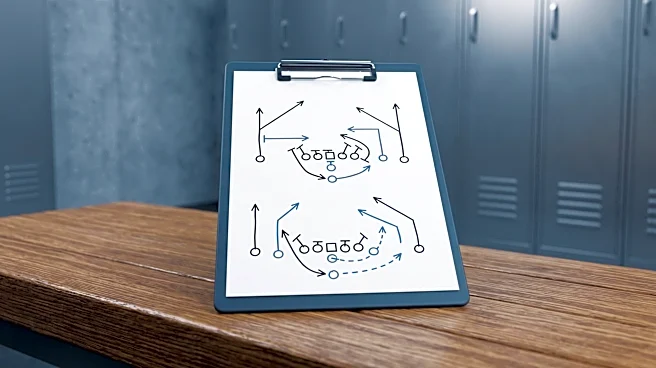
You know this manager. They're the ones who spend hours watching All-22 tape, talking about a receiver's 'hip fluidity' or a running back's 'contact balance.' These are the film grinders, the traditionalists who believe football is a game of nuance that
can't be captured in a box score. For them, context is king. They argue that a player's stat line doesn't tell you how he got his numbers. Was his quarterback under constant pressure? Did his 100-yard game come against a backup cornerback? Did a running back look hesitant hitting the hole, even if he broke one long run? Film grinders believe the eye test reveals truths about talent, effort, and situational football that quantitative analysis misses. They're betting on the art of the game, not just the math.
The Data Modeler: In Spreadsheets We Trust
Across the draft room sits the data modeler. Their bible isn't game tape; it's a spreadsheet with columns for Yards Per Route Run (YPRR), Target Share, and Weighted Opportunity Rating (WOPR). These managers believe human observation is riddled with bias. The data-driven approach, inspired by baseball's 'Moneyball' revolution, aims to strip away that subjectivity. Modelers argue that metrics like 'air yards' are more predictive of future production than a receiver's actual receiving yards from last season. They use data to identify players who saw massive opportunity but were unlucky, making them prime candidates for a positive regression. It’s about predicting future performance by focusing on usage and efficiency metrics that have proven to be sticky year-over-year. They trust the numbers to reveal underlying trends the human eye can't possibly process.
Where the 'Eye Test' Can Fool You
The problem with relying solely on film is that our eyes can lie to us, or at least be easily tricked. A flashy, one-handed catch can stick in our memory, causing us to overrate a receiver who is otherwise an inefficient route-runner. This is confirmation bias in action: we look for evidence that confirms our pre-existing belief about a player. A film grinder might fall in love with a running back's powerful style, ignoring data that shows he consistently faces light defensive fronts or that his offensive line is doing all the heavy lifting. Without the guardrails of objective data, it's easy to build a narrative about a player that isn't supported by his actual on-field opportunity and efficiency. The 'eye test' can tell you a player looks good, but data is often better at telling you if he's being put in a position to score fantasy points.
When the Numbers Lack Context
On the other side of the coin, data without context is just a collection of numbers. A model might flag a receiver for poor efficiency scores, but film could reveal he's playing with a quarterback who is consistently inaccurate or that the offensive scheme doesn't suit his talents. As one Reddit user on a fantasy forum noted, ignoring context is a misuse of analytics; the point is to bring attention to things you might have otherwise missed, not to replace observation entirely. Stats often tell you what happened, but rarely why. For example, a model might not be able to properly account for the ripple effects of a coaching change, a key injury on the offensive line, or a player's off-field issues. Relying only on spreadsheets can lead you to undervalue a talented player in a bad situation who is about to see his circumstances improve dramatically.
The Hybrid Champion: Art Meets Science
The most dominant fantasy football managers don't choose a side in this war; they operate as double agents. They use both disciplines to inform and sharpen one another. The process often starts with the data. An analytical model might flag a player who saw an elite target share but had a low touchdown total, suggesting he's due for a bounce-back. The manager then turns to the film. Does he look like the same explosive player he was before? Is there a subtle injury hampering him in the red zone? Conversely, watching film might reveal a rookie receiver with elite separation skills. Before getting too excited, the hybrid manager checks the data. Does the team's quarterback support a productive fantasy wideout? Is the player running high-value routes? This blend of art and science provides a complete picture. The numbers identify an opportunity, and the film confirms the talent. This integrated approach is what separates good process from lucky guessing.