


The Foundation of Violence
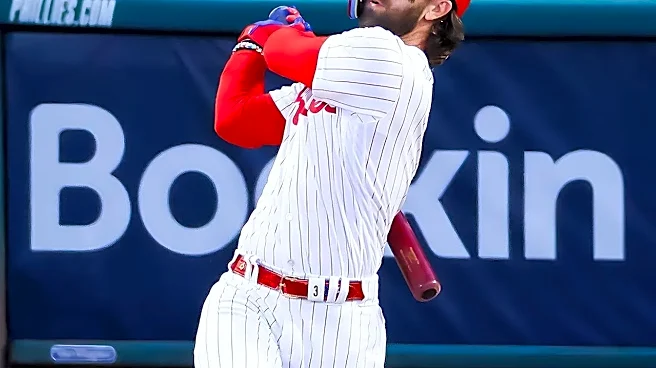
Everything about Bryce Harper’s swing is built for maximum force, and it all begins with his stance. Even before the pitch, he creates a stable, athletic base designed to generate torque. His feet, firmly planted, are the anchor points for one of the most
violent and effective swings in baseball. As he loads, he coils into his back hip, storing an immense amount of potential energy. Analysts note that while some hitters remain static, Harper’s pre-swing movements are about gathering momentum. This isn’t wasted motion; it's the process of turning his lower body into a tightly wound spring, ready to unleash on the baseball. This controlled coiling is the first critical step in a kinetic chain that results in tape-measure home runs.
The Engine Room of the Swing
Harper is famous for two primary timing mechanisms: a high leg kick and a quicker toe-tap. While the high leg kick is more visually dramatic, both serve to get his body moving forward while his hands and upper body stay back. This separation is key to his power. As his front foot strides toward the pitcher, his lower body begins to rotate open, while his upper half resists, creating a massive stretch across his core. It’s like pulling back a rubber band to its breaking point. By the time his front foot plants, his hips have already started to fire, creating incredible bat speed. This sequence, powered by his legs and hips, ensures he isn't just swinging with his arms; he’s swinging with his entire body. Biomechanics experts have noted this allows him to transfer tremendous force from the ground through the ball.
An Ever-Evolving Craft
What makes Harper’s footwork truly elite is his ability to adapt. Throughout his career, he has made subtle adjustments to his stance and stride, sometimes standing taller or using the toe-tap more frequently to break out of a slump or adjust to how pitchers are attacking him. This isn't a sign of inconsistency but of a deep understanding of his own mechanics. For example, he has shown the ability to use his leg kick for longer, higher home runs and his toe-tap for harder-hit line drives. He can quiet his movements with two strikes, sacrificing some power for better contact without abandoning the core principles of his swing. This constant refinement shows that his footwork isn't just a natural gift but a skill that has been deliberately honed into a superstar-level tool.
Aggression on the Basepaths
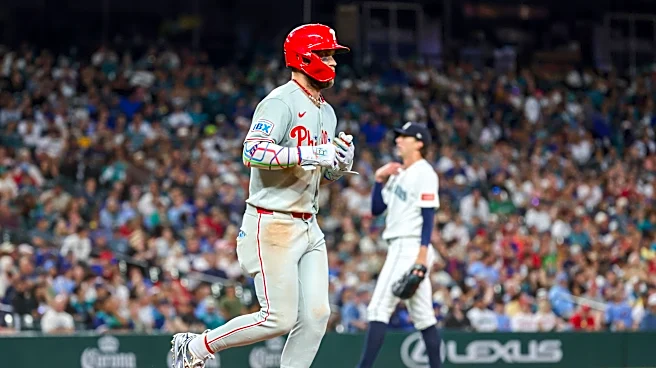
Harper’s explosive lower body isn’t just for hitting. On the basepaths, his footwork translates into an aggressive, pedal-to-the-metal style that consistently puts pressure on the defense. He is known for trying to stretch singles into doubles and take the extra base whenever possible. While this aggression sometimes results in him being thrown out, it’s part of the same mindset that fuels his greatness at the plate. His manager and teammates understand that this hyper-aggressive mentality is part of the total package. He has defended his approach by saying he's always played that way, believing that playing hard is the only way to play. This demonstrates how his feet, both in the batter’s box and running the bases, are a direct reflection of his relentless approach to the game.