
Althea Gibson: The Pioneer Who Opened the Door
Long before the Williams sisters, there was Althea Gibson. In 1950, she broke the color barrier, becoming the first African American to compete at the U.S. National Championships (the precursor to the US Open). Facing systemic racism, Gibson was often
barred from locker rooms and dining halls, but her talent was undeniable. She persevered, and in 1957, she won the tournament, a victory she repeated in 1958. Gibson's powerful serve-and-volley style was revolutionary, but her true impact was showing that a Black athlete could dominate a sport that had long excluded them. Her journey from the streets of Harlem to shaking hands with the Queen of England after her Wimbledon win proved that resilience and grace could overcome prejudice, paving the way for every person of color who followed.
Arthur Ashe: A Champion of Change in a Turbulent Time
In the tumultuous summer of 1968, a year marked by social upheaval, U.S. Army Lt. Arthur Ashe Jr. created a revolution of his own. As an amateur, he entered the first-ever US Open and defeated the pros to become the first African American man to win a Grand Slam singles title. Because he was an amateur, he couldn't even accept the $14,000 winner's check. But his victory was priceless. It wasn't just a historic athletic achievement; it gave him a powerful platform. Ashe used his newfound fame to advocate for civil rights, social justice, and the fight against apartheid. His quiet dignity and unwavering integrity showed young players that being a champion extends far beyond the court.
Jimmy Connors: The Fighter Who Refused to Fade
By 1991, Jimmy Connors was supposed to be a relic. At 39 years old and ranked 174th in the world after wrist surgery, he entered the US Open as a wildcard. What followed was one of the most electric runs in sports history. In the first round, he was down two sets and 0-3 before mounting a ferocious comeback. The defining match came on his 39th birthday, a grueling five-set epic against Aaron Krickstein where he rallied from being down 2-5 in the final set to win. Connors never won the tournament, but his journey to the semifinals was a masterclass in sheer grit. He reminded everyone that passion has no age limit and that a true competitor fights until the very last point.
Venus and Serena Williams: Redefining an Entire Sport
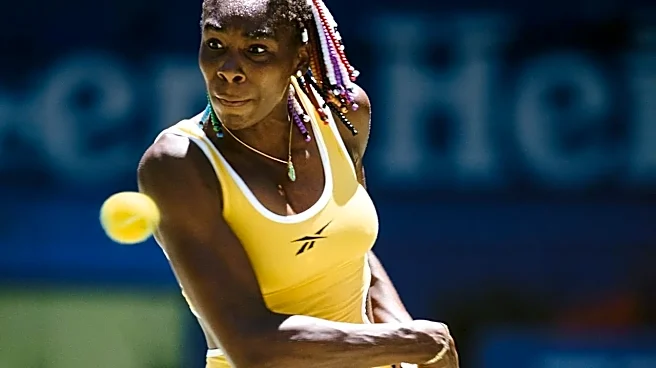
No story of inspiration is complete without Venus and Serena Williams. From the public courts of Compton, they brought a level of power, athleticism, and unapologetic confidence that women's tennis had never seen. They shattered barriers in a predominantly white sport, not just by winning over 30 combined singles Grand Slams, but by becoming cultural icons. They faced criticism and racism but responded by dominating, becoming the first sisters in history to be ranked world No. 1 and No. 2. Their success inspired a new, diverse generation of players, including stars like Coco Gauff and Naomi Osaka. The Williams sisters taught young athletes to be fierce, to create their own path, and to use their platform to advocate for change, like equal pay.
Emma Raducanu: The Ultimate Underdog Fairytale
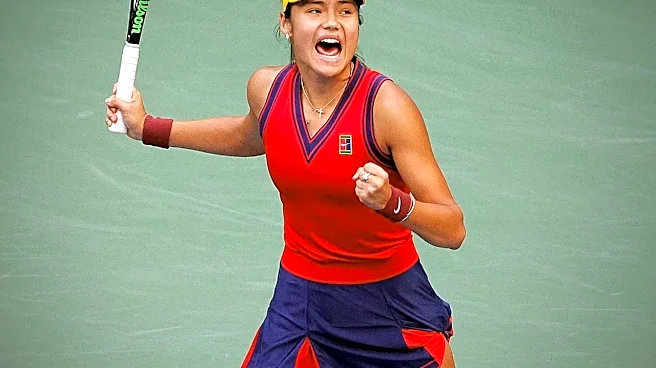
In 2021, the tennis world witnessed the impossible. Emma Raducanu, an 18-year-old from Great Britain ranked 150th, entered the US Open as a qualifier, meaning she wasn't even guaranteed a spot in the main tournament. What she did next was unprecedented. She won three qualifying matches and then stormed through the main draw, not dropping a single set in ten matches to become the first qualifier in history to win a Grand Slam. Her final against fellow teenager Leylah Fernandez was a glimpse of the future, but Raducanu's journey was the stuff of fantasy. It was a powerful message to every young player: with fearless belief and flawless execution, even the most improbable dreams can become a reality on the world's biggest stage.