




The Aftermath of Silver
The year was 1984, and the Olympic Games were in her hometown of Los Angeles. Florence Griffith, not yet married and not yet a global icon, was a formidable talent. She sprinted her way to an Olympic silver medal in the 200-meter dash, an incredible achievement
for any athlete. Yet, for Griffith, the moment was tinged with disappointment. For a competitor with her immense drive, finishing second felt like a failure. Coupled with the financial realities of being an amateur athlete in that era, the pressure began to mount. Track and field had not yet become the professionalized sport it is today, and the financial support simply wasn't there for her to focus exclusively on training. This combination of perceived failure and financial instability created a perfect storm of doubt.
From the Track to the Teller Line
In 1985, weighed down by these pressures, Griffith made a decision that seems unthinkable in hindsight: she stepped away from the sport. She went into what could be described as semi-retirement, trading her running spikes for a more conventional life. To support herself and her family, she took a job working as a bank teller. This wasn't the first time financial hardship had forced her off the track; she had previously dropped out of college to work at a bank before her coach, Bob Kersee, helped her find financial aid to return. In this period after the '84 Games, she also spent her time working as a hairstylist and nail technician, leaning into the creative flair that would later define her iconic look. To the outside world, it looked as though one of America's brightest athletic talents was fading away.
The Coach Who Wouldn't Let Go
The person who refused to let her talent go to waste was her coach, Bob Kersee. Having guided her through her college career at both Cal State Northridge and UCLA, Kersee knew the depth of her potential. He had seen her raw speed and competitive fire and was not prepared to let it be extinguished behind a bank counter. He had sought financial aid for her before and continued to be a pivotal presence. Alongside Kersee's influence, her personal life was also providing a new anchor to the sport. In 1987, she married Al Joyner, the 1984 Olympic triple jump champion, whom she had met years earlier at the Olympic trials. Al, whose sister was track legend Jackie Joyner-Kersee (coached by Bob Kersee), would eventually become her full-time coach, providing the dedicated support system she needed. Persuaded by this network of belief, she returned to serious training in April 1987.
The Legendary Comeback
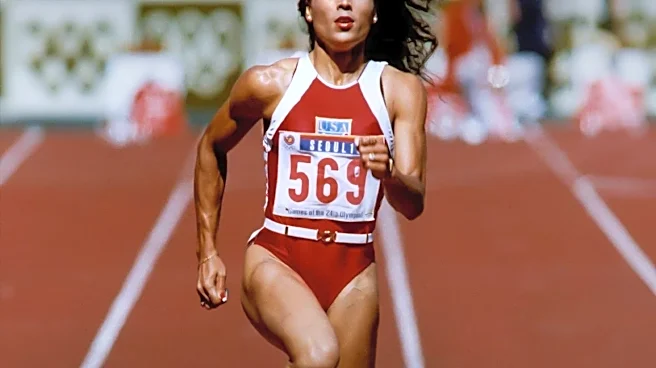
Griffith Joyner's return wasn't just a success; it was an explosion. All the years of hard work, the frustration, and the renewed focus coalesced into one of the most dominant periods in sports history. At the 1988 U.S. Olympic Trials, she didn't just win—she shattered the 100-meter world record with a stunning time of 10.49 seconds, a mark that remains untouched to this day. She carried that momentum to the 1988 Seoul Olympics, where the world was formally introduced to "Flo-Jo." With her iconic one-legged tracksuits and long, decorated nails, she became a global superstar. She won three gold medals (100m, 200m, 4x100m relay) and a silver (4x400m relay), setting another unbreakable world record in the 200-meter final. It was a complete reinvention, transforming her from a disillusioned silver medalist into the fastest woman of all time.