


Althea Gibson Breaks the Color Barrier (1950)
Long before the Williams sisters became global icons, the door to professional tennis had to be forced open. Althea Gibson was the one who kicked it down. In an era of rigid segregation, the sport's governing bodies barred Black players from top-level
competition. It took a public appeal from four-time champion Alice Marble in American Lawn Tennis magazine to shame the U.S. National Lawn Tennis Association into allowing Gibson to play. On August 25, 1950, Gibson walked onto the courts at Forest Hills and became the first African American to compete in the U.S. Nationals (the precursor to the US Open). While she lost in the second round, her presence was a monumental victory, proving that talent, not race, should be the only prerequisite for competition. Her breakthrough paved the way for every person of color who followed.
Arthur Ashe's Civil Rights-Era Victory (1968)
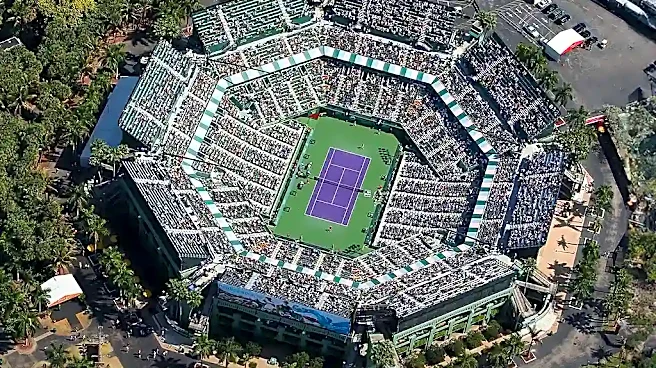
Eighteen years after Gibson’s debut, the nation was in turmoil. Amidst the assassinations of Martin Luther King Jr. and Robert F. Kennedy, Arthur Ashe, a lieutenant in the U.S. Army, arrived at the first-ever “Open” era tournament. As an amateur, he wasn't even eligible for the prize money. Yet, he played with a stoic grace that defied the era's turbulence. He became the first—and still the only—African American man to win the US Open singles title. His victory was more than a personal triumph; it was a powerful statement of progress and possibility in a deeply divided America. The legacy of his character and activism is so profound that the tournament’s main stadium, the largest tennis-specific venue in the world, now bears his name.
Billie Jean King Demands Equal Pay (1973)
After winning the US Open in 1972, Billie Jean King received a check for $10,000, while the men’s champion, Ilie Năstase, took home $25,000. King, a fierce advocate for women’s rights, publicly declared the disparity unacceptable and threatened that the women would boycott the following year’s tournament if their pay wasn't equal. Recognizing the power and draw of the women’s tour, the U.S. Tennis Association, with the help of a commercial sponsor, met her demand. In 1973, the US Open became the first major sporting event in history to offer equal prize money to its male and female competitors. It was a landmark decision that set a precedent for equality in sports, even though other Grand Slams would take decades to follow suit.
The Rise of the Machines (2006)
Human error has always been part of sports, but a series of high-profile, controversial line calls—most famously in a 2004 quarterfinal between Serena Williams and Jennifer Capriati—forced tennis into the 21st century. The repeated missed calls in that match created an uproar and accelerated the demand for technological intervention. In 2006, the US Open became the first Grand Slam to officially implement the Hawk-Eye electronic line-calling system, giving players the ability to challenge umpires' decisions. This innovation didn't just improve accuracy; it fundamentally changed the dynamic between players and officials, adding a new layer of strategy and drama while ensuring a fairer outcome. The system has since become standard, and automated line-calling is now replacing human judges entirely at many events.
The Women's Final Goes Primetime (2001)
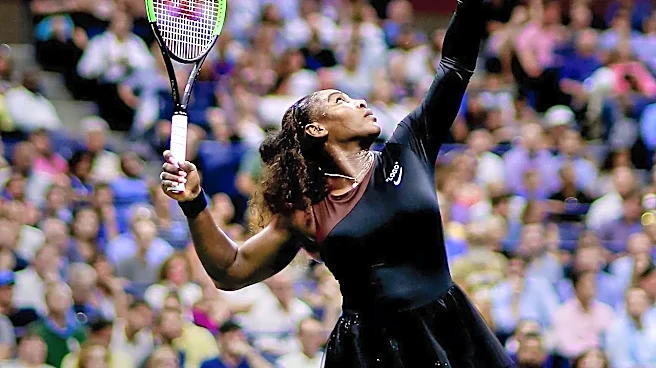
For decades, the women's final was an afternoon affair, often sandwiched between men's semifinals. But by 2001, the cultural force of Venus and Serena Williams was undeniable. Recognizing their blockbuster appeal, the USTA made a revolutionary decision: for the first time ever, the women’s singles final was moved to a standalone, primetime television slot on a Saturday night. The combatants, fittingly, were the Williams sisters themselves in their first major final against each other. The move was a massive commercial success and a powerful acknowledgment that women's tennis was not an opening act but a premier attraction deserving of the biggest stage.