






The Art of Constant Motion
One of the most striking differences between the leagues is the emphasis on teamwork and ball movement. While some NBA offenses can become a stage for one-on-one heroics, the WNBA game thrives on coordinated, five-player action. This year's All-Star exhibition
was no exception. Players moved with purpose, constantly cutting, screening, and relocating to create openings. This 'pass-first' mentality is backed by data; in recent seasons, the WNBA has posted a higher assist percentage than the NBA, meaning a greater share of their baskets come from a direct pass. For an NBA scout, this is a clinic on how to generate efficient offense without relying solely on a superstar to break down the defense. It’s a more sustainable model that makes the entire team a threat.
Smarter Screens, Better Shots
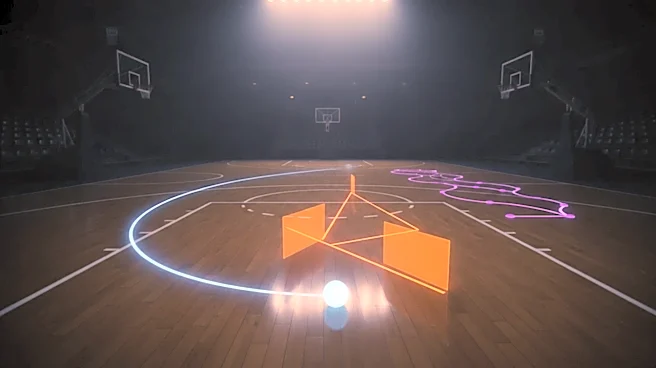
Every team runs pick-and-rolls, but the WNBA's execution involves a layer of sophistication that often goes overlooked. During the All-Star Game, teams repeatedly used complex actions like “Elevator Door” screens to spring shooters open. This play involves a shooter cutting between two teammates, who then step together like closing elevator doors to block the trailing defender. It’s a perfect example of prioritizing scheme over pure athleticism to generate a high-quality look from three-point range. In an NBA landscape obsessed with floor spacing, incorporating these intricate screening actions could be the key to unlocking an offense, proving that a well-designed play is often more valuable than a simple isolation.
Winning the In-Between Game
As NBA defenses have evolved to protect the rim and run shooters off the three-point line, the mid-range has become something of a lost art. The WNBA, however, demonstrates its enduring value. The game is played with a greater emphasis on fundamentals and technical skill, partly because players can’t always rely on overwhelming verticality to finish at the rim. This leads to a richer offensive tapestry filled with post-ups, fadeaway jumpers, and floaters—the very shots that can exploit modern NBA defensive schemes. Scouts watching the All-Star festivities would have seen stars dominate from the “in-between” areas. This is a crucial lesson: as defenses take away the easiest shots, the ability to create and convert in the mid-range becomes a championship-level separator.
Fluidity Over Rigid Positions
The era of the point guard, shooting guard, and so on, is fading. Modern basketball is about versatile skill sets, and the WNBA is at the forefront of this evolution. During the All-Star weekend, it was common to see forwards initiating the offense from the perimeter or guards using their strength to post up smaller defenders in the paint. Players like A'ja Wilson have consistently added new dimensions to their game, such as enhanced playmaking, to become more unpredictable. This positional fluidity creates mismatches all over the floor. For NBA teams looking to replicate the success of positionless systems, the WNBA provides a clear blueprint. It shows that when you empower players to use their full range of skills, regardless of the position listed next to their name, the entire offense becomes more dynamic and difficult to defend.