
From Elite Lawns to a Public Park
The modern US Open, held in a massive public park in Queens, feels like a quintessential New York event—loud, diverse, and unapologetically bold. But its roots are far more aristocratic. The tournament began in 1881 as the U.S. National Championship,
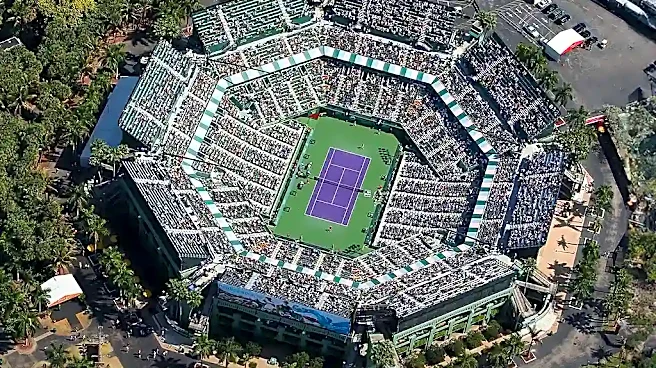
held on the manicured grass lawns of the Newport Casino in Rhode Island, a resort for America's upper crust. For decades, it was a high-society affair where only members of sanctioned clubs could compete. The move to the West Side Tennis Club in Forest Hills, Queens, in 1915 brought it closer to the city, but the real transformation came in 1978. To accommodate booming crowds, the tournament relocated to its current home in Flushing Meadows–Corona Park, a public space built on a former ash dump. This move from a private club to a public park was more than just a change of venue; it symbolized tennis shedding its elitist skin and embracing a more democratic and accessible future.
The Grand Slam of Three Surfaces
While Wimbledon has its grass, and the French Open has its clay, the US Open holds a unique distinction: it's the only Grand Slam tournament to have been played on three different surfaces. It started on grass in Newport and stayed that way through its years at Forest Hills until 1974. Then, in an experimental bid to be more television-friendly and slow down the game, the tournament switched to green clay courts (Har-Tru) from 1975 to 1977. Finally, with the 1978 move to Flushing Meadows, the tournament settled on hard courts, the fast, gritty surface we know today. This triple-surface history has a legendary footnote: Jimmy Connors is the only player in history to have won the US Open singles title on all three surfaces—grass (1974), clay (1976), and hard court (1978).
The Fight for Equal Pay Was Won Here First
Long before it became a global standard, the battle for equal prize money in tennis found its first major victory at the US Open. In 1972, women's champion Billie Jean King received $10,000, a stark contrast to the $25,000 awarded to men's winner Ilie Năstase. King, a fierce advocate for women's rights, threatened to boycott the following year's tournament if the pay gap wasn't closed. Heeding her call and recognizing the growing power of the women's tour, the US Open became the first Grand Slam to offer equal prize money in 1973. That year, both singles champions, Margaret Court and John Newcombe, received a check for $25,000. It was a landmark decision that sent ripples through the sports world and set a precedent that the other majors would take decades to follow.
Pioneering Night Tennis and TV Drama
The electric atmosphere of a US Open night session is now one of its defining features, but it was a radical innovation in its time. In 1975, the tournament became the first Grand Slam to hold matches under floodlights. The move was designed to make the sport more accessible to a primetime television audience and fans who worked during the day. Paired with another US Open innovation, the tiebreak—introduced in 1970 to prevent marathon matches—night tennis transformed the tournament into appointment viewing. No longer just a daytime sport, the US Open became a high-drama spectacle, creating a rowdy, uniquely American atmosphere that players both feed off of and struggle against.
Arthur Ashe's barrier-breaking win
The main stadium at the US Open is named Arthur Ashe Stadium for a profound reason that goes to the heart of the tournament's history. In 1968, the very first year the tournament was officially “open” to both amateurs and professionals, Arthur Ashe won the men's singles title. As the first-ever African American man to win a Grand Slam, his victory was a monumental moment for the sport and the country. Adding to the legend, Ashe was still registered as an amateur at the time, so he was ineligible for the $14,000 prize money, which went to his opponent, Tom Okker. Ashe's win wasn't just a triumph of skill but a powerful statement against segregation in a sport that had long been exclusive. Naming the world's largest tennis stadium in his honor ensures that his legacy of grace, activism, and barrier-breaking excellence remains central to the US Open's identity.