

Arthur Ashe, 1968: The Trailblazer
In a year of seismic social change, Arthur Ashe delivered a performance of historic gravity. At the first-ever US Open, where professionals were finally allowed to compete alongside amateurs, it was an amateur who won it all. Ashe, a 25-year-old lieutenant
in the U.S. Army on leave, became the first African-American man to win a Grand Slam title. His five-set victory in the final was a masterclass in poise and courage. Because of his amateur status, he couldn't accept the $14,000 prize money, which went to his opponent. Instead, Ashe left with a $280 check for his per diem and a platform he would use to advocate for civil rights, cementing a legacy that transcended sport.
Serena Williams, 2014: Flawless Dominance
Serena Williams arrived in New York in 2014 seeking her 18th major, and what followed was one of the most dominant runs in tennis history. She didn't just win; she annihilated the competition. Williams stormed through the tournament without dropping a single set. In fact, no opponent even managed to win more than three games against her in any set throughout her seven matches. Her victory over Caroline Wozniacki in the final sealed her third consecutive US Open title and her sixth overall, tying Chris Evert for the Open Era record. It was a statement of absolute authority from an all-time great, reminding the world that even in her 30s, she was in a class of her own.
Pete Sampras, 2002: The Perfect Farewell
By 2002, many had written off Pete Sampras. He hadn't won a tournament in over two years and entered the US Open as the 17th seed. What ensued was a fairy-tale ending. Drawing on his reserves of championship grit, Sampras navigated a tough draw, including a quarterfinal win over a young Andy Roddick. The final was pure Hollywood: a showdown with his career-long rival, Andre Agassi. In what would be the final professional match of his career, Sampras summoned his vintage serve-and-volley magic, winning in four sets to capture his 14th major title. He became the oldest champion since 1970 and walked away from the sport on the ultimate high, having authored the perfect final chapter.
Novak Djokovic, 2011: The Year of the Djoker
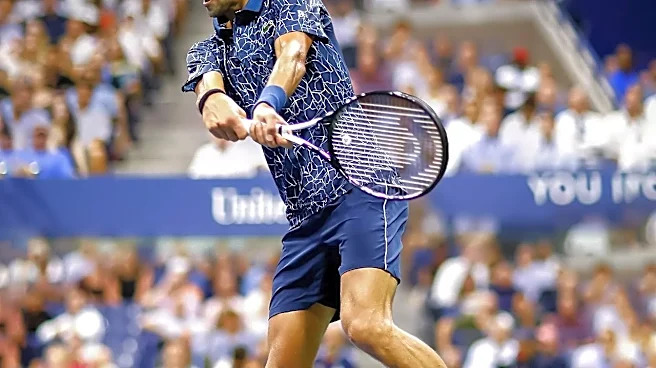
Novak Djokovic's 2011 season is considered one of the greatest in the history of men's tennis, and his US Open triumph was its crowning moment. He arrived in New York having lost only two matches all year. His run to the title was a microcosm of his season: a display of near-invincible returning and mental fortitude. In the semifinals, he saved two match points against Roger Federer for the second year in a row before prevailing in a five-set thriller. He then faced defending champion Rafael Nadal in the final, defeating him for the sixth time in a final that year to claim his first US Open title. The victory cemented his status as the new undisputed world No. 1, capping an astonishing and transformative season.
Roger Federer, 2008: The Five-Peat
After a season where his dominance was finally challenged, Roger Federer arrived at the 2008 US Open with questions swirling. He had lost his No. 1 ranking to Rafael Nadal and seemed vulnerable. But in New York, he reasserted his hard-court supremacy in emphatic fashion. He stormed to the final, where he faced a red-hot Andy Murray, who had just beaten Nadal. Federer put on a clinic, dismantling the Scot in straight sets to win his fifth consecutive US Open title, a record in the Open Era that still stands. It was a crucial victory that stopped talk of his decline and proved that his reign, particularly on the fast courts of Flushing Meadows, was far from over.