

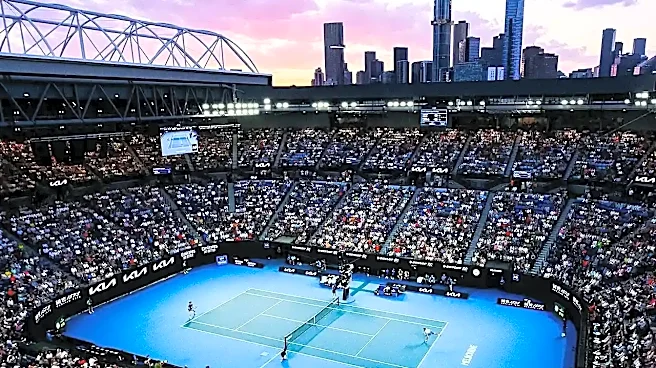


An Arena That Breathes New York
More than any other Grand Slam, the US Open feels like its host city: big, bold, and constantly reinventing itself. The USTA Billie Jean King National Tennis Center in Queens is a monument to this philosophy. Arthur Ashe Stadium, the largest tennis-specific
venue in the world, was fitted with a state-of-the-art retractable roof in 2016 to eliminate rain delays, a massive engineering feat. Just two years later, a brand new, 14,000-seat Louis Armstrong Stadium—also with a roof—was completed. Even now, a massive $800 million upgrade is underway to reimagine Arthur Ashe Stadium's interior and build a new player performance center, set to be ready by 2027. This constant evolution of the physical grounds ensures the tournament never feels dated, providing a modern stage that honors players and awes spectators, a far cry from the private grass courts where the tournament began in 1881.
A Tradition of Groundbreaking Firsts
Perhaps the US Open's most important tradition is its willingness to be first. Long before it was standard, the tournament embraced night sessions under floodlights in 1975, creating the electric primetime atmosphere that has become its signature. Even more significantly, in 1973, spurred by the advocacy of Billie Jean King, the US Open became the first Grand Slam to offer equal prize money to men and women. This was a landmark decision that took other majors decades to follow, cementing the Open's role as a progressive force in sports. That forward-thinking spirit continues today through its 'Be Open' platform, which champions inclusion and diversity with events like HBCU Live and Open Pride. The tournament’s identity is built not on resisting change, but on leading it.
Embracing Technology on and off the Court
While some tournaments hold tightly to classic conventions, the US Open consistently integrates technology to enhance the experience for players and fans. It was an early adopter of electronic line-calling and now uses Hawk-Eye Live, which has made line judges obsolete on its show courts. For the 2026 tournament, the fan experience is more digital than ever. The official app features AI-powered tools that provide fans with real-time win probabilities, personalized updates, and even a 'Match Chat' assistant that can answer questions about player stats. The USTA is also pushing engagement beyond the stadium gates, with activations like a traveling ice cream truck and immersive fan zones at Hudson Yards that feature gaming and virtual reality experiences. This digital-first approach ensures the Open connects with a new generation of fans in the language they speak fluently.
The Unmistakable Roar of the Crowd
The single most defining feature of the US Open might be its noise. Unlike the polite applause at Wimbledon, the New York crowd is an active participant—boisterous, passionate, and sometimes unruly. Players have long noted the unique energy, which can feel like playing in a rock concert. While this atmosphere might break from the sport’s genteel traditions, the tournament organizers have leaned into it. The sound, the energy, and the late-night drama are all part of the brand. This embrace of a loud, American-style sports environment is itself an innovation in the buttoned-up world of professional tennis. It creates an unpredictable and thrilling stage where epic comebacks feel possible and legends are often forged under immense pressure.