


The Set-It-and-Forget-It King
For fantasy football managers in the 2000s and early 2010s, drafting Peyton Manning was a license to relax. He was the quintessential “set-it-and-forget-it” quarterback. His value was built on a simple, devastating formula: historic passing volume and an uncanny
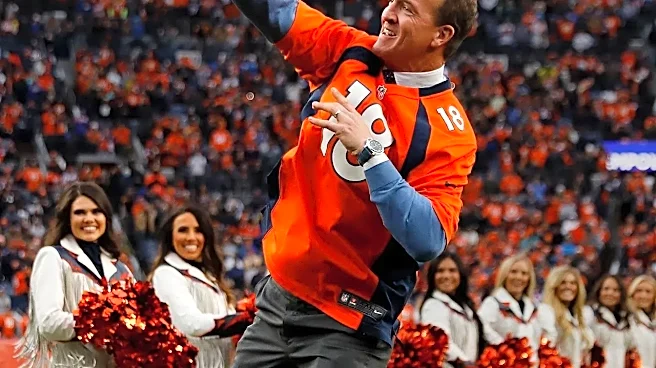
ability to find the end zone. Manning was the ultimate field general, a pure pocket passer whose fantasy points were earned almost exclusively through his arm. His career was littered with top-10 fantasy finishes, but two seasons stand as monuments to his greatness. In 2004 with the Colts, he threw for 49 touchdowns, shattering the previous NFL record. Then, nine years later with the Broncos, he did the unthinkable, putting together what many consider the greatest fantasy season ever: 5,477 passing yards and 55 touchdowns, both still NFL records. In that 2013 season, he was so dominant that he effectively gave his fantasy managers a weekly head start. He was the archetype of fantasy stardom in his era: a quarterback who won you your league from the pocket.
The Rushing Quarterback Revolution
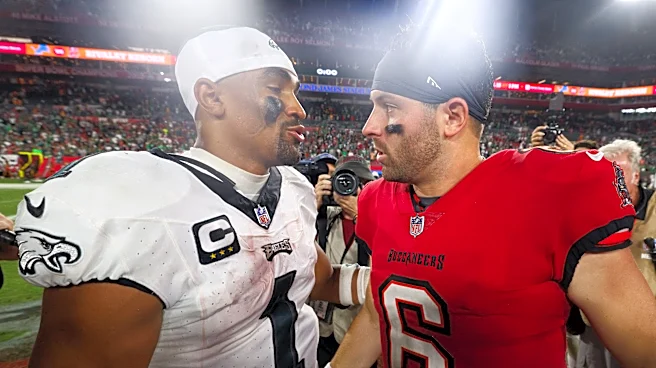
Look at the top of any 2026 fantasy draft board, and you’ll see a very different picture. The elite quarterbacks of today—names like Josh Allen, Lamar Jackson, and Jalen Hurts—are defined as much by their legs as their arms. The game has undergone a seismic shift, and fantasy football along with it. A rushing quarterback provides a “cheat code” for fantasy scoring. Standard fantasy scoring often awards one point for every 10 rushing yards and six points for a rushing touchdown, compared to one point for every 25 passing yards and four points for a passing score. This creates a mathematical advantage that pure pocket passers struggle to overcome. A quarterback who runs for 50 yards and a touchdown has added 11 fantasy points to their total—the equivalent of throwing for 125 yards and a touchdown. This rushing production provides a high weekly floor, making them less susceptible to a fantasy bust, and an explosive ceiling that can single-handedly win a matchup.
Has the Manning Archetype Vanished?
So, is there a modern quarterback who fits the Manning mold of an elite, stationary passer? Players like Joe Burrow and C.J. Stroud are cerebral and accurate, but even they are significantly more mobile than Manning was. The hard truth is that the path to consistent, top-tier fantasy production for a pure pocket passer has narrowed dramatically. To compete with the dual-threat monsters, a pocket passer has to be almost perfect. They need to approach historic levels of efficiency and touchdown production, much like Manning did in his record-breaking 2013 campaign. While that kind of season would still be the top fantasy performance in any year, it's an outlier. The new generation of quarterbacks doesn't need to be historically great passers every week to post elite fantasy scores. Their rushing ability gives them a baseline of production that pure passers simply don't have, making them the safer and higher-upside bet for fantasy managers. The game has evolved to favor athletes who can create chaos with their legs.
The Enduring Lesson of 'The Sheriff'
This isn't to say that passing doesn't matter. The lesson from Peyton Manning’s legacy isn’t that pocket passers are obsolete, but that the definition of fantasy quarterback stardom has permanently expanded. Manning was a master of his offensive system, elevating every player around him with his pre-snap reads and flawless accuracy. He embodied consistency, precision, and an elite football mind. Those traits are still invaluable. However, today’s fantasy superstars are often the system itself. Their ability to improvise, extend plays, and generate offense on their own—both through the air and on the ground—is what makes them truly special. Manning taught fantasy players to value elite production and consistency above all else. The modern game simply forces us to recognize that rushing is now one of the most reliable and explosive sources of that production.