




The Unquestioned Volume King
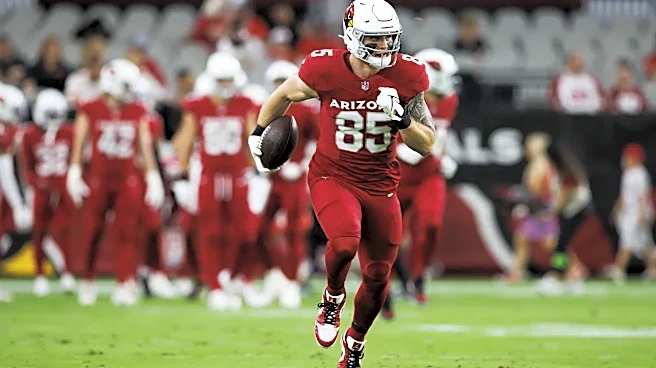
The foundation of any reliable fantasy asset is opportunity, and Trey McBride is drowning in it. Through nine games this season, he leads all NFL tight ends with an incredible 73 catches on 94 targets. That’s not just good; it’s elite territory usually
reserved for top-tier wide receivers. His target share sits at a dominant 28.7%, and he’s playing nearly every offensive down, with snap shares consistently hovering above 90%. Even in a game where the entire Arizona offense sputtered and scored only three points, McBride delivered a solid floor, catching seven passes for 54 yards. This kind of workload makes him virtually game-script proof. Whether the Cardinals are leading or trailing, McBride is the focal point of the passing attack, giving him a higher weekly floor than almost any other tight end.
Defining 'Reliable' in a Volatile Position
Reliability isn't just about posting one or two massive weeks; it's about avoiding the dreaded goose egg that can single-handedly lose a fantasy matchup. While players like George Kittle or Brock Bowers might have higher ceilings due to explosive, multi-touchdown upside, their weekly production can be more volatile. McBride's value comes from his consistency. He has recorded at least seven receptions in every single game this season. In point-per-reception (PPR) leagues, that's a baseline of seven points before he even gains a single yard. This reception-heavy role insulates his fantasy managers from touchdown dependency, a trap many other tight ends fall into. While he has found the end zone five times, his production doesn't live or die by it, making him a steadying force in any lineup.
McBride vs. The Field
So, is he the 'most' reliable? That depends on your definition. Brock Bowers in Las Vegas has been a touchdown machine, leading tight ends in receiving yards despite missing two games. However, a mid-season quarterback change adds a layer of uncertainty. Sam LaPorta of the Lions, after a blistering start, has seen his volume dip recently as Detroit’s passing attempts have decreased. Meanwhile, legends like Travis Kelce are seeing more target competition and have been less dominant than in years past. McBride's primary case against these names is his unparalleled target volume. The recent season-ending injury to the Cardinals' top wide receiver, Michael Wilson, only further cements McBride's role, concentrating the team’s passing looks even more heavily on him.
A Word of Caution
No player is without risk. The biggest question mark for McBride moving forward is a significant change at quarterback for the Cardinals. Rookie Carson Beck is set to take over after an injury to Gardner Minshew, and there's no guarantee the chemistry or target distribution will remain the same. Novice quarterbacks often struggle, which could lower the overall efficiency of the offense. Defenses, already aware of Arizona's lack of other proven weapons, will now be able to key in on stopping McBride exclusively. While his projected volume should keep his floor high, his efficiency could take a hit, and his ceiling might be more limited until the rookie quarterback gets acclimated.