

The 2002 World Cup Arrival
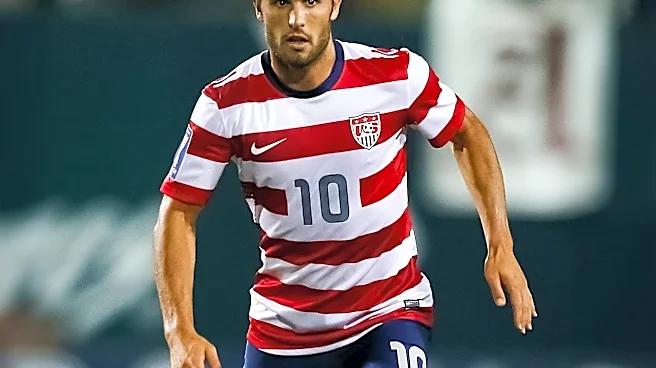
After the USMNT's disastrous last-place finish in the 1998 World Cup, expectations were low. Then, a 20-year-old with bleach-blonde hair took center stage. At the 2002 World Cup, Landon Donovan was electric. His performance, especially his headed goal
against rival Mexico in the Round of 16, announced the arrival of a new, fearless generation of American talent. The U.S. reached the quarterfinals, their best run in the modern era, and Donovan was named the tournament's Best Young Player. This wasn't just a successful tournament; it was a statement. It proved American players could compete on the world's biggest stage and gave a hungry fan base a legitimate star to rally behind, restoring credibility and excitement to U.S. soccer.
Making Major League Soccer Matter
In the early 2000s, many of America's best players still felt the need to prove themselves in Europe. Donovan, after a brief stint in Germany, returned to MLS, first with the San Jose Earthquakes and later with the LA Galaxy. Instead of being a step-down, he made the league his kingdom. Donovan led his teams to a record six MLS Cups and became the league's all-time leader in assists and, for a time, goals. By choosing to build his legacy at home, he gave MLS the one thing it desperately needed: a marketable, top-tier American superstar who consistently delivered. His success legitimized the league, encouraging other American talents to stay and helping attract international names, fundamentally strengthening the foundation of professional soccer in the country.
The Goal Heard 'Round the Nation
For all his goals, one stands alone. It's June 23, 2010. The U.S. is seconds from being eliminated from the World Cup in South Africa. What happened next is etched into American sports lore. Goalkeeper Tim Howard launched a desperate, perfect throw to Donovan, who started a frantic counter-attack. After a blocked shot, the ball fell to Donovan, who calmly slotted it into the net in stoppage time to beat Algeria. Bars erupted, highlight shows led with it, and a nation that often treated soccer as an afterthought was captivated. Commentator Ian Darke's famous "Go, Go, USA!" call became the soundtrack to a moment that transcended sports. This goal did more than win a game; it created a shared, iconic memory that brought soccer into the American mainstream like never before.
The Face of a Growing Sport
Donovan's impact wasn't just in his statistics—57 goals for the national team and 145 in MLS—but in his constant presence as the face of American soccer for over a decade. He was the player the media turned to, the name casual fans knew, and the standard by which future players would be judged. His brief, successful loan spells at Everton in the Premier League showed he could hang with the best, but his commitment to the U.S. and MLS was his defining choice. When he took a sabbatical for mental burnout, he humanized the pressures on athletes. When he was controversially left off the 2014 World Cup squad, it sparked a national debate, proving just how much his presence meant to fans. He shouldered the burden of being 'Captain America' when the sport needed it most.